








What if artificial intelligence wasn’t the shadow of the creator, but their muse? From Paris to New York, AI is inspiring creative directors, fueling enhanced creativity where human intuition and algorithmic power intertwine.
The awakening of a technological muse: Fashion Week and the generative revolution…
During Paris Fashion Week 2025, a thrill ran through the catwalks: a humanoid robot, N2, designed by Noetix Robotics, took to the stage outside the official schedule, dressed in three vintage outfits. This moment, reported by Time Magazine on October 8, 2025, symbolizes a new era: one where machines do not replace designers, but engage in dialogue with them.
This year, more than ever, artificial intelligence is establishing itself as a contemporary muse. From designing silhouettes to researching colors, generative tools are becoming creative partners. It is no longer a conflict between man and machine, but a conversation between sensitivity and calculation, intuition and data.
AI as a driver of inspiration and innovation
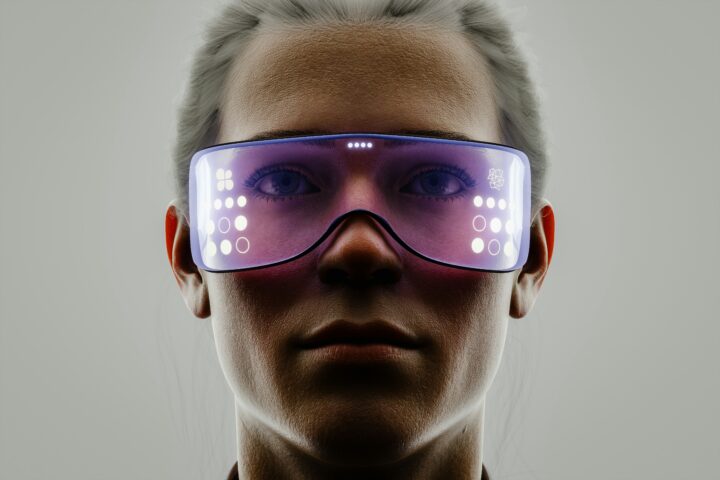
AI offers artistic directors a new medium: algorithmic inspiration. Far from standardizing creation, it multiplies it. Artists use it to explore previously inaccessible aesthetic worlds, test forms, simulate textures, and even imagine immersive fashion shows.
In fashion, this dynamic is embodied in a movement I call augmented creation. AI is becoming a mirror of the imagination: it learns from the past, interprets the present, and sketches possible futures. It stimulates visual thinking and helps us think differently—without ever depriving the creator of their intention.
Beyond the big names, an entire generation of anonymous art directors and creatives are embracing AI in their daily lives. They use it to instantly retouch photos, embed a packshot (high-quality photograph of a product, ed.) in a worn visual, animate or modify elements in a packshot, choose new angles in post-production, change a model’s posture in a video in post-production, or transform a single photo shoot into 100 videos.
Others use it to brainstorm ideas for upcoming collections, simulate runway show sets, or design store layouts. These uses, which are more discreet and practical but omnipresent, are redefining the behind-the-scenes world of contemporary design: AI is becoming an invisible companion for visual and strategic experimentation.
Pioneering designers of the human-machine fusion
Several figures are shaping this new alchemy between art and algorithms:
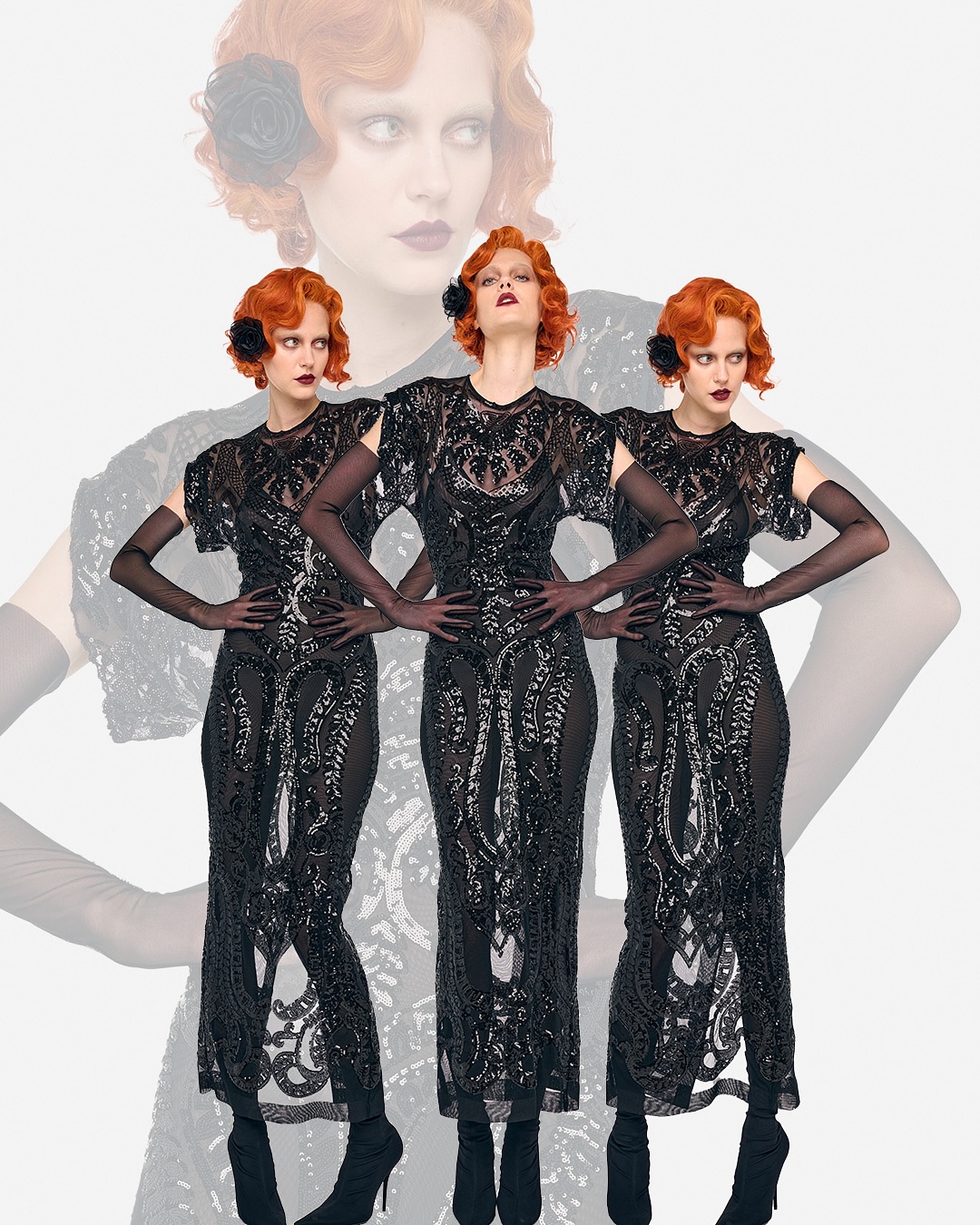
- Norma Kamali trained an AI on several decades of archives of her collections, generating new stylistic proposals that were then reinterpreted by her team. Here, AI serves to reveal the continuity of a vision.
- New York AI Fashion Week (2024) celebrated designers who have transformed virtual designs into real, marketable garments. A bridge between pixels and fabrics.
- Demna, at Balenciaga, has explored the digital imagination and mental landscapes created by generative tools. AI is becoming a space for contemporary surrealism, where luxury flirts with dystopia.
- Iris van Herpen, a pioneer in fashion tech, has been merging craftsmanship and technology for years. Her biomorphic dresses, inspired by shape algorithms, embody the symbiosis between hand and machine.
- Finally, the appearance of the N2 robot in Paris illustrates the ultimate convergence: that between creation, robotics, and artificial intelligence. A powerful symbol of a fashion that thinks as much as it moves.
These examples tell the same story: AI is not a replacement tool, but a catalyst for emotion and experimentation.
My perspective as a leader: creation as an act of consciousness
I support leaders, luxury brands, and designers in the strategic and ethical integration of artificial intelligence. I am convinced that the real revolution lies not in the speed of production, but in the depth of reflection.
When properly understood, AI helps us ask better questions: How can we remain human in a world of data? How can we keep people at the center of the game while using artificial intelligence tools that are revolutionizing creative processes and marketing?
Today’s executives and artistic directors have a responsibility: to learn how to engage with these new tools, master them, and turn them into levers for thought.
AI, muse of creators and catalyst for professions
At Eliosor AI, we also support professional teams from all backgrounds—from finance to human resources, operations, marketing, creation, and retail—because the uses of AI are as infinite as they are varied. Creation, which reveals the inspiring and emotional dimension of these tools, is often a wonderful gateway to this world. But it is only the beginning: every profession, whether analytical, strategic, or operational, can draw on it as a new lever for intelligence, creativity, and impact.
We support companies in this transformation: understanding generative tools, defining an ethic of augmented creation, and building a strategy where artificial intelligence serves vision, culture, and humans.
Read also > [COLUMN] AI, singularity, and the future of luxury
Featured photo: © Norma Kamali