

These bags with their instantly recognisable scale pattern – a palette of blues and greys, always with a splash of yellow – are the work of Fauré Le Page. A brand that many discover as a revelation, although its origins date back to the 18th century. Before meeting Augustin de Buffévent, the brand’s creative director, we wanted to understand what makes this French label so unique. How has Fauré Le Page, having evolved from a manufacturer of exceptional weapons into a leather goods house, managed to establish itself in the contemporary luxury sector without ever succumbing to the allure of flashy marketing ?
A story that begins with gunpowder and fire
The first House Fauré Le Page was founded in 1717, during the Regency, in a Paris where duelling was still the norm. Louis Pigny, a master arquebusier, set up a workshop on Rue de Richelieu. He crafted exceptional weapons for the aristocracy, pistols chiselled like jewels. European monarchs placed orders. The great rival Houses – Lepage, Boutet – vied to win over princes and generals.
The story could have ended there, in the dusty display cases of a military museum. But Fauré Le Page has weathered revolutions, empires and two world wars. When weapons ceased to be a gentleman’s attribute, the House reinvented itself. It applied its expertise – leatherwork for holsters, scabbards and cases – to a new everyday object: leather goods.
The real turning point came in the 2000s. The House, taken over by new owners, decided to revive a dormant heritage. There was no question of imitating the big names in French luxury. Fauré Le Page chose a different path: that of assertive discretion, of luxury that does not flaunt itself but is instantly recognisable.
Tortoiseshell, the hallmark of a style that goes against the grain
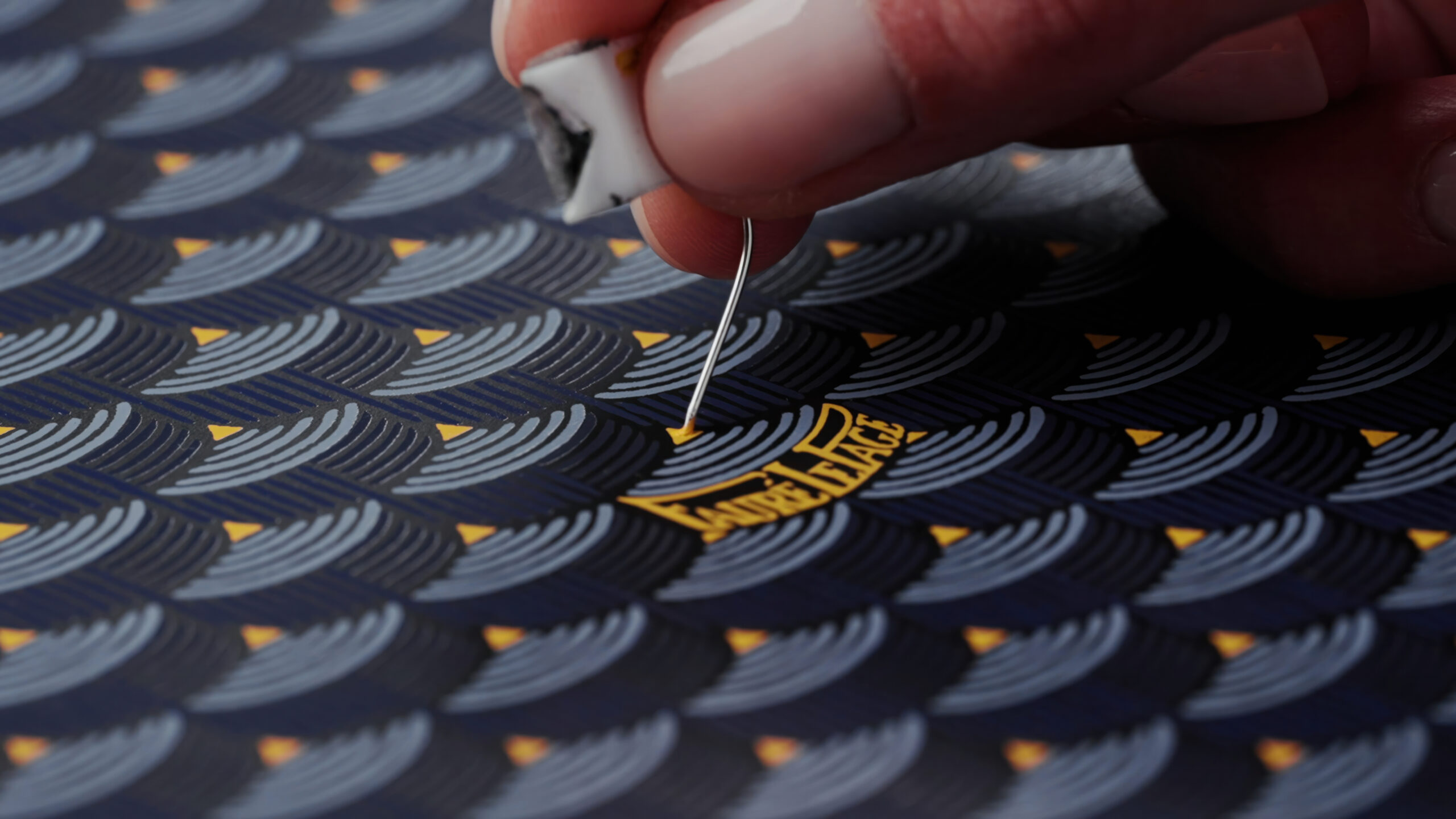
The savoir-faire © Fauré Le Page
The Houses iconic motif – those interlocking scales also known as ‘peacock feathers’ or ‘dragon scales’ depending on the mood – dates back to the 19th century. At the time, it adorned rifle butts and presentation boxes. Today, it adorns the coated canvas of bags, clutches and accessories.
What strikes you first is the colour palette. Whilst other Houses rely on monumental logos or garish colours, Fauré Le Page favours muted, almost military shades: Paris midnight blue, steel grey, empire green, velvet red. The brand’s signature ocher yellow appears in subtle touches – a lining, a trim – as a nod rather than a statement.
This aesthetic appeals to a clientele seeking beauty, durability and French craftsmanship, but not ostentation. An elegance that speaks volumes without shouting.
A luxury to be experienced
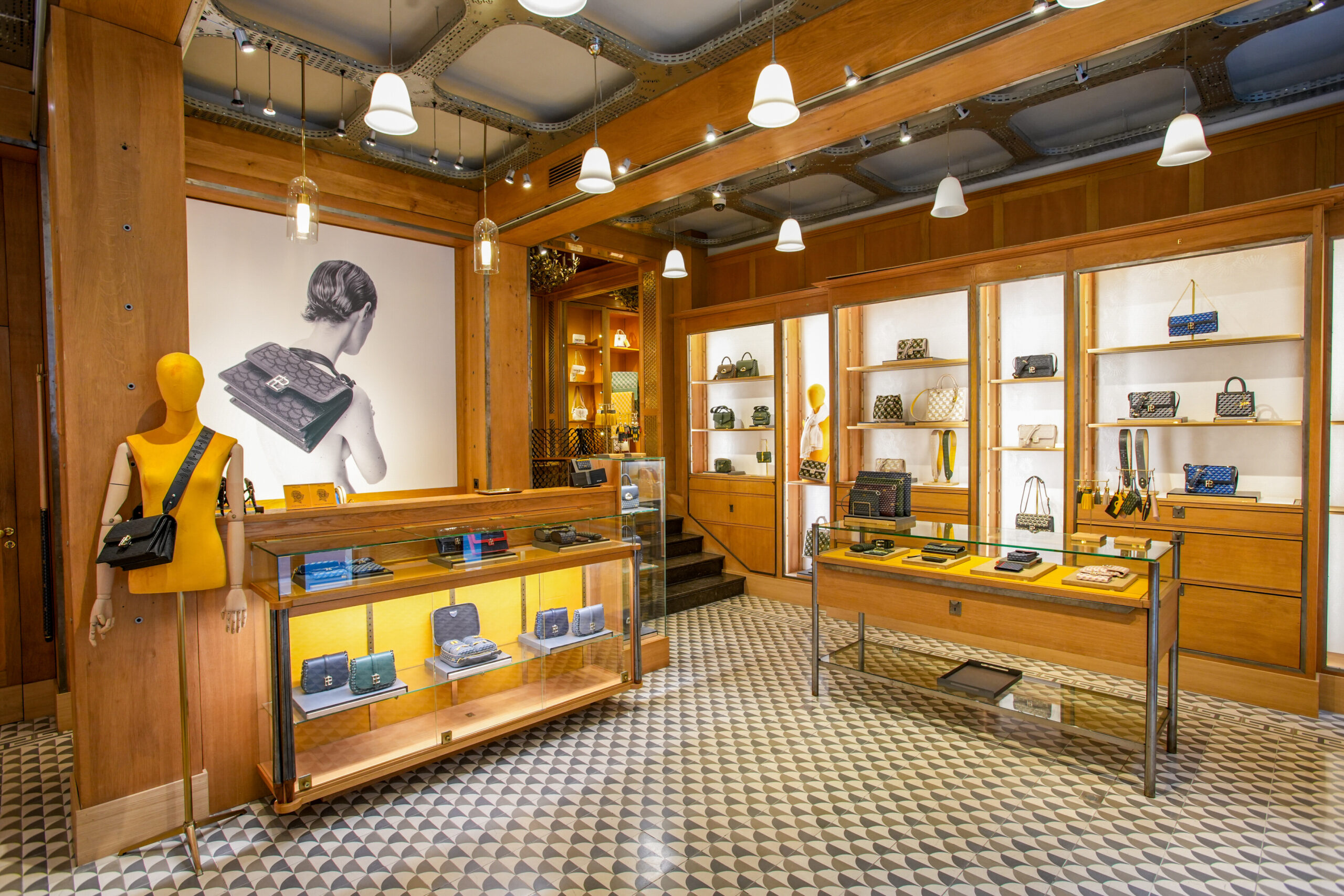
Stepping into the boutique on Rue Cambon is to leave behind the hustle and bustle of globalised luxury. No queues, no security guards in suits, no neon lights. Just a timber-panelled setting, a few pieces displayed as in a cabinet of curiosities, and sales assistants who take their time.
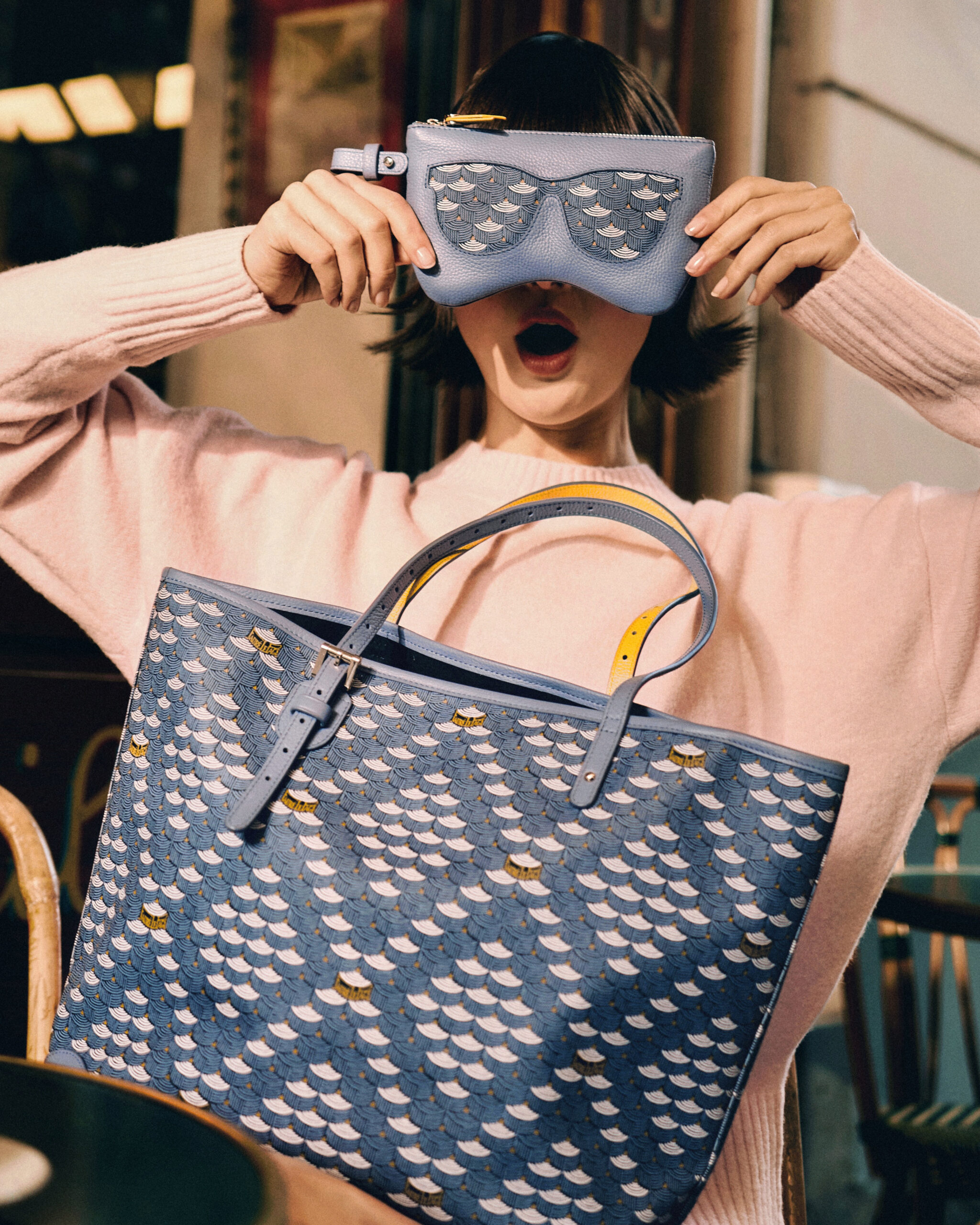
Daily Battle @ Fauré Le Page
The House produces very little, by design. Its workshops, located in France and in Europe, work with slowly tanned leathers and fabrics woven using traditional methods. A Daily Battle – the iconic tote bag – takes time to make. There are no ‘capsule’ collections every six weeks, no collaborations with the star of the moment, no official influencers.
This deliberate scarcity creates an unexpected effect: loyalty. Customers return, year after year. They give a wallet to their son for his thirtieth birthday, a clutch bag to their partner for an anniversary. The bags age well, develop a patina, and tell a story.
An artistic director’s vision for the next chapter
At the helm of the creative direction since 2009, Augustin de Buffévent embodies a certain vision of French luxury: cultured, discreet, obsessed with detail. Trained in decorative arts and driven by a passion for military history and heraldry, he has imbued Fauré Le Page with a rare visual coherence.
Under his leadership, the House has developed new formats – travel bags, briefcases, more assertive women’s lines – without ever betraying its original DNA. Each creation engages with the arquebusier heritage: the clasps recall breech mechanisms, the handles evoke rifle straps, the colours reference the uniforms of yesteryear.
But beyond form, Augustin de Buffévent champions a genuine philosophy: that of luxury built to last, nourished by the time we devote to objects to imbue them with meaning. It is based on the collective work of artisans – leatherworkers, weavers, screen printers – who design durable pieces, such as the Daily Battle tote bag or the Écailles canvas, crafted using traditional techniques that combine suppleness and durability. An approach faithful to the House’s heritage, whilst remaining firmly rooted in the present.
A conversation with Augustin de Buffévent, during which we discussed his vision, his inspirations and his plans for the House, as well as how to bring a three-century-old heritage to life without freezing it in a museum-like approach.
LUXUS PLUS: Founded in 1717 as a royal arquebusier, the House of Fauré Le Page became a leather goods maker. How do you transform this historical heritage into a contemporary creative language?
AUGUSTIN de BUFFÉVENT: The original Maison Fauré Le Page made its name in the manufacture of ceremonial weapons that brought together a multitude of artistic crafts: cabinetmakers, engravers, jewellers…
Today, our craft is leather goods, and we like to point out that we have silenced the weapons. In turn, we bring together the most exclusive skills, but in a different realm: that of bags and accessories that accompany today’s heroines and heroes. All those who have a thousand lives within their lives, a thousand days within their days. Does that ring a bell?
LUXUS PLUS: You relaunched the House in 2009. What was the greatest challenge in reviving this ‘sleeping beauty’ and making it relevant to a 21st-century audience?
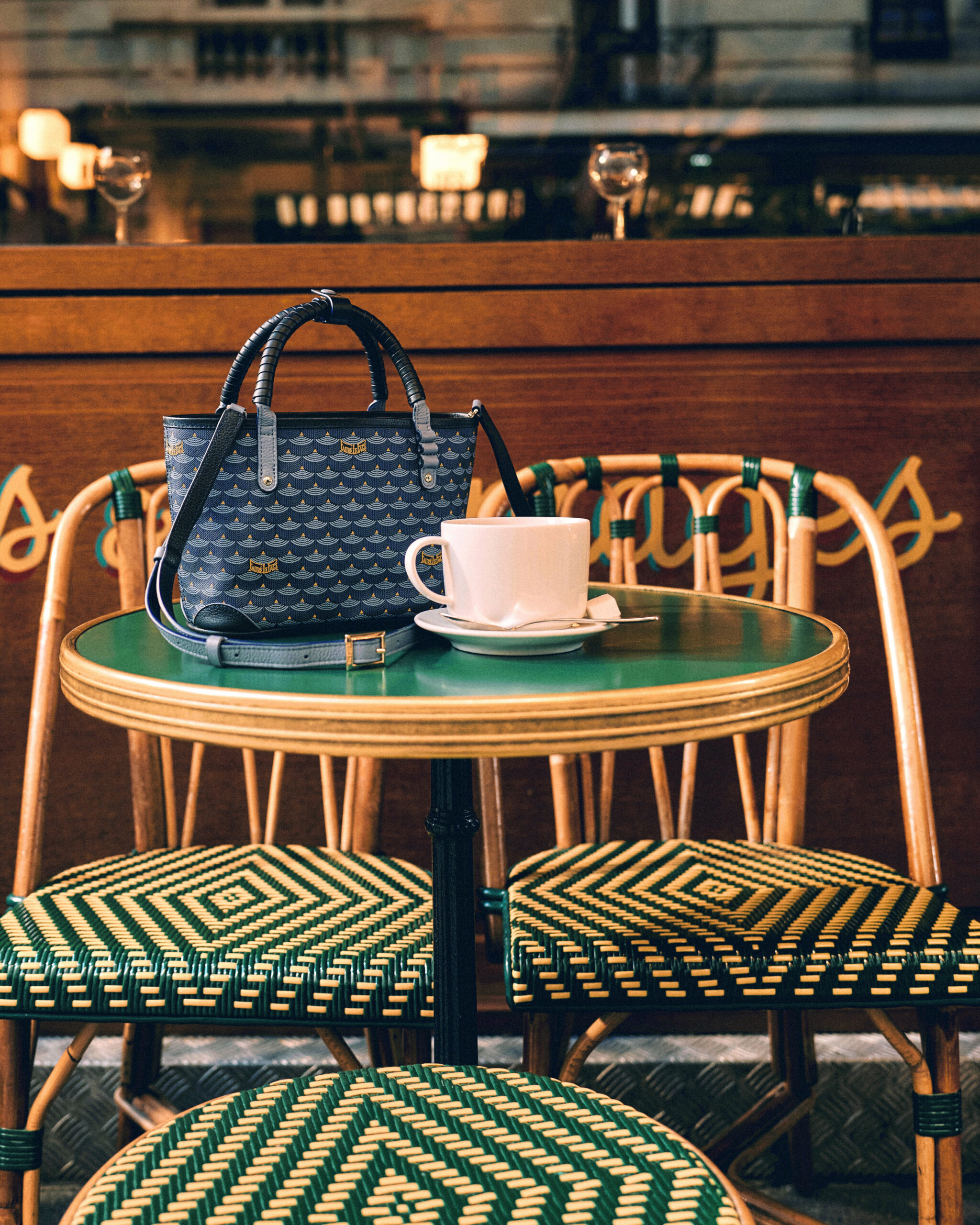
AUGUSTIN de BUFFÉVENT: To stand the test of time, all brands must constantly reinvent themselves. It’s a balancing act: just as in a family home, we foster dialogue between generations; we cherish our heritage whilst renewing ourselves, so as to be neither uprooted nor turned into a museum piece. History is one of our sources of inspiration, just as much as art or the spirit of the times, in this projection towards the future.
LUXUS PLUS: The House’s motto is ‘Armed to seduce’. How does this idea translate into your collections in practical terms?
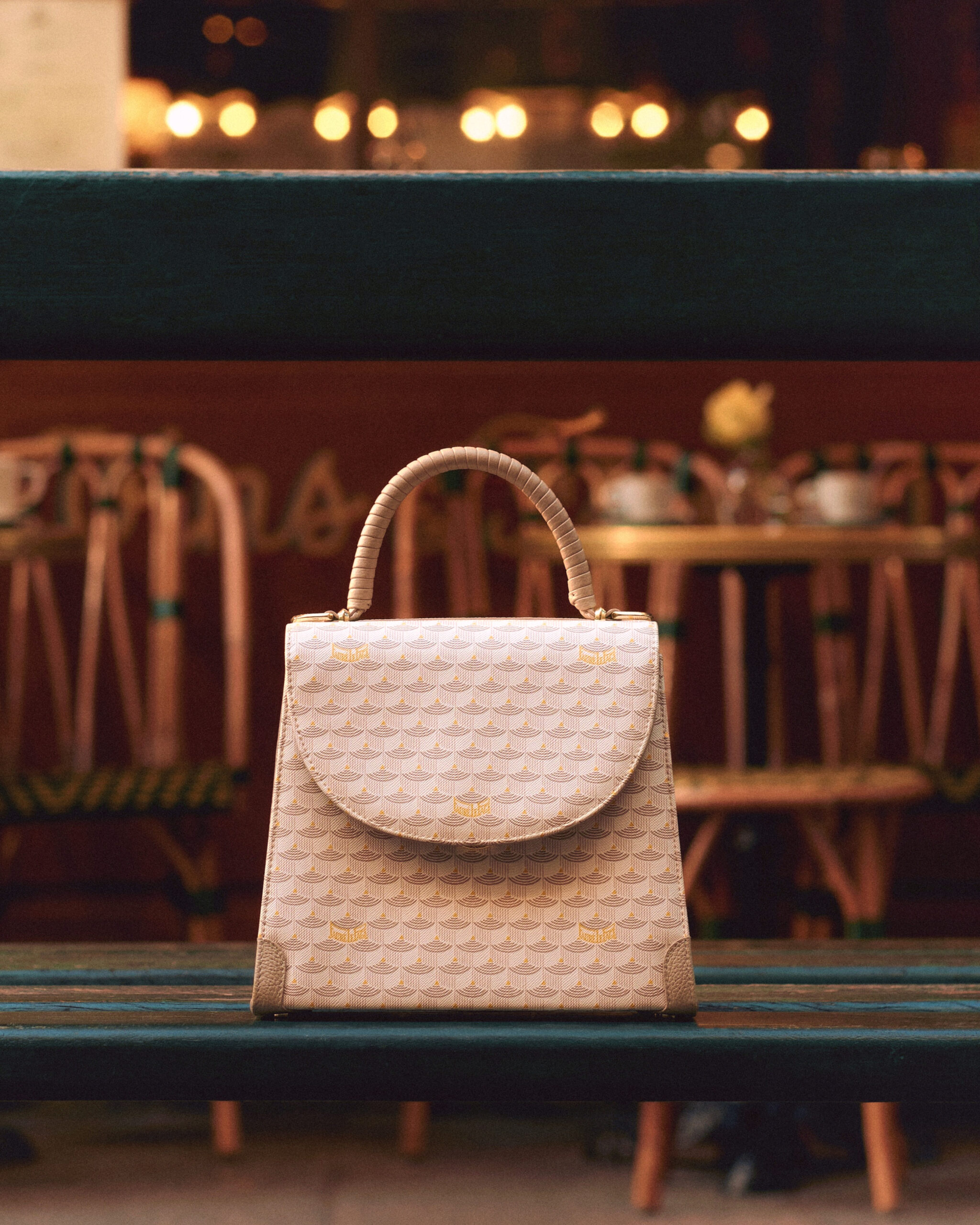
AUGUSTIN de BUFFÉVENT: I’d say it’s about the element of surprise, which is very important to us! Our creations are brimming with details, often hidden: the asymmetry of the handles on the Daily Battle, a helmet or barrel clasp for the Faurever and Ladies First bags, a calibre mirror nestled within a Dream Vanity. Being unpredictable is also a way of reinventing oneself, to tie in with your previous question.
LUXUS PLUS: What objects or worlds – military, literary or artistic – fuel your creative imagination?
AUGUSTIN de BUFFÉVENT: Everything, absolutely everything! Art, history, the spirit of the times, travel, encounters. I often say that imagination is a muscle that needs to be exercised. So, I exercise it with ceaseless curiosity and find inspiration in the diversity of my memories and discoveries. It’s endless!
LUXUS PLUS: Your creations are teeming with playful and unconventional details (pistol-shaped pouches, quivers, etc.). How important are humour and irony in luxury today?
AUGUSTIN de BUFFÉVENT: Humour and playfulness are an integral part of the brand’s mode of expression, as are subversion and the juxtaposition of opposites. We love to surprise with details, hidden touches, and to appear where we are least expected. We like to subvert the imagery of armoury (a barrel clasp, a cartridge belt to hold medals), and combine opposites (embroidered leather with Cuir Armure). We love fine craftsmanship and take our work very seriously… but without taking ourselves too seriously. A creative has every right, except the right to be boring. And, in my view, they also have a duty to bring beauty and optimism.
LUXUS PLUS: Fauré Le Page is highly regarded internationally, particularly in Asia and the Middle East. How do French culture and the history of Paris continue to influence your global reach?
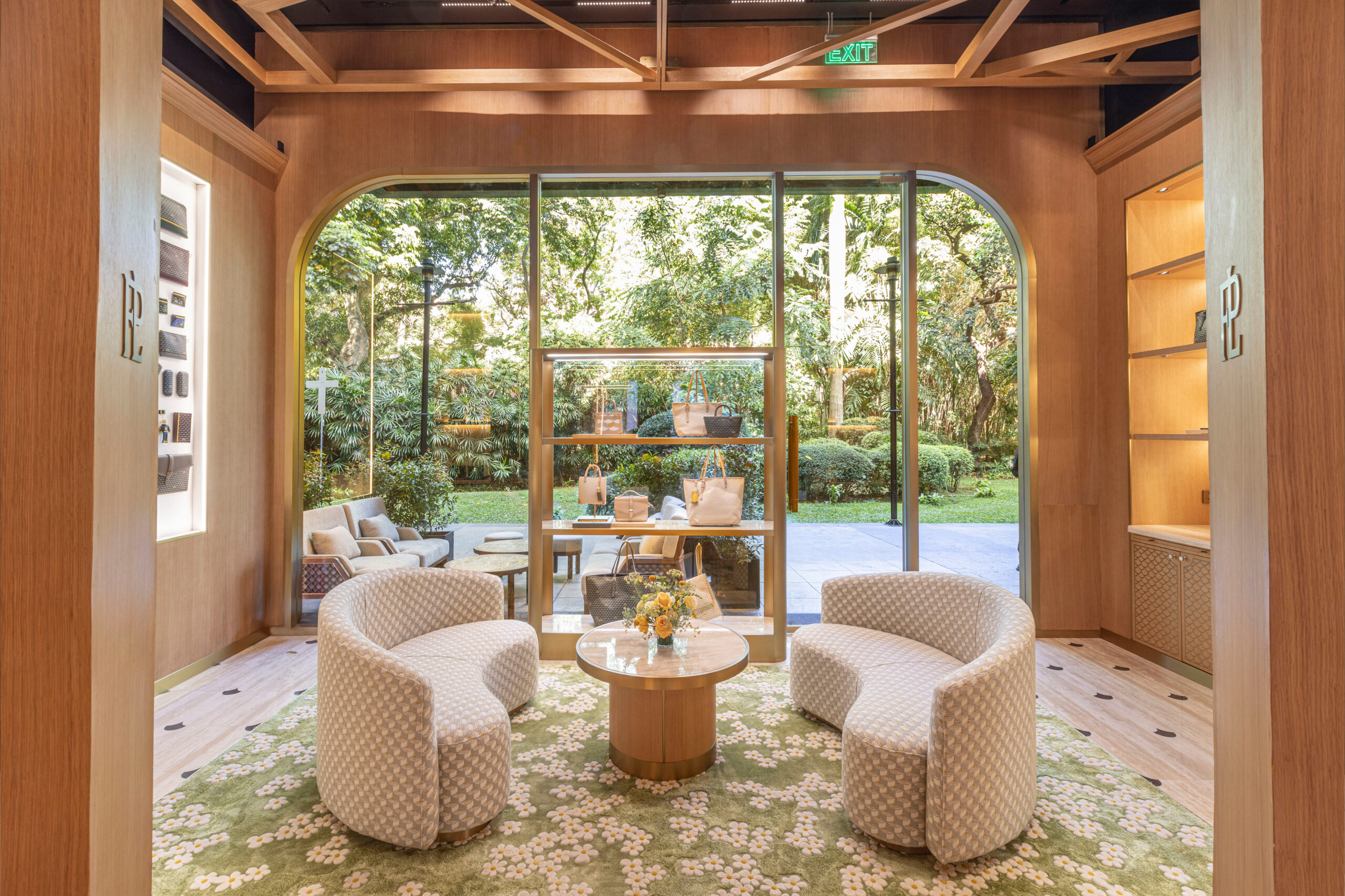
AUGUSTIN de BUFFÉVENT: Like many others in the industry, we are ambassadors and ‘ambassadors’ of the French art de vivre. We help to promote the creative process and pass on traditional crafts. This is deeply rooted in French culture, and this ‘French exception’ – of which Paris is the epicentre – is highly valued worldwide. It dates back to Colbert: the promotion of the arts, the founding of the manufactories and the export of craftsmanship. Every time I delve into the 18th- or 19th-century archives of the original House, I am blown away by the beauty of the creations, the nobility of the materials and the virtuosity of the artisans of the time.
LUXUS PLUS: How do you see the House evolving in the coming years: new categories, collaborations, in-store experiences?
AUGUSTIN de BUFFÉVENT: Seduction is all about the art of surprise! I’m not going to reveal everything to you today. We will soon have an important milestone to reveal regarding the House’s future. I can tell you that we are working on this with Jean de Gastines, the architect with whom we design all our boutiques worldwide, whether in Paris, Asia or the Middle East. And this will also be an opportunity to expand our brand’s scope to include more lifestyle items.
LUXUS PLUS: If you had to choose a single piece from the 2026 collection to define the future of the House, which one would it be and why?
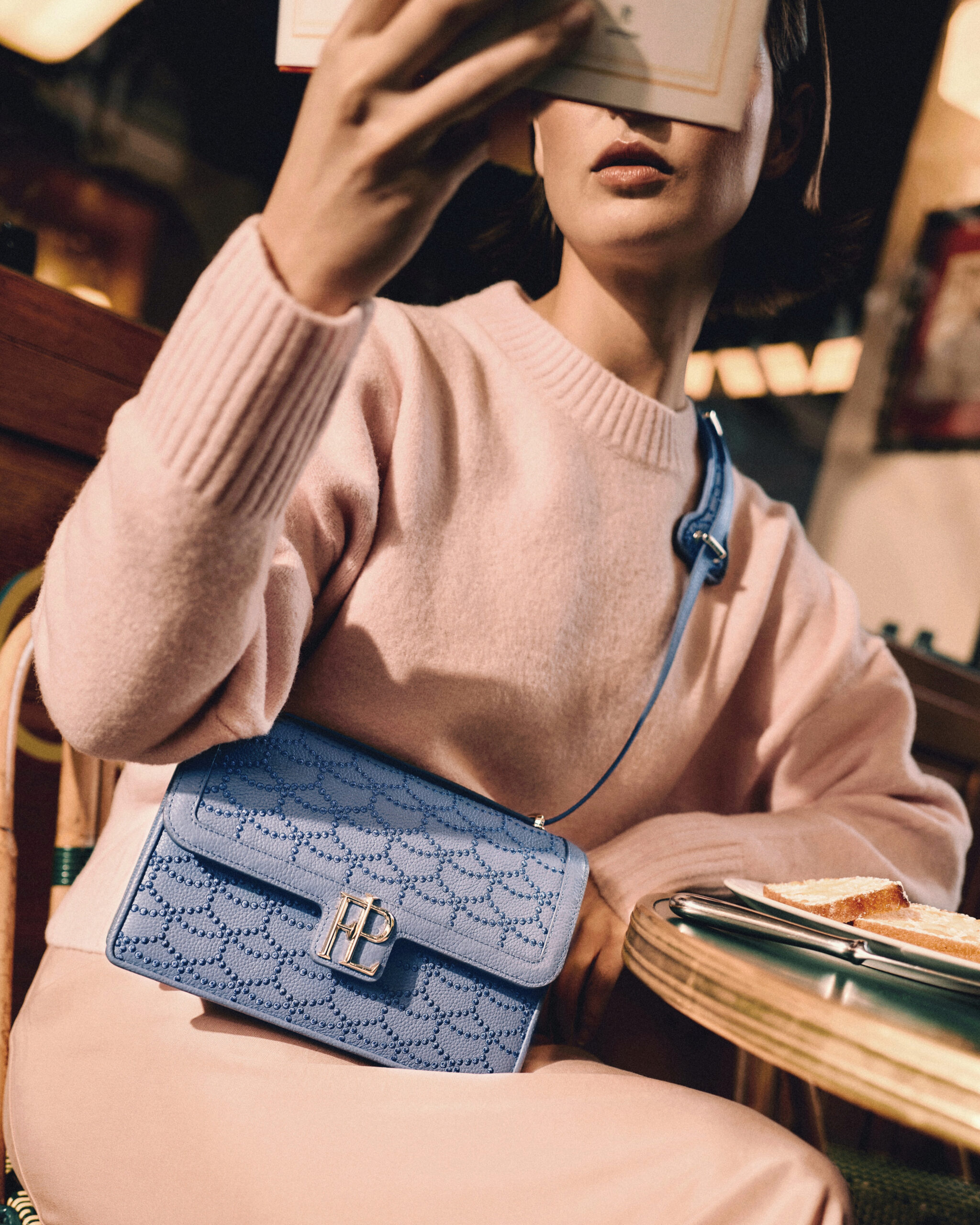
AUGUSTIN de BUFFÉVENT: It’s a real dilemma! I can’t choose between the future editions of the Daily Battle and the Ladies First, both of which embody the brand so well. The first, an essential tote bag, so functional and sturdy; the second, a Haute Couture bag in embroidered leather, more sophisticated yet suitable for your entire day, from morning until night.
Read also > https://luxus-plus.com/en/interview-bringing-people-together-around-a-product-that-is-both-beautiful-and-delicious-cedric-travella-chapon-chocolaterie/
Featured photo: Angustin de Buffévent © Fauré Le Page