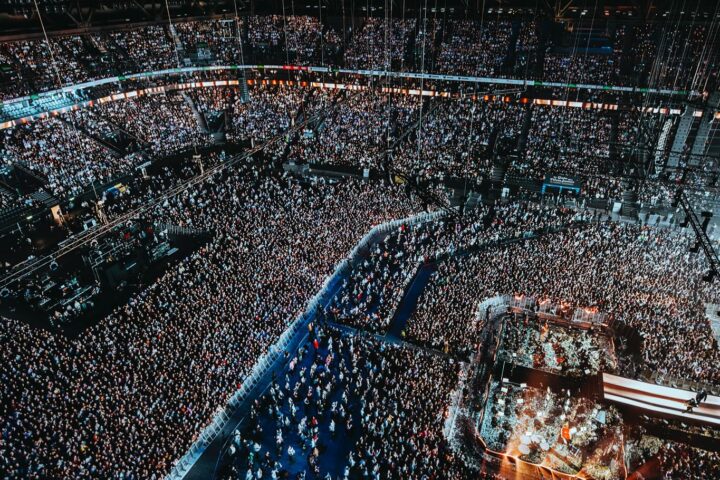













One Sunday morning at the Javits Center, Sundar Pichai and John Furner announced that they were “rewriting the retail playbook.” Google and Walmart sealed an alliance to make artificial intelligence the new entry point for commerce. Conversational agents became shopping concierges, orchestrating discovery, comparison, and transaction. Standing ovation. The agentic era was declared open.
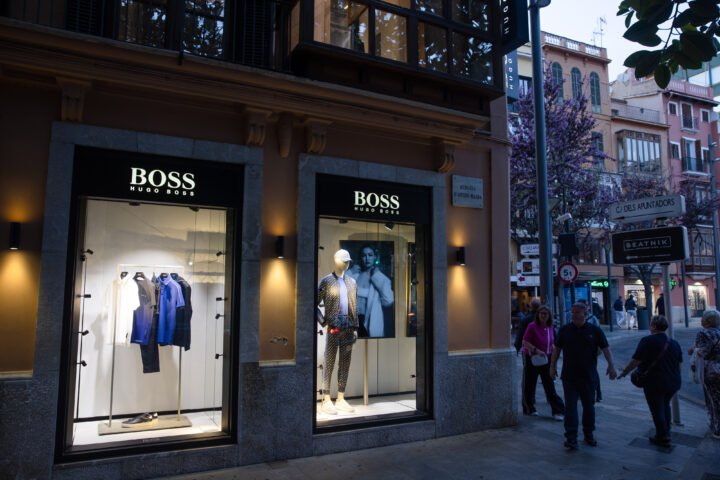
Three days later, a few miles from the Javits Center, another truth emerges in the streets of SoHo and Flatiron. At the NRF Show—the major international Retail Tech event in New York—we visited more than thirty flagship stores of premium and luxury brands. No giant touch screens. No humanoid robots. No laminated QR codes on the walls. These spaces resemble those of 2023—sleek and sensory—but their strategic significance has changed completely.
The paradox is striking: at a time when the retail industry is racing toward hyper-technologization of the customer journey, luxury brands are making the opposite choice. They deliberately erase all visible traces of technology from their physical spaces. This invisibility is not a renunciation. It is a superior form of sophistication.
In the world of luxury, flaunting technology is an admission of weakness. Sophistication is not something to be demonstrated.
“Quiet tech”: The anti-ostentatiousness of technology
“Quiet tech” — an approach formalized by LVMH that consists of making technology “present everywhere but visible nowhere” — is establishing itself as the digital counterpart to “quiet luxury.” Just as Loro Piana has made ostentation vulgar, major brands are reinventing their relationship with technology: it must do everything without ever showing itself.
This choice is not aesthetic. It is philosophical. Technological ostentation belongs to mass retail. Interactive screens, connected mirrors — all of this is part of “tech theater.” In luxury, this logic is reversed. Innovation is not proven, it is felt.
Luxury does not show off its technology, it makes you forget it.
Step into Hermès on Rue du Faubourg Saint-Honoré. No screen extols the virtues of leather. Yet behind this sobriety, a sophisticated infrastructure orchestrates the experience. The salesperson knows your history before you even cross the threshold. Blockchain traceability documents every stage of production. But none of this is apparent. All you see is the craftsman, the leather, the gesture.
In a world saturated with digital interfaces, the absence of visible technological mediation becomes a form of luxury in itself. “Quiet tech” responds to a new kind of fatigue: that of technological omnipresence.
The sensory sanctuary: the irreducible experience
Weak signals are already heralding this shift. The new Lululemon flagship store at 524 Broadway: a sculptural terracotta staircase, an undulating ceiling, two words engraved: “Made to Feel.” Technology? Omnipresent in the backend, invisible in the store. At Gentle Monster, the store becomes an art gallery where eyewear seems almost secondary.
While Google unveils its Universal Commerce Protocol to standardize transactions via AI agents, these flagship stores are taking the opposite approach: creating experiences that resist any algorithmic compression.
In the age of agents, the body becomes the last bastion of authenticity.
A conversational agent can compare ten leather bags, analyze their characteristics and their value for money. But it cannot convey the tactile thrill of Barenia leather under your fingers, the smell of a Berluti workshop, or the kinesthetic satisfaction of a physical experience.
These strategies, already visible in premium brands, reach their peak in authentic luxury, where this absence becomes a philosophical signature.
Backend orchestration: The invisible symphony
The sophistication of “quiet tech” lies in its invisible orchestration. At Berluti, the custom patina service is based on a database that documents thousands of formulas and their variations. Master patinators work with predictive algorithms, but the customer only sees the gesture, the brush, the transformation of the leather.
At Gucci SoHo, the digital installations do not showcase their technology—they embody Sabato De Sarno’s equestrian universe. Technology serves the creative vision. It never shows off for its own sake.
Sophistication lies in the ability to make the machine work without showing the inner workings.
Desirability through absence: the store as a counter-narrative
If AI wins the battle of discovery—if conversational agents become the new entry point for commerce—what will brands have left to control? Only one territory: the physical moment of truth. The point of contact where the brand becomes the author again, not the subject.
The luxury store in 2026 no longer sells products. It will sell three strategic assets:
The irreducible experience. The weight of a Dior bag in your hand. The smell of an Aesop boutique. The kinesthetic satisfaction of touching Loro Piana cashmere. These sensations cannot be mediated by AI. They cannot be described in a “product feed.” They require presence.
The authentic signal. Every moment captured in a flagship store becomes social proof that AI agents will consume to formulate their recommendations. The store is no longer the end point of the sales funnel—it is the generator of signals that feed the algorithmic ecosystem. In luxury, these signals attest to an irreplaceable experience.
The direct relationship. In a world where AI agents capture signals of intent, brands are losing visibility into the customer journey. The antidote? Exclusive relationships. Watchmaking masterclasses at Patek Philippe, private dinners at Brunello Cucinelli, customization workshops at Berluti—these are all points of contact that generate first-party data outside of any platform and create a brand intimacy that AI agents cannot penetrate.
When AI orchestrates discovery, luxury orchestrates presence.
Humans augmented, not replaced
This “quiet tech” philosophy is evident in stores. Salespeople at Louis Vuitton use sophisticated clienteling tools, but when they greet a customer, none of that is apparent. What matters most is human conversation, personalized advice, and attentive service.
Mainstream retail automates interaction. Luxury enhances the human experience. Berluti artisans use algorithms to optimize their patinas, but it is their hands that apply the brush. Hermès saddlers use 3D modeling, but it is their hands that assemble the leather.
You can ask ChatGPT to recommend a luxury bag. It will analyze thousands of reviews and compare prices. But it will never be able to convey the thrill of discovering the Birkin bag that was meant for you, in the store where you have built a relationship over the years.
In a world where everything is becoming mediated by AI, luxury orchestrates the last spaces of human immediacy. This rarity—the unmediated human experience—is becoming the new form of exclusivity.
From orchestration to recommendation: the ultimate paradox
Quiet tech allows luxury brands to perfectly control the physical experience. But here’s the ultimate paradox of the agentic era: control is no longer enough.
Brands have total control over the store. They partially influence social media. And they have virtually no control over what ChatGPT or Gemini will say about them when a user asks for a recommendation.
How do you orchestrate an ecosystem where you control only a third of the touchpoints? How do you ensure that the signals generated in your physical sanctuaries reach the AI agents who will decide whether your brand is worth recommending?
Luxury has always been the art of creating desire in humans. The agentic era adds a dizzying layer: you now have to be desirable to machines. Not by optimizing your product feeds—a necessary but insufficient exercise—but by creating physical experiences so remarkable that they generate signals that algorithms cannot ignore.
The store therefore becomes doubly strategic. It creates an irreplaceable human experience. But it also generates the social proof that feeds AI models. Quiet Tech is not just an aesthetic philosophy—it is a bet on the persistence of reality in an increasingly synthetic world.
The companies that will win will not be those that fight AI, nor those that flaunt it. They will be those that know how to orchestrate it silently—by creating physical experiences so powerful that they permeate all layers of the ecosystem, from the human body to artificial neurons.
The sophistication of the invisible thus becomes a strategy for algorithmic visibility. The paradox comes full circle: to be seen by machines, you must first make them forget they exist.
Read also > [COLUMN] Algorithms versus craftsmanship
Featured photo: Unsplash