











In an environment marked by a global slowdown in the luxury sector, watchmaking and jewelry stand out as distinct segments. Less exposed to fashion trends than leather goods or ready-to-wear, they are now part of a deeper dynamic: a gradual transformation into hybrid assets, serving both as objects of desire and instruments for preserving value.
Watches and Jewelry: From Anticipation to Selection
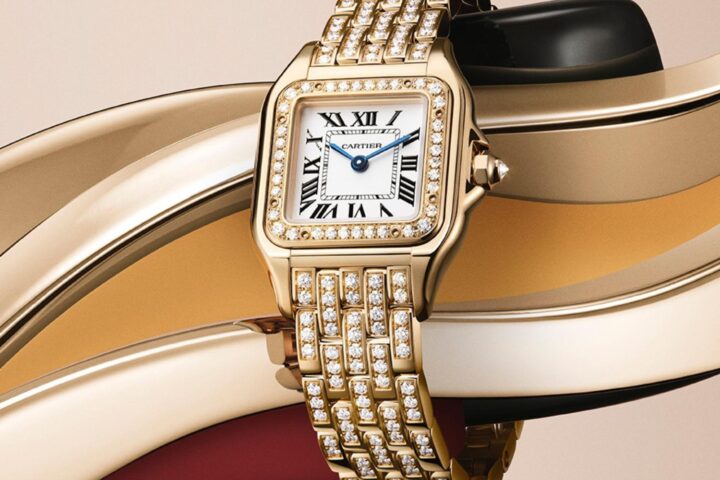
The first defining phenomenon is the growing financialization of these products. For several years now, certain iconic watches from Rolex or Patek Philippe, as well as High Jewelry pieces by Cartier or Van Cleef & Arpels, have been perceived not merely as consumer goods, but as tangible assets. Against a backdrop of financial market volatility and geopolitical uncertainty, this shift is significant; it reflects a drive toward asset diversification into “real” assets that hold intrinsic and symbolic value.
However,the market has recently shifted gears. Following the post-Covid euphoria, marked by a surge in prices on the secondary market, a normalization has begun. Collectible watch indices have been corrected, certain models with strong valuation momentum have lost their appeal, and waiting times have shortened. This return to equilibrium is healthy, as it marks theend of a phase of overheating and refocuses the market on its fundamentals: rarity, craftsmanship, and brand history.
In other words, the investment logic is not disappearing, but it is becoming more selective and less opportunistic.
LVMH, Hermès: the ultra-luxury segment holds steady, while the mid-range segment falters
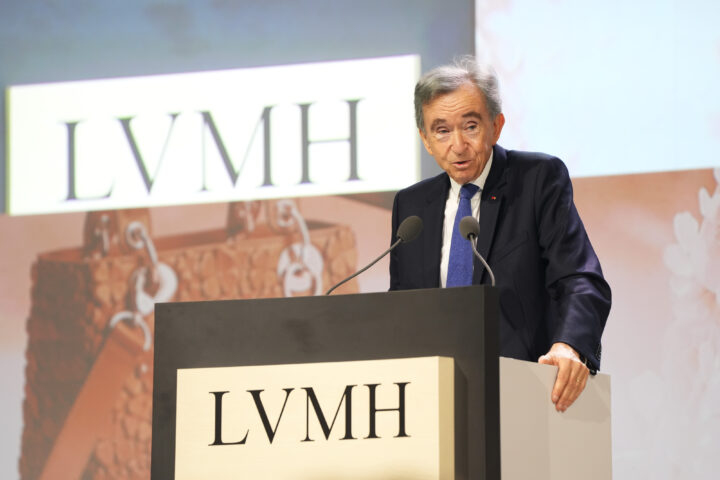
In this context, the recent results from Hermès and LVMH are particularly revealing. While several luxury segments, notably fashion and spirits, are showing signs of a slowdown, jewelry and watchmaking continue to demonstrate resilience.
At LVMH, the “Watches & Jewelry” division, driven notably by Tiffany & Co. and Bvlgari, is showing stronger momentum than other divisions of the group. For its part, Hermès, although less exposed to watchmaking, benefits from an extremely high-end positioning that allows it to maintain strong desirability for its jewelry and watch lines.
The second key trend is market polarization. Watches and jewelry are not immune to the global slowdown, but this primarily affects the mid-range segment. The ultra-luxury segment, meanwhile, remains supported by an ultra-wealthy clientele less sensitive to economic cycles. Conversely, the mid-range segments are more affected by budget trade-offs, particularly in a context of persistent inflation. This polarization reinforces the competitive advantage of Houses capable of capitalizing on exclusivity and scarcity.
From Ostentation to Legitimacy: Young People’s New Relationship with Luxury
But it is undoubtedly the third factor—often underestimated—that is reshaping the market most profoundly: generational change. Contrary to popular belief, Generation Z is not turning its back on ostentation; it is redefining its codes. On social media, luxury watches and jewelry remain markers of success and status, sometimes even more visible than before. However, this display is accompanied by a heightened expectation for meaning and legitimacy.
Owning a Rolex or Cartier piece is no longer enough; one must also be able to tell its story, justifying the choice through craftsmanship, rarity, or resale value. Ostentation thus becomes more “refined”. The purchase is no longer purely impulsive; it fits into a hybrid logic, blending pleasure, image, and legitimacy.
This highly connected generation also plays a key role in shaping the secondary market. By staying informed in real time about prices, trends, and the liquidity of pieces, it helps reinforce the idea that watches and jewelry can be viewed as assets in their own right.
Finally, the geopolitical and macroeconomic context is once again becoming a central risk factor for demand. The slowdown in China continues to weigh on the sector, but contrary to expectations,the Middle East is no longer fully fulfilling its role as a growth driver. The intensification of conflict in the region could curb local consumption of luxury goods, particularly in key hubs such as Dubai or Doha, where a portion of purchases is strongly correlated with regional confidence and stability.
In this context, tourist flows, particularly to Europe, are becoming more uncertain, even though they had largely supported the post-COVID recovery. Luxury brands must now cope with more erratic demand, sensitive to short-term geopolitical shocks, and less predictable than in the previous decade. This new reality requires more precise management of inventories, distribution networks, and investments, in an environment where visibility remains limited.
Read more > Swiss watch exports get a boost in February
Featured photo: Patek Philippe watch Unsplash