




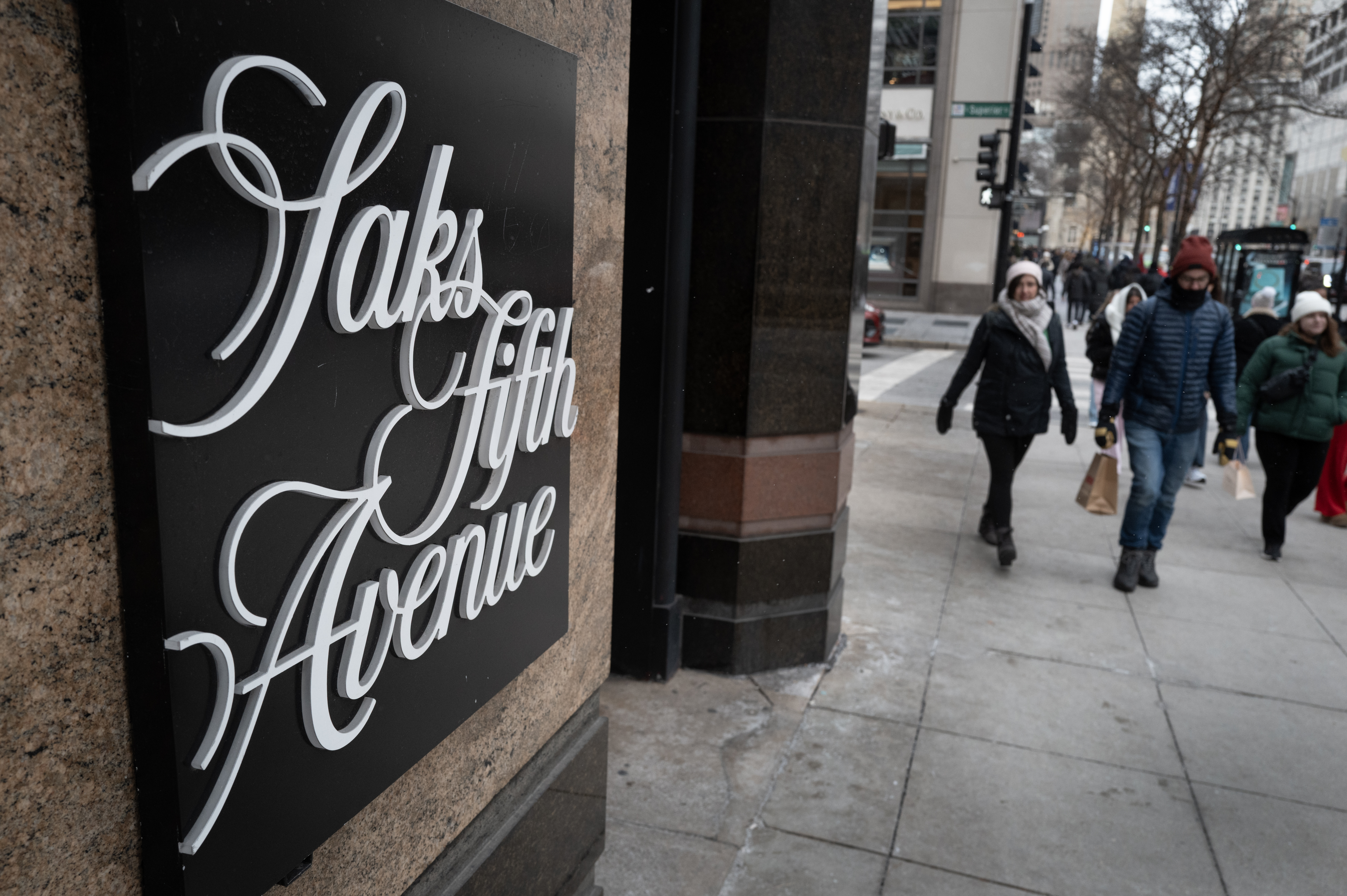








Having just emerged from the bankruptcy proceedings that began last January, Saks is embarking on a new chapter in its history under a new name and with a new growth plan.
Now known as Exemplar Luxury Group, the company aims to move past a radical restructuring by refocusing its business on luxury goods, with the goal of reaching $9 billion in gross merchandise volume by 2030.
Emerging from bankruptcy through deep restructuring
After nearly five months in court-supervised restructuring, Saks Global officially emerged from bankruptcy on June 26. The American retailer, owner of the Saks Fifth Avenue, Neiman Marcus, and Bergdorf Goodman brands, now operates under the name Exemplar Luxury Group.
This restructuring was accompanied by a massive financial turnaround: the group reports having reduced its debt by approximately 75%, while the former shareholders were completely wiped out as part of the reorganization plan. The new shareholder base is now dominated by the creditors who supported the restructuring, notably the funds Pentwater Capital Management and Bracebridge Capital.
The retail network has also been significantly reduced. Exemplar Luxury Group now has only 49 stores, following the closure of 62 discount outlets—including 57 Saks OFF 5th stores and the five Neiman Marcus Last Call stores—as well as 15 traditional stores.
A strategy refocused on the most affluent clientele
For Geoffroy van Raemdonck, the group’s CEO, the priority is now to reconnect with a wealthy clientele in a luxury market that has become more demanding.
The company aims to strengthen its positioning in the highest-end products and offer a more personalized experience, relying in particular on its top salespeople and the customer data it has at its disposal. This strategy aims to restore relationships with major luxury brands, which were strained during the retailer’s financial difficulties.
The group has set a goal of increasing its gross merchandise volume to $9 billion by 2030.
The burden of an acquisition that became unsustainable
Saks’ difficulties stem from the acquisition of Neiman Marcus, which was completed in 2024 for $2.7 billion. This acquisition significantly increased the group’s debt at the very moment the global luxury market was slowing down.
The decline in demand, combined with growing pressure on margins, quickly weakened the company’s cash flow. Delayed payments to certain suppliers strained relationships with several major brands, while the group was forced to discontinue certain initiatives, notably its controversial partnership with Amazon, which was deemed incompatible with the image sought by many luxury brands.
Read also > Saks Global receives court approval for its reorganization plan
Featured photo : © Getty Images