




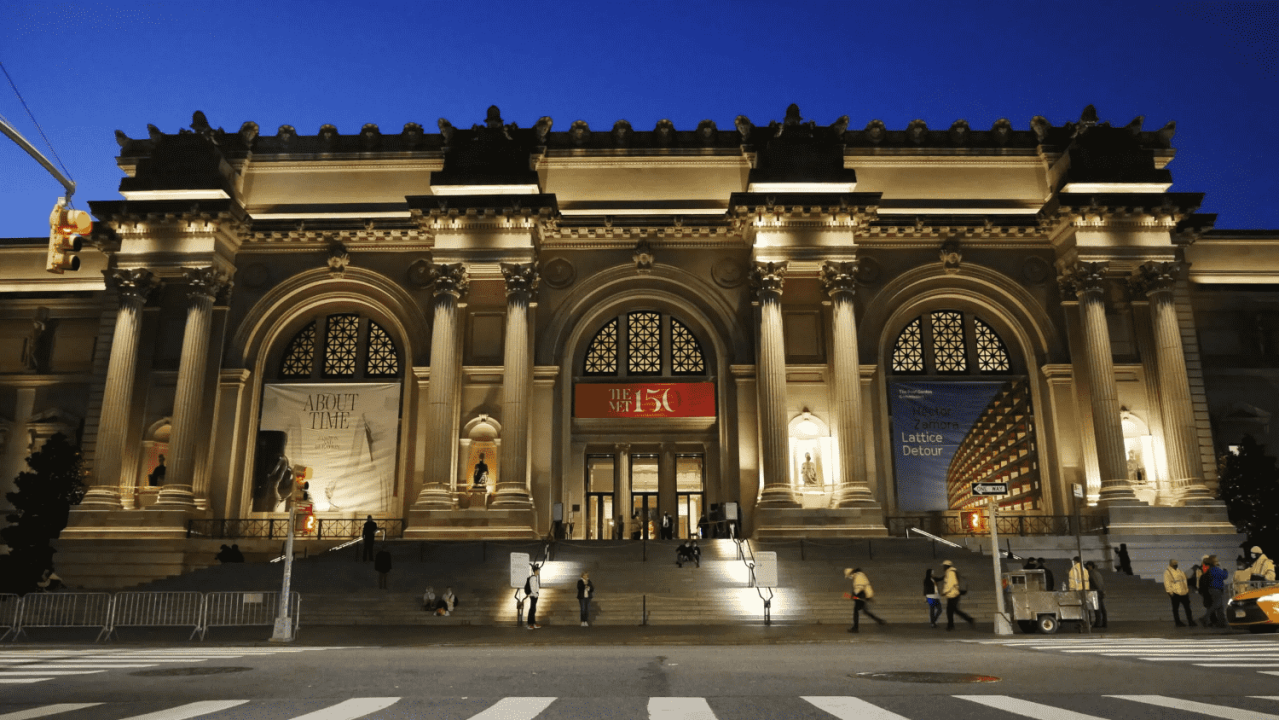








With its star-studded guest list, breathtaking outfits, and impressive array of luxury fashion houses, the Met Gala is undoubtedly the most glamorous red carpet event of the year. What started out as a simple charity dinner to fund the fashion department of the Metropolitan Museum in New York has become an unmissable showcase for luxury brands, who spare no expense in dressing the world’s most influential cultural figures.
Organized by Vogue (Condé Nast) on the first Monday in May at the Metropolitan Museum of Art (or Met) in New York, the Met Gala is, alongside the Cannes Film Festival, one of those events that makes everyone’s eyes sparkle.
But behind this fusion of fashion, art, and pop culture lies a fundraiser aimed at enabling the Costume Institute, the Met’s fashion department, to finance its exhibitions, the maintenance of more than 33,000 pieces, and future acquisitions. It is the only department in the museum that has to finance its own activities.
To achieve this, former editor-in-chief of Vogue USA, Anna Wintour, helped raise the ticket price, which is now largely, if not entirely, covered by the brands themselves. These brands see the “Super Bowl of fashion” as an opportunity to showcase their most beautiful haute couture creations on some of the world’s most fashionable celebrities and thus benefit from unparalleled media exposure.
In addition, the Met Gala heralds the opening of the museum’s major fashion exhibition each year, which this year is dedicated to the figure of the black dandy and the importance of clothing in black identity with Superfine: Tailoring Black Style, scheduled to run from May 10 to October 26.
Seven centuries of fashion
What was the Museum of Costume Art before its merger with the Met in 1946 was initially the brainchild of two art and theater enthusiasts, the Lewisohn sisters, who donated historical costumes to the museum in 1937.
Through their donations, Irene and Alice helped bring fashion to the museum well before Yves Saint Laurent (in 1976), thereby legitimizing the artistic dimension of the discipline.
This collection would serve as the basis for the 33,000 pieces that now make up the museum’s collections, representing seven centuries of fashion and accessories for men, women, and children, from the 15th century to the present day.
And the Met had its Gala
The very first edition of the Met Gala in 1948 consisted of a dinner and evening show called “The Costume Institute Benefit,” conceived by Eleanor Lambert, then high priestess of American fashion. While the event was primarily intended to fund the fashion department recently integrated into the Met, it was also, even at that time, about raising the status of American fashion on the international stage, 25 years before the Battle of Versailles episode. This fashion competition, organized by Baroness de Rothschild in the famous château in 1973, pitted the greatest French couturiers, such as Yves Saint Laurent, Pierre Cardin, and Hubert de Givenchy, against American designers such as Oscar de la Renta and Anne Klein Halston.
Since 1948, more than $223.5 million has been raised through the Met Gala, thanks to luxury brand sponsorship and increased ticket prices. In 2022 alone, the event broke a new record with $17.4 million raised.
However, it wasn’t until the iconic Diana Vreeland, former editor-in-chief of Vogue, became a special consultant that the Costume Institute organized its first themed gala in 1973.
This “spectacular” theme, linked to the Met’s annual exhibition, has since been accompanied by a dress code inviting guest stars and participating brands to push the boundaries of creativity ever further through increasingly sumptuous couture outfits that even flirt with the carnival aspect of fancy dress.
Among the most memorable exhibitions at the Met are “Heavenly Bodies” (2018); “Camp: Notes on Fashion” (2019), “Karl Lagerfeld: A Line of Beauty” (2023) and “Sleeping Beauties: Reawakening Fashion” (2024). “Heavenly Bodies,” which included rare liturgical garments on loan from the Vatican, attracted more than 1.65 million visitors.
A $75,000 golden ticket
In addition to a preview of the exhibition opening the following day, guests are treated to a cocktail reception—during which the famous red carpet takes place—and an official dinner. In keeping with its desire to reflect major societal changes, the dinner has been entirely vegan since 2021.
While an individual ticket to the inaugural Met Gala cost just $50, in 2024 you had to pay $75,000 (a 50% increase on the previous year) to be in with a chance of attending the event.
“In with a chance” because, as the Americans say, the Met Gala is renowned for being a ‘Money Can’t Buy Event’. You still have to be previously approved by Anna Wintour herself, who has discretionary power over the 600 to 700 hand-picked guests. The former editor-in-chief, who joined American Vogue in 1995, has the final say on everything from the guest list to their evening attire, as well as the decoration and organization.
With its influential network (in fashion, entertainment, sports, and politics), the Met Gala has become a global media machine, followed live on social media and analyzed from every angle.
While the selection criteria and photographs of the ceremony (since 2015) remain a closely guarded secret, it’s safe to say that it helps to be in the news, be an ambassador or friend of a leading brand.
Amy Odell, author of Anna: The Biography, revealed to Time magazine that the price of an invitation varies according to current events and depends on a person’s cultural significance. Not to mention that an invitation does not extend to a lover. And if both members of a couple are invited, they are always seated separately to maximize the networking effect desired at the Met Gala.
But where Anna Wintour has been most innovative, both in terms of financial and media impact, is in the concept of sponsored tables. Major fashion and luxury houses are willing to pay at least $350,000 for a table of ten, which means that stars no longer need to pay out of their own pockets.
In exchange, the brands invite celebrities to wear their designs for the evening, guaranteeing their brands global visibility. It’s a clever approach that combines philanthropy, prestige, and marketing.
Brands not only pay for the tickets for their protégés, friends, and other ambassadors, but according to Le Monde, they are also required to finance their travel, hotel, makeup artist, hairdresser, car, and security guards.
Finally, some brands, such as Loewe, Tiktok, and OpenAI in 2024, even finance the organization of the Met Gala. The previous edition saw Shou Zi Chew, the CEO of the social media platform Tiktok, mingle with high-profile guests such as the star of Dune 2 and the phenomenon Challengers, actress Zendaya.
Last year, the museum also collaborated with the American artificial intelligence giant to allow visitors to the Met to converse with a 20th-century New York socialite, Natalie Potter, and learn more about the cathedral train dress she wore at her wedding on December 4, 1930.
The event’s ultra-high media coverage led the late André Leon Talley, former editor-in-chief of Vogue, to describe the Met Gala as the real “Super Bowl of social fashion events.” For Michael Burke, former CEO of Louis Vuitton, the evening represented the “high point” of his career and a “very serious promotional machine.”
From broadcasting rights to merchandise sales, sponsorships and exclusive partnerships, every aspect of the Met Gala is subject to a monetization strategy.
Read also > [Luxus Magazine] MET Gala 2023: the best looks of the evening
Featured photo: © Metropolitan Museum New York (Met)