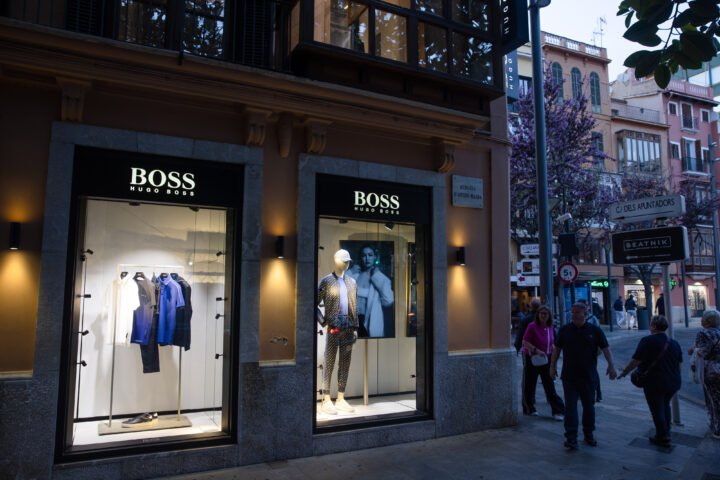












French luxury brands embody unrivaled expertise, admired creativity, and undisputed global influence. But behind the shop windows of Place Vendôme and Avenue Montaigne, the teams that bring these brands to life are now spread across Paris, Milan, Tokyo, Dubai, and New York.
In this globalized context, ignoring cultural differences is no longer a simple managerial error: it is a strategic risk. And this risk is far from marginal: according to a McKinsey study, 70% of international expansion failures are due to a poor understanding of local cultural factors.
Luxury: a global showcase but fragile management
Luxury is multicultural by nature. Its employees are international, its customers expect special treatment tailored to their cultural codes, and its leaders navigate between several continents. This diversity is an extraordinary asset… provided you know how to manage it.
Feedback that is too direct is perceived as rude in Asia. A meeting organized without taking time zones into account can be seen as disrespectful. A typically French confrontation of ideas can be interpreted as aggression.
In luxury, where every detail counts, these misunderstandings are not insignificant: they can undermine internal cohesion, slow down projects, and even affect the customer experience and brand image.
Intercultural intelligence: a human and business lever
It is time to consider intercultural intelligence not as a “soft” skill, but as a strategic performance lever on a par with creativity or operational excellence.
Sociologist Geert Hofstede has shown that cultures differ in particular in their relationship to power, time, and communication. These dimensions are intrinsic to luxury: hierarchical distance in workshops, strict punctuality at fashion shows, or, conversely, flexibility with time in certain emerging markets. Ignoring these differences leads to costly misunderstandings. Conversely, leaders who are able to decode and adapt their approaches transform this complexity into a sustainable competitive advantage.
Mistakes to avoid
In the real world of business, several recurring pitfalls still hinder this approach:
- Believing in the universality of one’s management style: applying a single style everywhere is tantamount to turning a blind eye to the real diversity of teams.
- Relying on stereotypes: reducing an employee to their passport means forgetting that each career path is unique.
- Poorly calibrated communication: direct French-style feedback can offend an Anglo-Saxon employee, while respectful silence can be perceived as disengagement.
- Standardizing leadership: while some people expect clear directives, others thrive on autonomy.
These pitfalls, repeated on a daily basis, weigh on efficiency, motivation, and talent retention.
Applying luxury standards to management
Luxury is defined by its obsession with detail, its constant pursuit of excellence, and its ability to accurately address customers around the world. Why not apply the same standards to teams?
Training managers, creating spaces for listening, developing a culture of trust that respects local codes: these efforts are now as strategic as a successful product launch. They make it possible to anticipate tensions, streamline collaboration, and transform cultural diversity into a real driver of innovation. The sector, which has always made detail its trademark, has a unique opportunity here: to elevate its management and organization to the level of its art.
In 2025, cultivating intercultural intelligence is no longer an option for French luxury. It is a prerequisite for preserving its global influence, protecting its image, and capitalizing on the wealth of its talent. Because luxury, which is universal by nature, must also become exemplary in the way it brings cultures together. This is not just a question of management. It is a new definition of excellence.
Read also > [COLUMN] Luxury and Gen Z: rethinking talent attraction
Featured photo: Rodion Kutsaiev/Unsplash