









Luxury is going through an unprecedented period of tension. Slowing sales, questions about desirability, rising widespread mistrust: the warning signs are mounting. Faced with this instability, luxury brands have, almost mechanically, reinforced their strategies of exclusivity, thinking they would find a bulwark there.
But what if the problem were not a lack of exception, but an excess of polarization? What if, in its efforts to protect the top, luxury were weakening its entire relational pyramid?
Beyond luxury fatigue: a crisis of perceived value
There is a lot of talk about luxury fatigue. The term is convenient. It suggests a temporary, almost capricious weariness, yet masks a more structural reality: luxury is currently undergoing a crisis of perceived value. Since 2019, many categories have seen their prices rise by 40 to 50%. At the same time, perceived quality has not kept pace, and in some cases has even declined. As a result, 60% of customers say they have given up on a purchase for this reason (EY, 2025). It is not desire that is waning, but confidence.
Fatigue is now widespread. Aspirational consumers are dropping out: nearly 35% have reduced or stopped their purchases over the last twelve months (BCG/Altagamma). Affluent consumers are becoming more discerning. And even the most committed VIC customers are reaching saturation point. The rise of dupe culture, used by 71% of Gen Z, is not a rejection of luxury, but a symptom of a question that has become central: what am I really buying?
Faced with this diagnosis, a major confusion has set in: the belief that the solution lies in an automatic move upmarket, where the higher you climb the pyramid, the more the customer automatically expects hyper-exclusivity. However, aspirational, affluent, and VIC customers share a common fatigue: the standardization of experiences and the disconnect between price and proof.
The problem is not the existence of the pyramid, but its misinterpretation. Under economic pressure, brands have treated it as a funnel for concentrating resources: the higher you go, the more you invest. Time, attention, products, and experiences have been sucked toward the top, creating a polarization that is now weakening the entire structure.
The illusion of the summit: hyper-exclusivity as a relational dead end
Faced with the slowdown, many luxury brands have chosen to “protect the summit.” The figures justify this: around 2% of customers can account for up to 30% of sales, depending on the category. The problem, therefore, is not the attention paid to VICs, but the way in which it has been conceived. In recent years, the response has often taken the form of one-upmanship: private salons outside the store, secret locations, entirely one-to-one experiences, entire teams mobilized for a single customer. On paper, everything is flawless. In reality, this approach can prove paradoxical.

A VIC welcomed alone in an empty space, with everyone focused on them, doesn’t always feel privileged. They may feel a weight. The weight of expectation. The weight of the effort made. The more diffuse weight of having to live up to what is being offered. The attention becomes intense, almost heavy. The silence, too emphatic. Time becomes too concentrated. The experience ceases to be a space of desire and becomes a stage. What we thought was hyper-care can then turn into an implicit injunction to buy. In these ultra-dedicated settings, the act of purchasing is no longer free: it is expected. And this expectation generates relational fatigue, even among historically very committed customers.
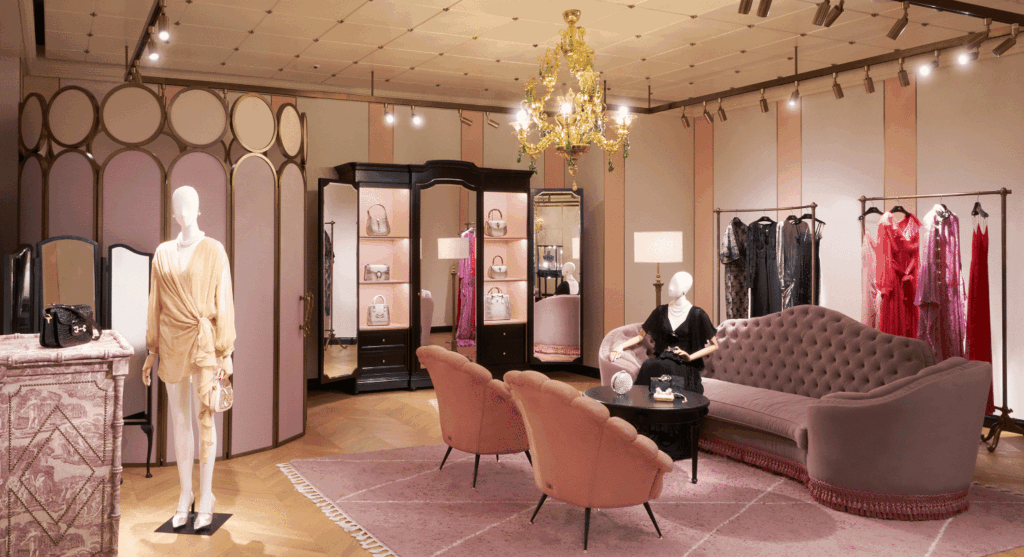
When hyper-exclusivity isolates, it often produces the opposite of the desired effect. It stiffens the relationship instead of nurturing it. It strips luxury of an essential dimension: its collective energy. Some Houses are already observing this: over-solicited VICs are stepping back, not out of disaffection, but out of emotional saturation. Because a VIC is not an archetype. They are not constantly seeking grandeur. They may want to enter a boutique like any other customer, browse without being solicited, move around freely, and find a form of normality in a world they already know. Constantly imposing a dedicated path on them is to take away that freedom.
Bringing people together rather than isolating them: exclusivity as community
The problem with luxury today is not the existence of the pyramid, but its management by silos. By polarizing paths, with stores on one side and above-ground VIP programs on the other, brands weaken the entire relational structure. They erode their cultural foundation, overexpose their most committed customers, and break the aspirational projection. This rigid segmentation has an invisible cost. By shifting scarce resources—exclusive pieces, human attention, expertise—to ultra-dedicated but low-energy spaces, luxury impoverishes its core boutique. Yet this is where its cultural function comes into play: nurturing the collective dream, showcasing expertise, and bringing the brand to life as a living universe. When exceptional pieces disappear behind closed doors, when the craft becomes invisible, it is the very authenticity of the House that is undermined.
Because exclusivity is not an act of exclusion. On the contrary, it is a way of bringing people together.
The question is therefore no longer: how can we isolate ourselves further?
But: how can we bring people together, at the right time, in the right way, around something truly precious? This means reintroducing porosity into the customer journey, without ever diluting value. Some Houses are leading the way by designing the boutique as a layered rather than segmented space: shared moments, where you can feel the energy of the brand community, storytelling, creation, cultural events, and more offbeat, more confidential moments, activated according to the context and intensity of the relationship. Exclusivity no longer comes through closure, but through the level of interpretation and access.
At Saint Laurent, design objects and collector’s items are fully integrated into the store experience. Everyone can see them, but only some can access them. The dream circulates; exclusivity is expressed through use, not invisibility.
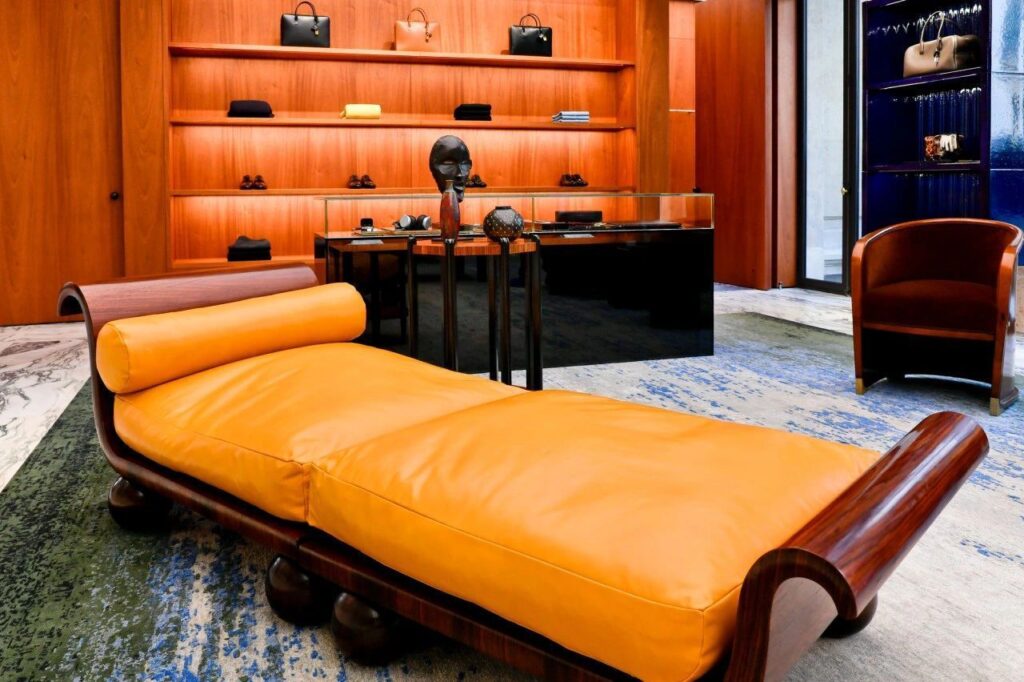
At Chanel, exclusivity is not based on removing the customer from the store, but on the selective activation of levels of confidentiality within the same experience. A sliding mirror, a private lounge designed as a natural extension rather than a bunker. The store remains fully visible and aspirational.
Beyond the store, this approach extends to a renewed hosting posture. The brand invites people into its home. It brings together affinity groups, not by status, but by sensibility, to convey what truly underpins its value. Workshop visits, masterclasses, and meetings with artisans shift the relationship from status to meaning, from a demonstration of power to proof of authenticity.
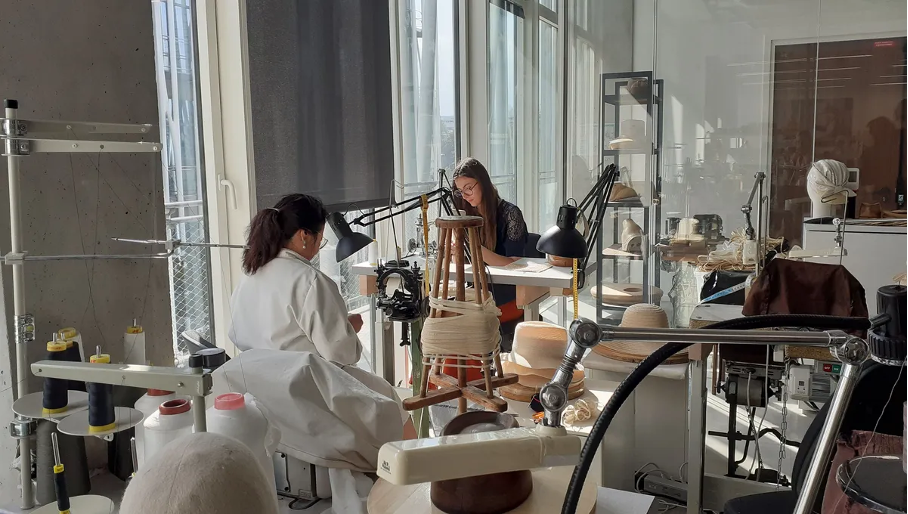
Luxury does not suffer from an excess of exclusivity, but from an uneven distribution of exclusivity. By concentrating value at the top and making it invisible elsewhere, luxury brands have weakened their cultural foundation, stiffened their relationship with their most committed customers, and broken the dynamic of projection that is the strength of luxury.
Reintroducing porosity does not mean opening up access, but restoring clarity.
Seeing without owning. Understanding without accessing. Circulating without being assigned a status.
Exclusivity is not reinforced by isolation, but by a brand’s ability to maintain a common, stratified, coherent framework where multiple uses can coexist without fragmenting the experience. In a context of mistrust, luxury no longer defends itself through one-upmanship.
It maintains itself through the accuracy with which it makes its value perceptible.
Read also > [COLUMN] Storytelling is dead, long live storyproving!
Featured photo: Red Room at Printemps New York © Printemps New York