











In recent years, luxury brands have been entering the world of video games more than ever before, multiplying collaborations, collector’s items, and digital incursions to establish a lasting presence in a world long considered far removed from their DNA.
The integration of luxury into video games is not just a passing trend. While the phenomenon has been particularly intense due to the COVID-19 pandemic, it now reflects a profound transformation in consumption and expression patterns. Whether through immersive spaces, objects of all kinds, or real-world integration inspired by gaming, brands are reinventing their strategies through this digital channel in order to reach a new generation of customers globally.
High-end skins
Among the most visible objects at the intersection of luxury and gaming, customizable items, whether virtual or real, occupy a central place. In 2022, Lacoste introduced its crocodile into a dedicated space on Minecraft, offering an experience consisting of in-game activities accompanied by a physical clothing collection.
For its part, Moncler had worked with Fortnite during Season 8 of Chapter 2 in 2021, launching a digital collection called “Moncler Classic Set.” This collection included two skins and accessories (back bling, pickaxe, glider) featuring an alpine design. What made it special was that the outfits were reactive: their color changed from light to dark depending on the player’s altitude in the game.
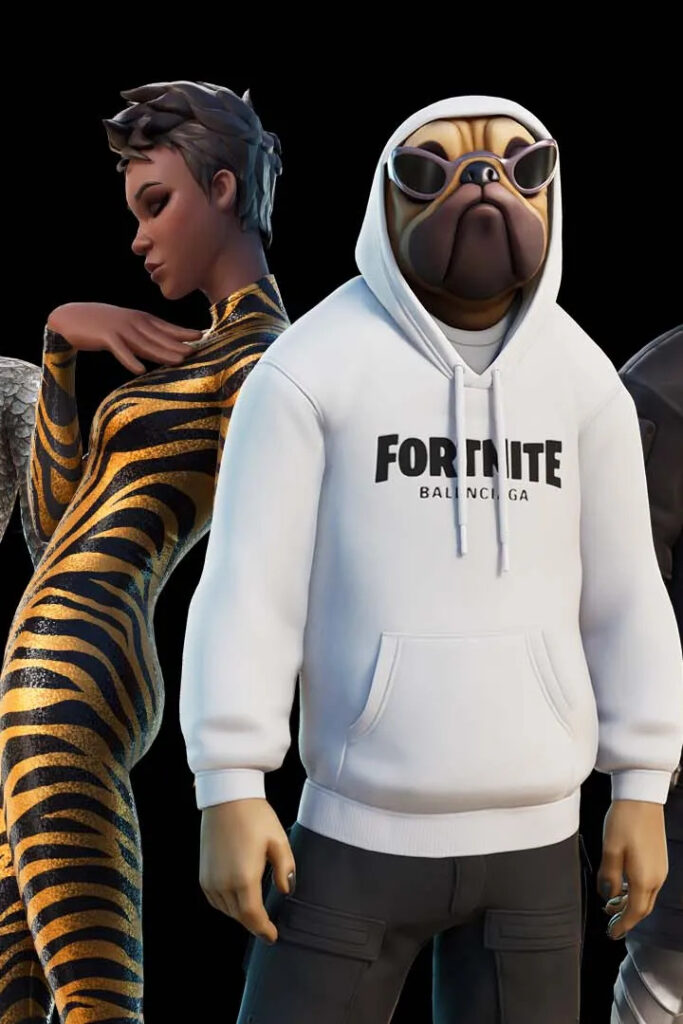
Balenciaga also followed suit the same year as Fortnite, offering digital outfits and accessories. Some items from the virtual collection were then redesigned to be sold in the real world, as part of a strategy where items are tested digitally to gauge their success before being sold in stores.
Balenciaga is continuing its exploration of gaming, as the Kering group brand announced a few days ago a strategic partnership with the online shooter game PUBG. The fashion house is offering exclusive content such as digital outfits inspired by its Winter 2025 Couture collections, as well as accessories such as a blue fur helmet. The operation is accompanied by a physical range available in certain stores, including T-shirts, caps, and charms.
In 2024, Gentle Monster, a Korean brand renowned for its avant-garde eyewear frames, entered the world of combat games by partnering with one of the most iconic games : Tekken 8.
Promoted by one of the greatest antagonists in video game history, Kazuya Mishima, the silver INFERNO frame was directly inspired by the character’s colors and devil horn-shaped temples. Released at the end of last year, it was a huge success, selling out two days after its release. At the same time, the game also included a customizable Gentle Monster outfit for the game’s fighters.
Luxury redesigns technological objects
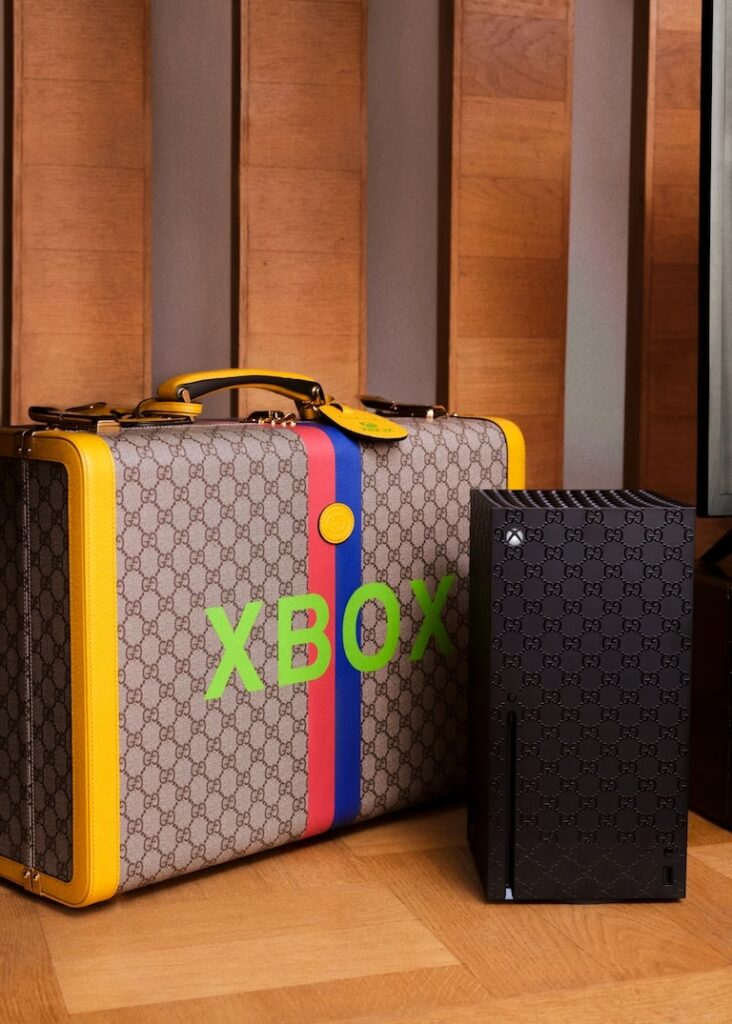
Partnerships between luxury brands and video game companies can sometimes take on more global forms. For example, to mark its centenary in 2021, Gucci designed a collector’s edition Xbox Series X with its briefcase, finished with high-end details and sold as a collector’s item intended to bridge the gap between the brand’s heritage and gaming culture, which went on sale at a price of $10,000 for a hundred copies.
A year later, Burberry had the honor of dressing up Microsoft‘s console as part of a first partnership between the British brand and the game Minecraft.
PlayStation also had its own partnership, but this time it did not directly involve the game console. In 2021, Xbox’s direct competitor teamed up with Balenciaga to release a range of clothing featuring the PlayStation 5 logo. The success was only relative : the collection was heavily criticized for its simplicity and, above all, its price : a T-shirt costing €510 and a hoodie costing €665 !
Some fashion houses have chosen to go far beyond a simple collaboration with the console, opting instead to mark the occasion by embracing the e-sports trend. None other than Louis Vuitton designed a unique travel case for the League of Legends World Championship trophy in 2019. The LVMH brand then extended this collaboration with aesthetic creations linked to the world of gaming, marking the entry of Louis Vuitton’s refined craftsmanship into the competitive world of video games.
Automobiles : a safe bet in gaming
On virtual racetracks, prestigious car brands find a natural outlet : Lamborghini, Bugatti, Aston Martin, Porsche, and Ferrari all gather there to showcase their most beautiful supercar models. In Forza Horizon, the wealth of vehicles on offer provides luxury manufacturers with an immersive showcase where design and performance are tested and approved. These appearances help to perpetuate the myth of automotive brands and spark conversations about models that, in some cases, have never been sold in large numbers.
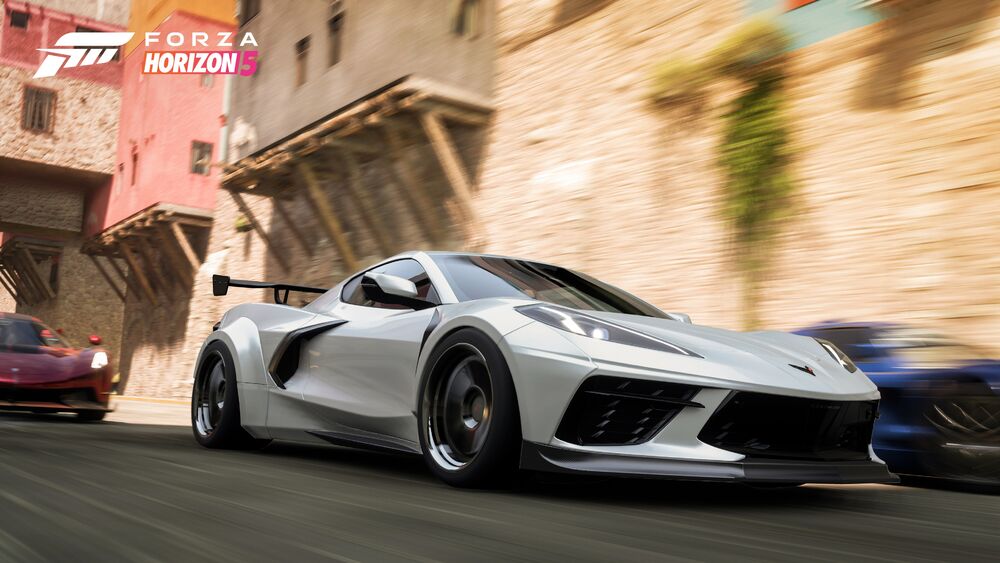
Other iconic franchises also contribute their own take on automotive luxury. In Burnout, the speed and style of the cars allow players to feel the power of prestigious vehicles. The Need for Speed game focuses on free customization and tuning, offering brands the opportunity to showcase iconic models under the creative eye of the player, while Gran Turismo emphasizes technical and aesthetic fidelity, making each car a true digital showcase, combined with exclusive collaborations with luxury brands for special editions.
In the summer of 2022, Gran Turismo entered into a partnership with a brand completely unrelated to the automotive sector : Dior. Former creative director of menswear collections Kim Jones designed a digital wardrobe for the driver, as well as a vintage car customized to reflect the brand’s DNA.
The Italian brand Bvlgari also took a step forward in its exploration of gaming with the creation of the virtual concept car BVLGARI Aluminium Vision Gran Turismo for Gran Turismo 7. Unveiled at the Gran Turismo World Series finals in Barcelona in December 2023, this initiative marked the brand’s first foray into the virtual automotive world. The brand took advantage of this opportunity to launch two limited editions of the BVLGARI Aluminium watch, with a special engraving celebrating the 10th anniversary of the Vision Gran Turismo collection.
Gucci, specialist in the genre
Gucci has adopted a resolutely immersive strategy in the world of video games, particularly during lockdowns, by creating virtual experiences designed to last, such as Gucci Town on Roblox. Rather than limiting itself to a temporary event, the fashion house has literally built a permanent digital city : a central piazza surrounded by spaces such as the “Vault Plaza,” the “Creative Corner,” and a mini-shop where users can buy virtual Gucci items to dress their avatars.
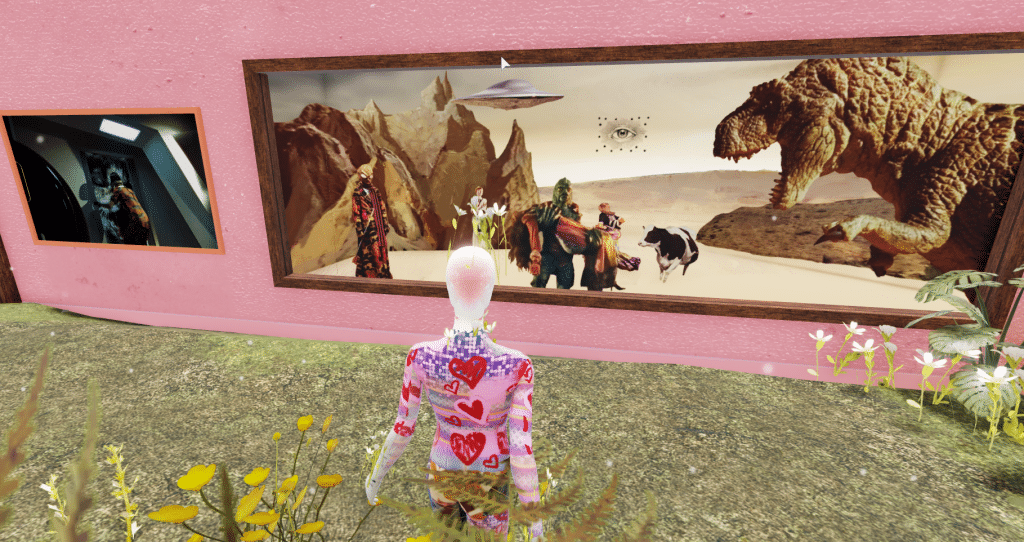
Gucci’s first foray into Roblox dates back to the Gucci Garden Archetypes event, coinciding with the brand’s centenary. In this digital installation, avatars start out as neutral mannequins : as they explore, they absorb patterns, colors, and shapes inspired by the brand’s iconic campaigns. The event was so successful that some Gucci items, such as a virtual bag, sold for exorbitant prices : $4,000!
The brand also made an appearance in mobile games, notably Tennis Clash. Starting in June 2020, players were able to participate in a tennis tournament called Gucci Open, dressed in virtual outfits designed by the fashion house and inspired by real items. Better yet, it was possible to purchase these outfits in the Gucci store on the official website, recreating a direct link between the virtual experience and the real wardrobe.
Gucci has also ventured into the world of League of Legends through a bold partnership with esports organization Fnatic. In 2020, the luxury brand unveiled a very limited edition watch, the Gucci Dive, directly inspired by Fnatic’s LoL team : it features their logo and black and orange colors on a 40 mm steel case.
The Italian firm didn’t limit this operation to a physical product: it also created a mini-game, Gucci Dive, integrated into its own app. In this arcade-style game, players pilot a submarine bearing the Fnatic logo in an underwater cave, collecting coins and dodging obstacles.
Opportunity or risk ?
While these collaborations open up new sources of revenue and visibility for luxury brands, they also raise questions. The rise of skins and other paid digital cosmetics raises the question of the value and monetization of virtual identity. The conversion of prestige symbols into paid digital skins redefines the notion of scarcity : some items remain rare due to their physical production run, others due to their status in a game. On the one hand, this can create marketing windfall effects, but it can also undermine the notion of exclusivity.
At the same time, fashion houses must preserve their artistic legitimacy and not damage their image through a succession of partnerships, as was the case for Balenciaga in 2021, which entered into a series of expensive partnerships that were of poor quality in terms of products.
For many players, the shift to digital also raises ethical and environmental issues : energy consumption of infrastructure, sustainability of digital objects, and transparency on monetization methods. Some brands tend to present these initiatives as less materialistic, while others point to the environmental cost of these digital infrastructures. These concerns are increasingly forcing fashion houses to think about these collaborations in the long term.
Read also > Gentle Monster x Tekken 8: when reality goes beyond video games
Featured photo : © Burberry