












2026 marks the 50th edition of the Rolex Awards. Unlike other CSR-oriented awards, the Rolex Awards recognize sustainable initiatives that are still relevant today. This year’s winners are particularly noteworthy as they coincide with the 100th anniversary of the Oyster model, the starting point for the award and the world’s first fully waterproof wristwatch.
“For nearly a century, Rolex has been supporting explorers. Over time, the desire for discovery has been enriched by a commitment to preserving the planet,” explains the famous Swiss manufacturer.
Launched in 1976, the Rolex Awards recognize and support ongoing projects around the world that are bringing about significant change in the fields of the environment, science, health, and technology.
To date, the award has honored 165 winners whose projects have contributed to planting more than 50 million trees, protecting 137 endangered species and 32 major ecosystems, and developing 50 innovative technologies, according to the brand with the crown logo in its press release.
Pandas, bees, and forest ecosystems
The Rolex Awards were created in 1976 to celebrate the 50th anniversary of the iconic Oyster model, the first waterproof wristwatch created by Rolex in 1926.
The 2026 edition highlighted five new winners, each leading innovative, high-impact projects that embody the ambition to protect our planet for future generations.
Originally from China, Binbin Li is committed to protecting wild pandas. This environmental scientist is working with rural communities to develop sustainable grazing models that combine the preservation of bamboo forests with the protection of wild giant pandas.
Not far away, in Indonesia, Farwiza Farhan has made it her mission to protect a forest on the island of Sumatra. As a forest conservationist, she mobilizes women and local communities to defend the Leuser ecosystem, the last place on our planet where elephants, tigers, orangutans, and rhinos still coexist in the wild.
In addition to Asia, Africa is the other continent in the spotlight. In West Africa, Pardis Sabeti seeks to prevent epidemics. The geneticist is developing innovative diagnostic tools to detect and contain viral epidemics before they spread on a large scale. For her part, Rachel Ikemeh, originally from Nigeria, is implementing a community conservation model in the Niger Delta, protecting thousands of hectares of forest and endangered species while sustainably improving local livelihoods.
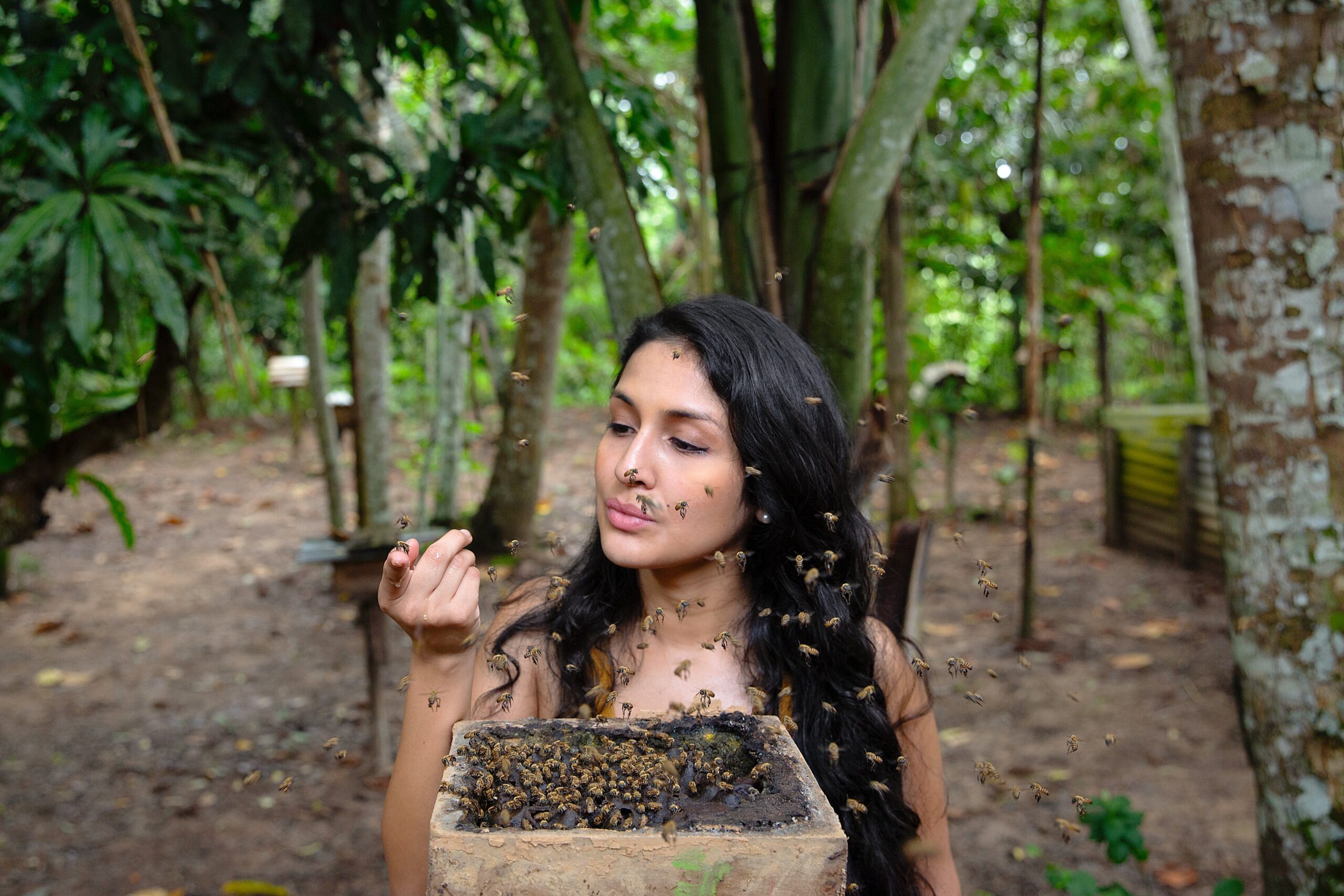
Finally, in Latin America, and more specifically in Peru, Rosa Vásquez Espinoza works daily to save the bees of the Amazon and thus preserve the lungs of the world. This biologist is renowned for being the first to scientifically establish the link between deforestation in the Amazon and the decline of stingless bees, an essential pollinator of endemic plant species.
An award open to all
In 1976, the Rolex Awards for Enterprise chose to reward innovative projects, without restriction of gender or nationality.
Although very much in the minority at the outset (5% in 1976), over the years more and more women have begun to apply. The ratio thus grew to 39% in 2010. In 2006, the number of female candidates even exceeded that of men for the first time.
More recently, the Rolex Awards have placed greater emphasis on women’s achievements. And the 2026 edition is entirely dedicated to women.
The Rolex Awards are a continuation of the Perpetual Planet Initiative, launched in 2019. This initiative supports concrete projects with a strong environmental impact, led by explorers, researchers, and committed citizens.
Read also > [COLUMN] Second-hand goods, a strategic lever for luxury competitiveness
Featured photo: © Rolex