



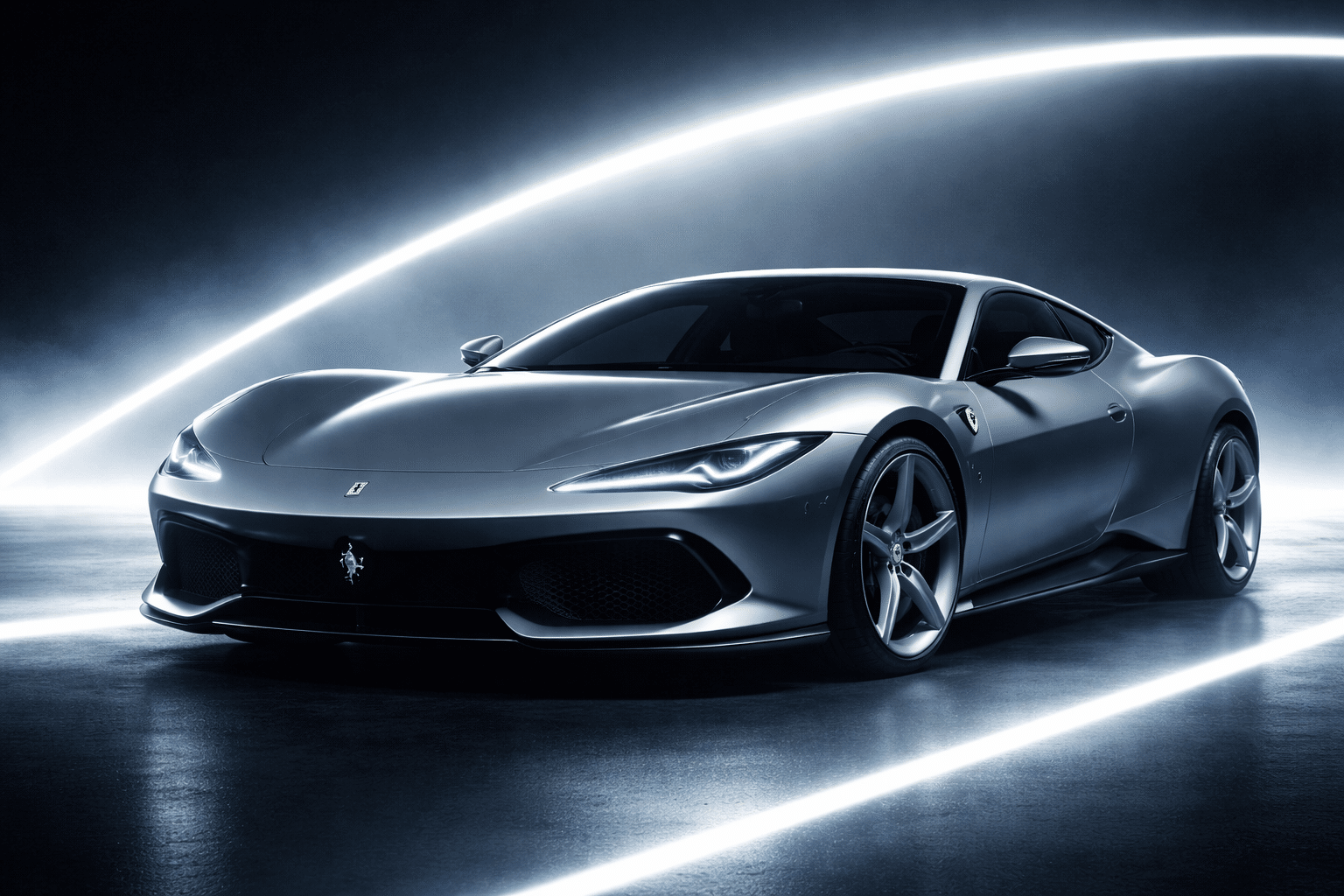






Italian automaker Ferrari has vigorously denied reports suggesting that purchasing its first electric car, the Luce, has become a prerequisite for accessing its most exclusive future models. This controversy echoes the accusations leveled at Hermès regarding its famous Birkin and Kelly bags. Beyond the denials, these cases illustrate the tensions inherent in the scarcity strategies of major luxury brands.
Ferrari’s First Electric Car Met with Caution
The controversy arose after reports surfaced that certain Ferrari customers had been encouraged to purchase the new Luce – the brand’s first 100% electric vehicle -in order to preserve their privileged status and their chances of gaining access to future limited editions.
The reception for the Luce, however, has been more mixed than that typically reserved for the brand’s new models. As the first all-electric Ferrari in history, this model marks a break from several hallmarks that have built the Italian automaker’s legend. Its four-door, five-seat architecture, its more mainstream design, and the absence of the traditional internal combustion engine have raised reservations among some enthusiasts and collectors.
Following its official unveiling in late May, Ferrari’s stock price fell on the market, as some investors questioned the group’s ability to preserve its identity while successfully transitioning to electric vehicles. On social media and in various specialized publications, many purists lamented the loss of the distinctive sound of the V8 and V12 engines, considered an essential part of the Ferrari experience. The automaker nevertheless reports strong commercial interest in the Luce, which could also appeal to a new customer base more receptive to electric technology and environmental concerns.
Ferrari Denies Any Link Between the Luce and Access to Limited-Edition Models
The automaker, based in Maranello in the Emilia-Romagna region, quickly denied these reports. Enrico Galliera, Ferrari’s director of marketing and sales, stated that requiring the purchase of the Luce as a condition for accessing other models would be a “huge mistake.” According to him, selling a vehicle to a customer who does not want it could create “negative ambassadors” and weaken the model’s residual value.
Ferrari does, however, acknowledge the existence of an allocation system that prioritizes its most loyal customers. In 2025, 84% of new vehicles were sold to customers who already owned a Ferrari, and more than half were sold to collectors who own multiple models of the brand.
This selection policy is not new. The rarest models are traditionally reserved for customers most deeply engaged in the Ferrari ecosystem, whether in terms of their purchase history, their participation in the brand’s events, or their long-term loyalty.
The Hermès Precedent
This controversy echoes the one that affected Hermès in the United States. In 2024, a class-action lawsuit accused the French fashion house of implicitly requiring certain customers to first purchase other products – shoes, scarves, jewelry, or ready-to-wear -before they could hope to be offered a Birkin or a Kelly bag.
Hermès has always denied the existence of such a formalized practice. The brand emphasizes that the allocation of its most sought-after bags depends on numerous criteria, including product availability and the relationship maintained with customers. Nevertheless, the perception of a “mandatory purchasing process” remains widespread among certain consumers and industry observers.
Scarcity as a Driver of Desire
In both cases, the issue goes beyond the simple sale of a product. It touches on the very heart of the luxury business model: the management of scarcity.
Both Ferrari and Hermès cultivate demand that exceeds supply in order to preserve their exclusivity and their ability to set prices. This strategy greatly contributes to the desirability of their products but also exposes the brands to criticism when the mechanisms for gaining access appear opaque.
While Ferrari denies any link between the Luce and its future limited editions, just as Hermès rejects the idea of a prior purchase requirement to obtain a Birkin or a Kelly, both companies face the same challenge: convincing their customers that rewarded loyalty does not amount to a disguised conditional sale.
As waiting lists grow longer and iconic products become true collector’s items, the line between loyalty programs and privileged access will likely continue to fuel debate within the luxury industry.
Read more > Ferrari enters the electric era with the Luce, but markets remain skeptical
Featured photo : © Ferrari