





At a time when performance dictates brand narratives, the holiday season reminds us of an essential truth: luxury is above all about emotion. This moment in the calendar is not just a commercial peak—it is a privileged space for storytelling, a theater of wonder, a stage where brands can connect with their target audiences. In 2025, certain luxury houses and premium brands have managed to orchestrate this magic, not by multiplying messages, but by focusing on the essentials: sensitivity, memory, and shared beauty.
Emotion as a strategic territory
Storytelling is key during this festive period, when content is in abundance. Some campaigns offer a truly structured, embodied, almost cinematic narrative. This approach is fully in line with emotional marketing, where the brand becomes a catalyst rather than a mere transactional player.
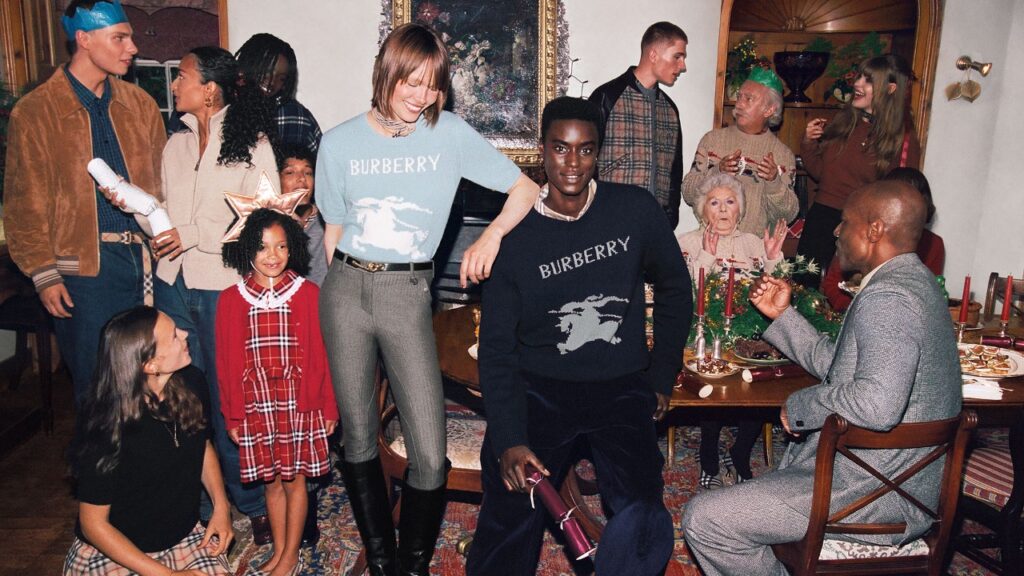
The most striking example does not come from the luxury sector, but from Intermarché, whose Christmas campaign went viral thanks to its narrative accuracy: a story in the style of a modern fable, with a moral, gentleness, and a happy ending. No emphasis on price or product, just an emotion told with delicacy. In the luxury sector, Burberry distinguished itself with a campaign that celebrates British humor and eccentricity through an extravagant dinner party orchestrated by Jennifer Saunders. Here, the strategic approach is based on cultural recognition and a sense of belonging: we witness a family scene that we would love to be a part of. Everything is consistent in the artistic direction, designed as an extension of the brand identity.
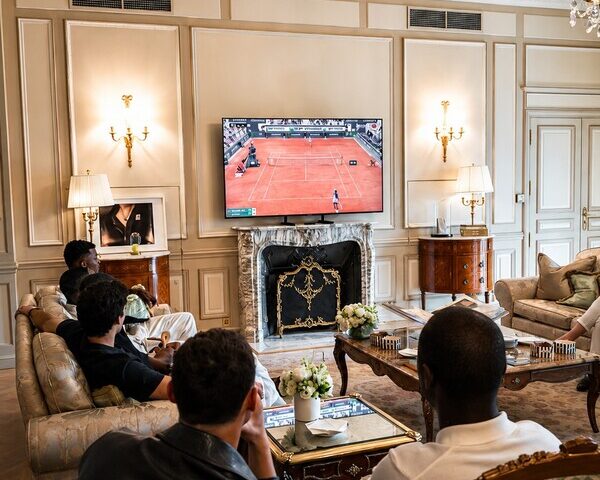
For his part, Brunello Cucinelli, known for his poetic campaigns, takes us to a neighborhood movie theater. The campaign, designed as an aesthetic and introspective short film, explores human relationships in the hushed setting of darkened theaters. The intention here is clear: to make collective viewing a moment of emotional connection, reminding us that “the real wonder is not the film, but the silent bond between those who watch it.”
Masterful orchestration
Beyond the narrative, the strength of brands also lies in their ability to deploy a powerful concept across multiple touchpoints. Enchantment is not just a matter of a beautiful video: it becomes a total, immersive, multisensory experience. It is the coherence of this orchestration between digital, retail, gastronomy, and product that transforms a festive initiative into a strategic engagement device.
At Dior, the magic takes the form of a “Circus of Dreams” in the world of beauty, featuring celebrities, but also in its exceptional locations: a poetic menu created by Anne-Sophie Pic in Beijing, a Christmas log by Yannick Alléno at 30 Avenue Montaigne. Each activation is part of a brand immersion strategy, where the dream appeals to all the senses, without ever forcing a purchase.
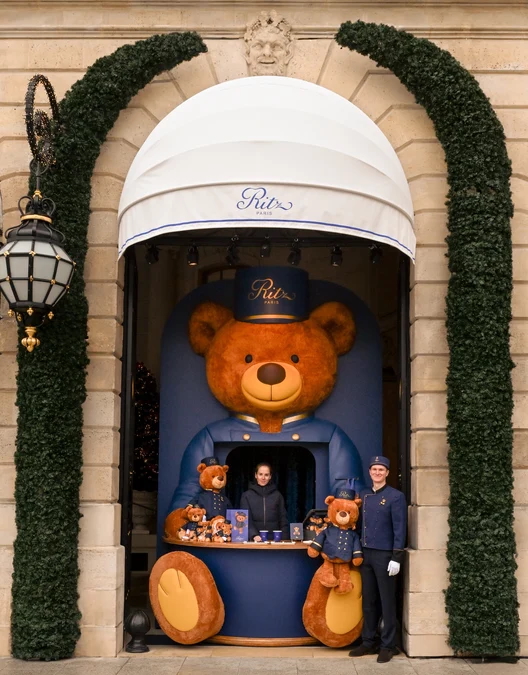
Finally, the Ritz Paris is orchestrating an activation that is as comprehensive as it is poetic, combining immersive retail and digital content. The palace has created an XXL Christmas pop-up in the shape of a Teddy B(e)ar. But the experience doesn’t stop there: an online game invites young and old alike to search for the Ritz’s iconic teddy bear, hidden in different scenes. Each entry gives access to a prize draw, reinforcing community engagement. A masterful 360-degree strategy, where the physical experience is extended by playful online storytelling, activating a sense of privilege, childhood nostalgia, and curiosity.
Reconnecting with childhood memories
Several campaigns share a common theme: childhood as the archetype of pure emotion. By evoking memories, rituals, playful forms, and illustrations, brands are creating campaigns that are as comforting as they are enchanting. It’s a sensitive response to a time when the need for gentleness and beauty is becoming more pressing. The Ritz’s digital game plays on the excitement of hidden treasures, playful quests, and the simple pleasure of finding the solution.
Loewe beautifully embodies this aesthetic with its capsule collection inspired by artist Louis Wain, known for his whimsical cat drawings. Here, products become objects of art, but above all, fragments of a child’s imagination. The deliberately naive and colorful visual universe contrasts with the sophistication of the pieces, a perfectly mastered play on tension that is the signature of the great fashion houses.
Miu Miu, for its part, combines sophistication and playfulness. Its Super 8 campaign, featuring Gigi Hadid and a cast reminiscent of a vintage photo novel, seduces with its regressive softness. On the website, the digital animation entitled “The Holiday Diary” continues the vintage style: users can create a personalized greeting card with stickers, a nod to teenage diaries. We are witnessing an assumed emotional regression, used as a vehicle for connection and lightheartedness.

Enchantment at this time of year is perhaps a necessity. It allows us to suspend time and rediscover what our fast-paced world too often makes us forget: the warmth of a glance, the promise of a story, the delicacy of a detail. Some holiday campaigns remind us that magic does not lie in excess, but in the subtle harmony between emotion, beauty, and accuracy.
Read also > [COLUMN] Storytelling is dead, long live storyproving!
Featured photo: © Brunello Cucinelli