












In Tokyo, the jirai kei movement—literally “landmine style”—attracts thousands of young people who deliberately cultivate an aesthetic of fragility. In Lagos, the Alté collective rejects ostentatious bling in favor of an “anti-materialist thrift/DIY” mix. In China, young urbanites are embracing tucool (土酷), celebrating what was once considered uncool. And during the protests in Santiago, combativo perreo transforms bodies into political weapons through a hypersexualized and queer aesthetic.
Theparadox is striking: a generation that creates more and more “safe spaces” and claims anxiety as an existential condition nevertheless chooses dress codes that are openly transgressive, uncomfortable, and sometimes dangerous. This is not a contradiction.
It is alogical response to the structural impossibility of accessing the material security enjoyed by previous generations. When stable employment, property, and the ability to plan for the future become inaccessible, personal aesthetics become the last territory of total control.
Tokyo (Japan): Fragility as Armor
In the streets of Kabukicho, the red-light district of Shinjuku, jirai kei emerges from a specific context. These young women (and men, with the jirai danshi) adopt makeup that accentuates dark circles, simulates tears using pink and red eyeshadow, and creates the permanent illusion of having cried. Their outfits blend ultra-feminine lace with subversive accessories: crosses, fake blades, toy syringes, and reimagined Sanrio characters.

The term itself is revealing: jirai means“landmine”, and describes someone who is “dangerous to approach”, prone to unpredictable emotional outbursts. What was previously a misogynistic insult—a label applied to women deemed mentally unstable—has been reappropriated as a self-asserted identity. In a Japanese society where perfection is oppressive and kawaii culture is omnipresent, displaying vulnerability becomes an act of radical control.
Jirai kei transforms constant anxiety into a chosen identity. Fragility is no longer a weakness to be concealed, but an aesthetic to be performed. In a world where everything is slipping away, there remains at least the possibility of orchestrating one’s own vulnerability.
Lagos (Nigeria): Aesthetic Rejection as a Political Manifesto
8,000 kilometers away, the Alté (Alternative) movement in Lagos proposes a reverse transgression, yet guided by the same logic. In a city where material ostentation reigns supreme—the “big boys” and their luxury watches, parties where success is measured—young people like Ashley Okoli, Odunsi the Engine, and Lady Donli choose the aesthetic of “poverty”.
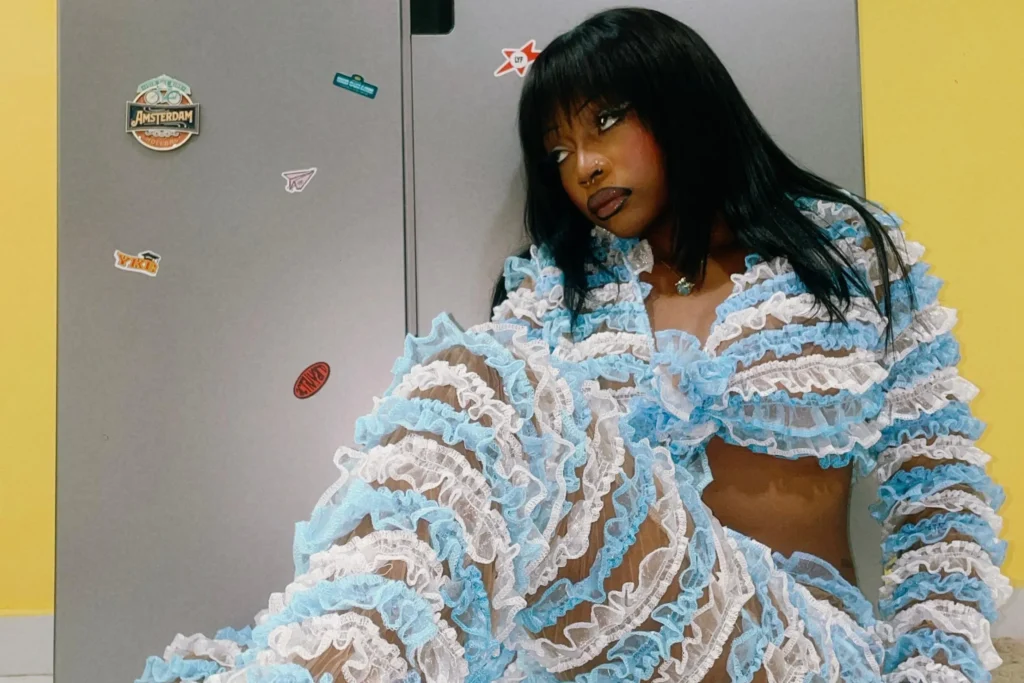
A mix of vintage finds, Ankara—the traditional fabric, deconstructed—Doc Martens, and piercings, Alte is an “anti-materialist statement” in a context of extreme inequality. But this is not Western-style voluntary simplicity. It is a reappropriation of the “low-end” aesthetic as a marker of authenticity and cultural capital. During the #EndSARS movement, these fashion codes became political: black nail polish, unapologetic dreadlocks, a physical presence in public spaces.
Alté redefines success on its own terms. In a Nigerian society where “succeeding” means flaunting one’s wealth, choosing “thrift” (saving) becomes an act of sovereignty. The risk here is not physical, but social: being judged “weird” or a “failure,” even though that is precisely the goal.
Tehran (Iran): the price of blood to control one’s image
To understand the geography of aesthetic risk, Tehran now offers the most radical—and the most tragic—case. September 2022: Mahsa Amini, 22, dies in custody of the morality police for wearing her hijab improperly.
This is followed by months of massive protests under the slogan “Woman, Life, Freedom” (Zan, Zendegi, Azadi). A partial victory followed: by late 2024, the government suspended the draconian hijab law, replacing street patrols with algorithmic surveillance—facial recognition cameras, automatic warning text messages, and mobile data tracking.
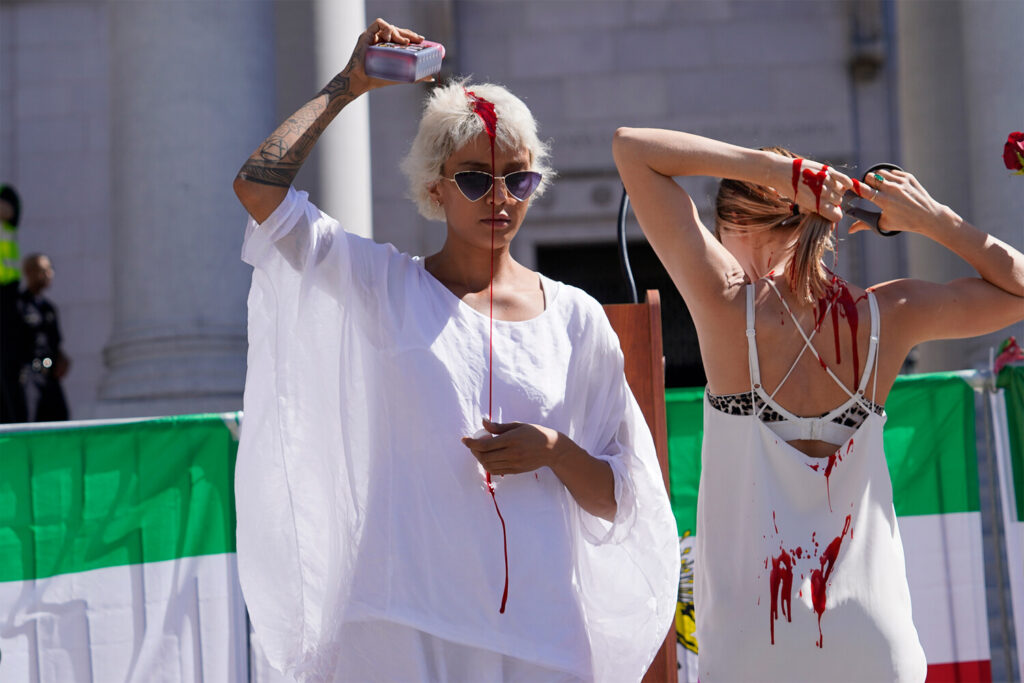
But since then, the situation has taken an unprecedented turn. In June 2025, the “Twelve-Day War” pits Israel and then the United States against Iran, targeting the regime’s nuclear facilities and military infrastructure. In the wake of this, a nationwide uprising erupted on December 28, 2025, triggered by the collapse of the rial, which within days turned into a direct challenge to the ruling regime—the largest protests since the 1979 revolution. The repression is massive: human rights organizations document several thousand deaths. Then, on February 28, 2026, the United States and Israel launch joint strikes on Tehran, Isfahan, and several other cities, eliminating Khamenei and several key figures of the regime—with the stated goal of overthrowing the Islamic Republic.
The regime’s future remains deeply uncertain today. It is precisely in this context of structural instability that aesthetic transgression takes on dizzying significance. In the streets of Tehran, thousands of young women continue to defy the dress code—slipped-off hijabs, bright colors, visible hair.
Why continue when physical survival itself is at stake? Because when all certainties crumble—regime, war, national identity—appearance becomes the sole space for self-expression that resists the chaos. Aesthetic transgression is no longer merely a political act: it is an ontological act. To exist through one’s appearance when everything else hangs in the balance.
China: Imperfection as Resistance to the System
In China, Gen Z is developing more subtle codes, but ones that are just as significant. Tucool (土酷)—literally “cool-tacky”—celebrates once-scorned Y2K aesthetics: leopard prints, kitschy Qzone filters, and small-town neon signs. County-town style (县城风) documents the chipped tile floors and dilapidated staircases of third-tier cities.
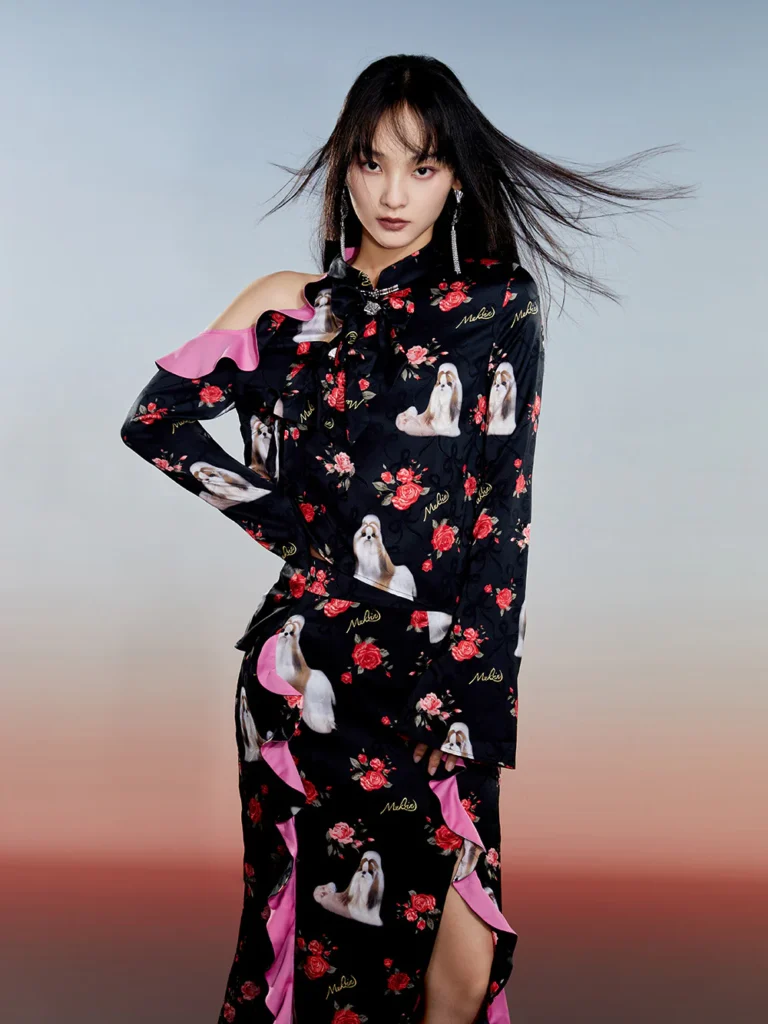
These movements fall under “dark forest” tactics, a Chinese concept where ambiguity protects against censorship. By celebrating the “has-been” aesthetic of rural areas, young urbanites implicitly criticize the pressure for urban perfection, competition (neijuan), and graduate unemployment. Irony becomes a shield; kitsch becomes armor.
Even more revealing: the ugly-cute movement (丑萌, chǒuméng) and its “rat-dried” figurines (laoshugan)—deliberately poorly made, flattened, misshapen stuffed animals.
In a culture saturated with filtered perfection, deliberate imperfection becomes an act of authenticity. Young people say: in a world where I have no control over my job, my housing, or my future, at least I control my refusal to perform perfection.
Santiago (Chile): The Body as a Battlefield
Perreo combativo—literally “combat perreo”—emerged during the 2019 protests in Puerto Rico against Governor Ricardo Roselló, before spreading to Chile, Argentina, and Colombia. Ittransforms reggaeton dance into a feminist and queer protest.
The aesthetic is explicitly provocative: crop tops, sheer clothing, exposed bodies, exaggerated makeup, fluid gender performance. In Latin American societies where gender-based violence is endemic, where exposing one’s body can be literally dangerous, this aesthetic becomes a calculated risk AND a political statement.
Tomasa del Real, a Chilean artist who theorized neoperreo, sums it up: “If I can’t dance, it’s not my revolution.” The aesthetic of risk, here, merges with political risk. Clothing is not merely an accessory to protest: it is the primary weapon.
What brands don’t understand
Faced with these movements, the industry’s reaction reveals a fundamental misunderstanding. TikTok normalizes transgression in 48 hours. Shein sells “bad hijab accessories.” Zara launches an “Alte collection.” Risk becomes a costume, a disguise, and loses all meaning.
The problem isn’t commercialization itself—young people in Lagos shop at Zara too. The problem is extraction without understanding. These aesthetics aren’t “trends to be captured”, but existential survival strategies that must be respected.
Therare examples that work—Wales Bonner’s collaborations with Adidas, certain Kering capsule collections with LGBTQ+ collectives—share one thing in common: they create platforms rather than products. They allow communities to express themselves, rather than mimicking them.
The luxury industry, which traditionally sells perfection and refinement,finds itself facing a generation that values the imperfect and the transgressive. Balenciaga understood this by embracing subversion. Others are experimenting with “luxury discomfort”—pieces that are deliberately uncomfortable or strange. But as long as the approach remains cosmetic rather than philosophical, failure is guaranteed.
Control through appearance: the last refuge of agency (the ability to be in control of one’s own life)
Let’s return to the initial thesis: unlike previous generations, who sought real security (employment, property, family) and could often achieve it, Gen Z knows that this security is structurally unattainable. Faced with a world they do not control—climate crisis, economic precariousness, political instability—they perform control where it remains possible: appearance.
Geographical observation is revealing. The more unstable the context, the more pronounced and codified the aesthetic transgression. Tehran, Lagos, Santiago: where insecurity is at its peak, the aesthetics of risk are the most elaborate. Tokyo, Shanghai: where the context is stable but oppressive, the transgression is more subtle, yet systematic. In all cases, the logic is the same.
This is not adolescent rebellion. It is an existential survival strategy.
Fashion “risk” is the only variable this generation fully controls, in a world where everything else eludes them. Aesthetics are not superficial: they are the last bastion of freedom.
For brands, the implication is clear: those that seek to “capture” this aesthetic without understanding its existential function will fail. Those that create spaces where Gen Z can exercise this control will succeed. The difference is not cosmetic. It is philosophical.
Read more > [COLUMN] Luxury will not be overwhelmed by artificial intelligence. It is in the process of harnessing it
Featured photo: © Couture by Rojita