




February 17, 2026 marks the beginning of the Year of the Fire Horse. At first glance, the event is part of the ritual calendar that luxury brands have become accustomed to, with their capsule collections, red packaging, and digital activations. However, this year’s edition reveals a more profound shift: brands are no longer content to apply a symbolic checklist, but are seeking to interpret the cultural and energetic significance of the sign itself.
Whereas the Year of the Snake invited a subtle and sinuous, almost introspective repositioning, the Year of the Fire Horse allows for momentum, affirmation, and a form of re-engagement. This phenomenon should not be read as a simple thematic variation; it actually reveals a broader need for brands to rediscover a clear narrative direction in a Chinese market undergoing restructuring.
Anaïs Bournonville, CEO of AB ADVISORY, an international agency specializing in marketing and strategy for China, takes us on a journey to the heart of the new habits observed in the Middle Kingdom.
From symbol to interpretation: breaking out of the “template”
For several years now, Chinese New Year campaigns have oscillated between respect for heritage and visual standardization. Omnipresent red, lucky envelopes, stylized zodiac signs: the format has gradually become fixed… and boring.
In 2026, several brands chose to explore the symbolism of the Horse in a more embodied way. And to take it a step further, they decided to reconnect with the symbolism of New Year, family, and affection.
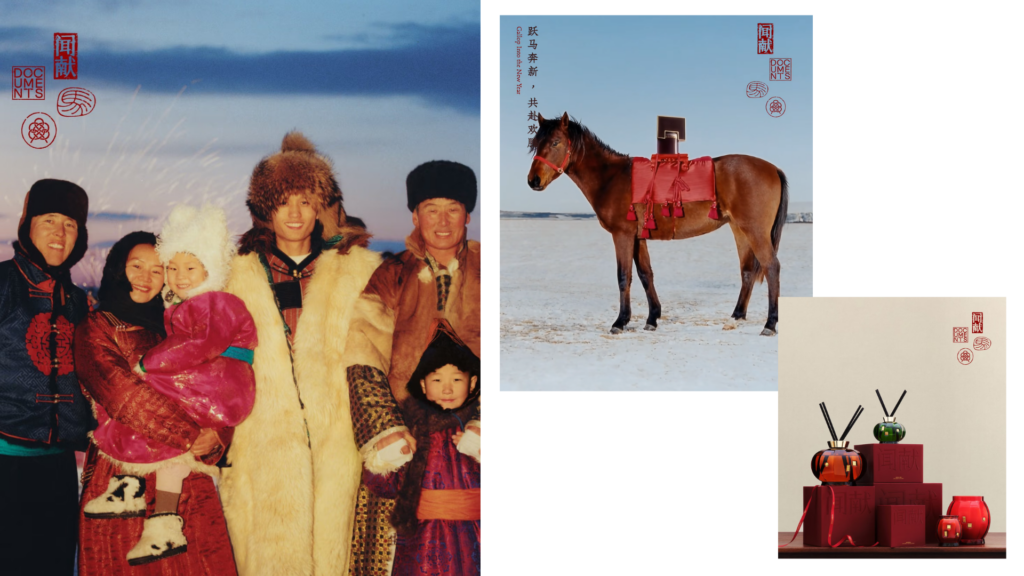
The Chinese perfume brand Documents, in which L’Oréal invested in 2022, reconnected with its Mongolian roots through one of its most powerful symbols: the Mongolian horse. The campaign, which is very understated, builds a visual narrative around a family’s New Year celebrations. The collection of four candles is inspired by the “10,000 families lantern,” transforming light into a common language of unity and peace. More than just a product, the lantern becomes a discreet tribute to transmission and collective calm. This approach does not seek spectacular effect; it instills a subtle and poetic force, consistent with the controlled energy of Fire.
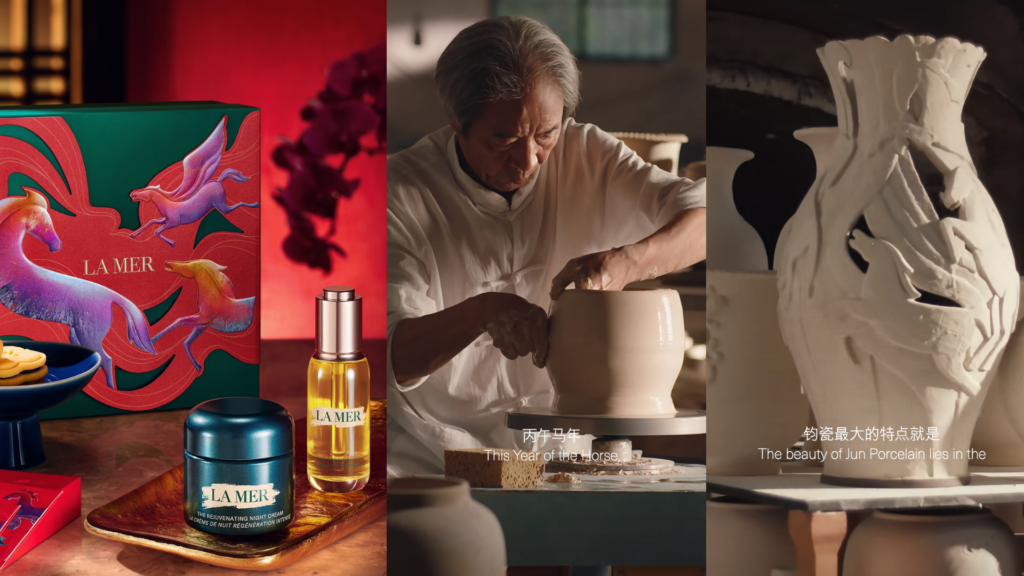
For La Mer, interpretation comes through craftsmanship. By collaborating with Chinese ceramist Ren Xinghang, inspired by the traditional painting of the “Eight Horses,” the brand inscribes the gallop into the very material of the object. Eight horses emerge from the fire, each piece unique, shaped by the vagaries of the kiln and technical mastery. The shades of blue and purple are only revealed after firing, introducing an element of unpredictability. It is interesting to note that the same creative language informs the visual identity, packaging, and one-to-one activations, transforming craftsmanship into a coherent cultural narrative rather than mere decoration.
Luxury now seems to embody a sensitive and authentic discourse.
An immersive and attentive luxury
Chinese New Year campaigns are like icebergs, where the “Chinese New Year” collections are only the tip of the iceberg. Luxury is also discreet, with gestures specially dedicated to “Very Important Clients” (VIC). The New Year boxes sent to these clients also become vectors of meaning. They are no longer just relational tools, but symbolic gestures that reconnect the brand with the depth of cultural celebration.
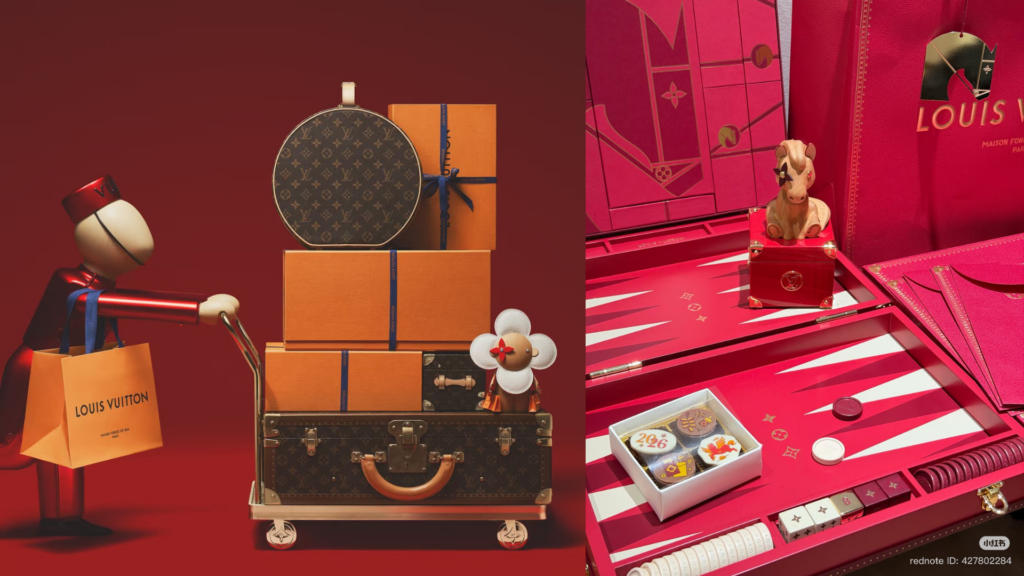
Louis Vuitton sent a box containing red envelopes and paper decorated with lucky characters. The exercise remains faithful to the brand’s codes, but is part of a ritualistic approach, widely preserved and shared.
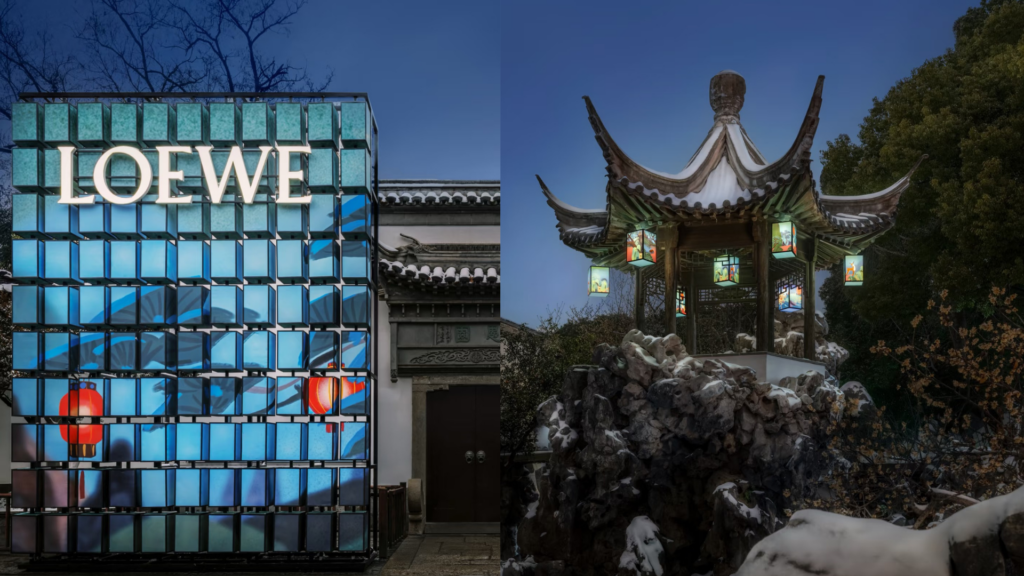
Loewe, for its part, released a mini animated film featuring the brand’s ambassador, Wang Yibo, on the themes of self-confidence and courage. Inspired by the lantern, a symbol of reunion and hope, the 2026 collection was accompanied by an artistic and immersive pop-up store in Nanjing, where excerpts from the film were projected onto a water curtain. This hybrid device, both poetic and immersive, reflects a desire to anchor the narrative in both physical and digital space, in line with the omnichannel logic of the Chinese market.
Luxury is reconnecting with its discreet and attentive identity, which is particularly appreciated by Chinese customers.
A broader shift from celebration to cultural consistency
More than just a creative trend, this Chinese New Year edition reveals an evolution in the relationship between brands and the Chinese market. In a context of more selective growth and more demanding consumers, formal repetition is no longer enough. Symbolic appropriation must be credible, rooted, and consistent with the brand’s overall identity.
The perfumer To Summer provides a perfect example of this, adopting a more intimate interpretation of renewal. By collaborating with Ren Helin, curator of the Chinese New Year Painting Museum, and Wang Qiyang, master of sugar painting, the brand is putting the spotlight back on slow gestures and living heritage. The preparation of sugar, the rhythm of the hands, and the gentleness of everyday scenes compose a narrative where time seems to slow down. This choice may seem to go against the grain of a Horse synonymous with momentum, but it reveals an interesting strategy: an ode to everyday life.
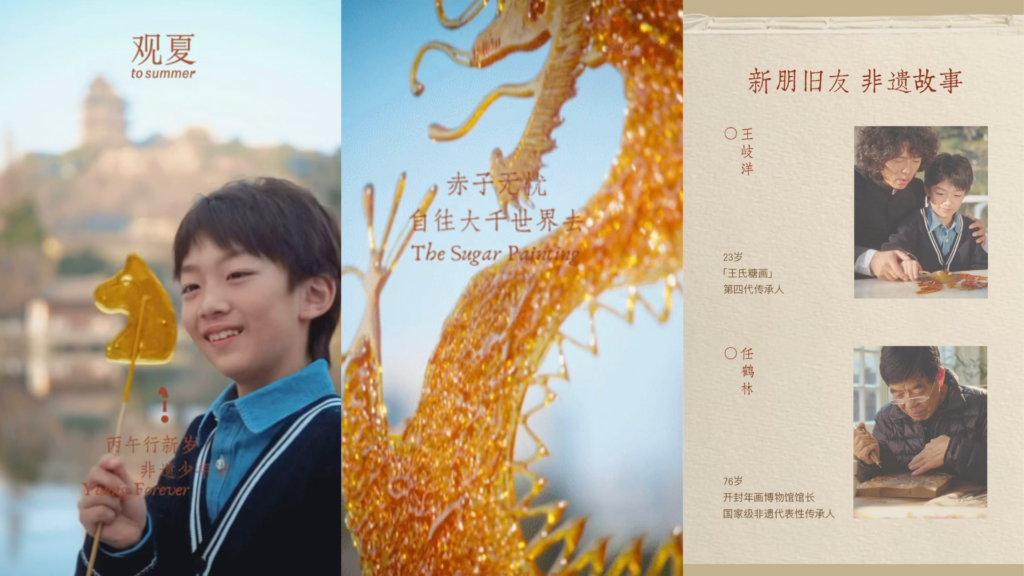
The success of a campaign lies not in its excess or magnificence, but in its accuracy. And beyond the gold, red, and grandiose spectacles, the everyday life of a sugar horse eaten by the river in Suzhou with his children is perhaps the most enjoyable thing of all. The current concept of “slow life” in China is thus perfectly embodied, celebrating the sweetness of life and the small joys of everyday life shared with loved ones.
The Fire Horse, with its energetic charge, acts as a revelator. It highlights the Houses capable of articulating heritage, storytelling, and omnichannel execution, but also exposes those whose approach remains superficial. The question is no longer whether a brand participates in Chinese New Year, but how it transforms this event into an organic extension of its own narrative.
As the Chinese market enters a more critical phase of maturity, New Year ceases to be a seasonal exercise and becomes a strategic test. The Fire Horse invites movement and affirmation, but this momentum must be driven by a coherent vision. It remains to be seen whether this demand for cultural depth will become a lasting feature of the Houses’ practices, or whether it will fade away with the next zodiac cycle.
Read also > [COLUMN] Slow Pop-ups: China’s New Retail Laboratories
Featured photo: © Loewe