



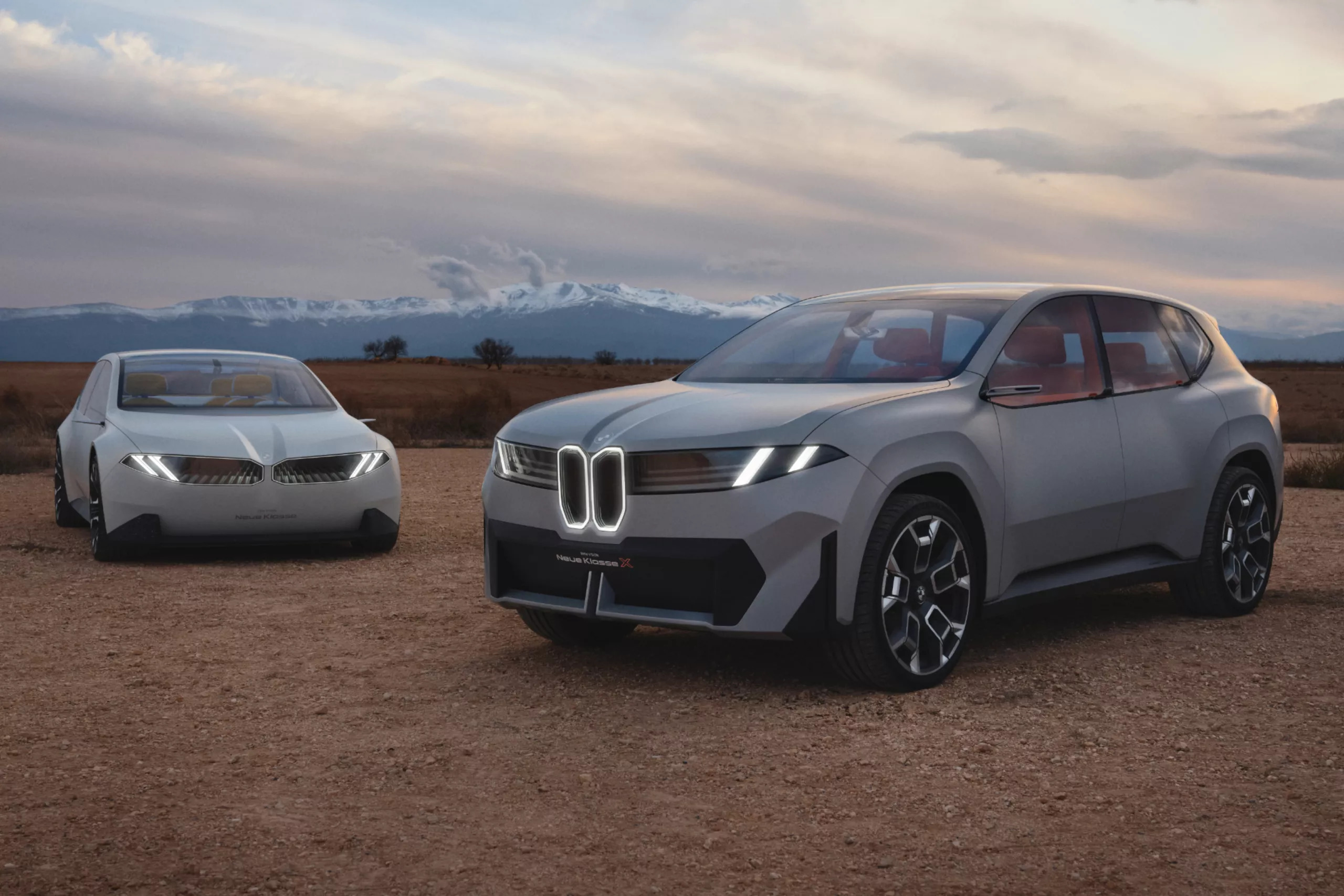







After several difficult quarters in the Chinese market, BMW intends to go back on the offensive with its new all-electric Neue Klasse range.
Unveiled ahead of the 2025 IAA Motor Show in Munich, this major overhaul of the manufacturer’s portfolio marks a decisive strategic step toward regaining growth in China, its largest market.
A disruptive electric strategy
According to Walter Mertl, BMW‘s chief financial officer, the Neue Klasse, launched with the iX3 electric SUV, is designed to revive the group’s growth in China : “We are more than competitive with this product. With the increasing availability of the Neue Klasse, we will see growth in China again.”
Sales in China had fallen by 15.5% in the first half of 2025, as a result of fierce local competition and an economic slowdown that reduced the appetite of affluent consumers. BMW is targeting an EBIT margin of 5-7% in 2025, with a target of 8-10% in the coming years. In addition, the group plans to phase out its traditional models by the end of the decade, retaining only the Neue Klasse range.
The electric iX3, scheduled for release on the Chinese market in the summer of 2026, uses batteries that are 40-50% less expensive, which could enable BMW to achieve margin parity with its combustion engine models as early as 2026.
Technological innovation and local production
The Neue Klasse platform is based on advanced software architectures : it integrates central “superbrain” systems, offering more than 20 times the computing power of current vehicles, with vehicles capable of receiving remote updates and enhanced after-sales services.
Specifically, the iX3 SUV uses a system called “Heart of Joy,” one of four superbrains dedicated to dynamic vehicle management. It promises instant power retention for regenerative braking, with a latency of 1 millisecond, compared to the usual 10 to 50 milliseconds. The model also offers ultra-fast charging (230 miles in 10 minutes) and an 800 V architecture, with an advanced onboard system.
BMW is adopting a “local for local” strategy for the production of its batteries, with five sites on three continents, including one in Shenyang, China, which will be operational in 2026, ensuring resilience and logistical efficiency.
Chinese context : the assault of local players
According to Caixin Global, German luxury brands such as BMW, Mercedes, and Audi saw their market share fall to 14.9% in 2024, faced with a dramatic rise in new energy vehicles (NEVs), which reached 64.6% of the market. Chinese consumers now favor competitively priced smart electric cars, such as Nio and Li Auto.
BMW is therefore banking on a radical transformation to win back China : from electrification to software architecture, the Neue Klasse embodies its future. Local production in Shenyang starting in 2026 is a strong sign of its commitment to the country.
Trade tensions between the EU and the US, with hopes of reduced tariffs, represent a key variable for BMW’s margins, as does the growing technological pressure imposed by Chinese rivals.
Read also > Bentley pushes back its all-electric plan to 2035
Featured photo: © BMW