



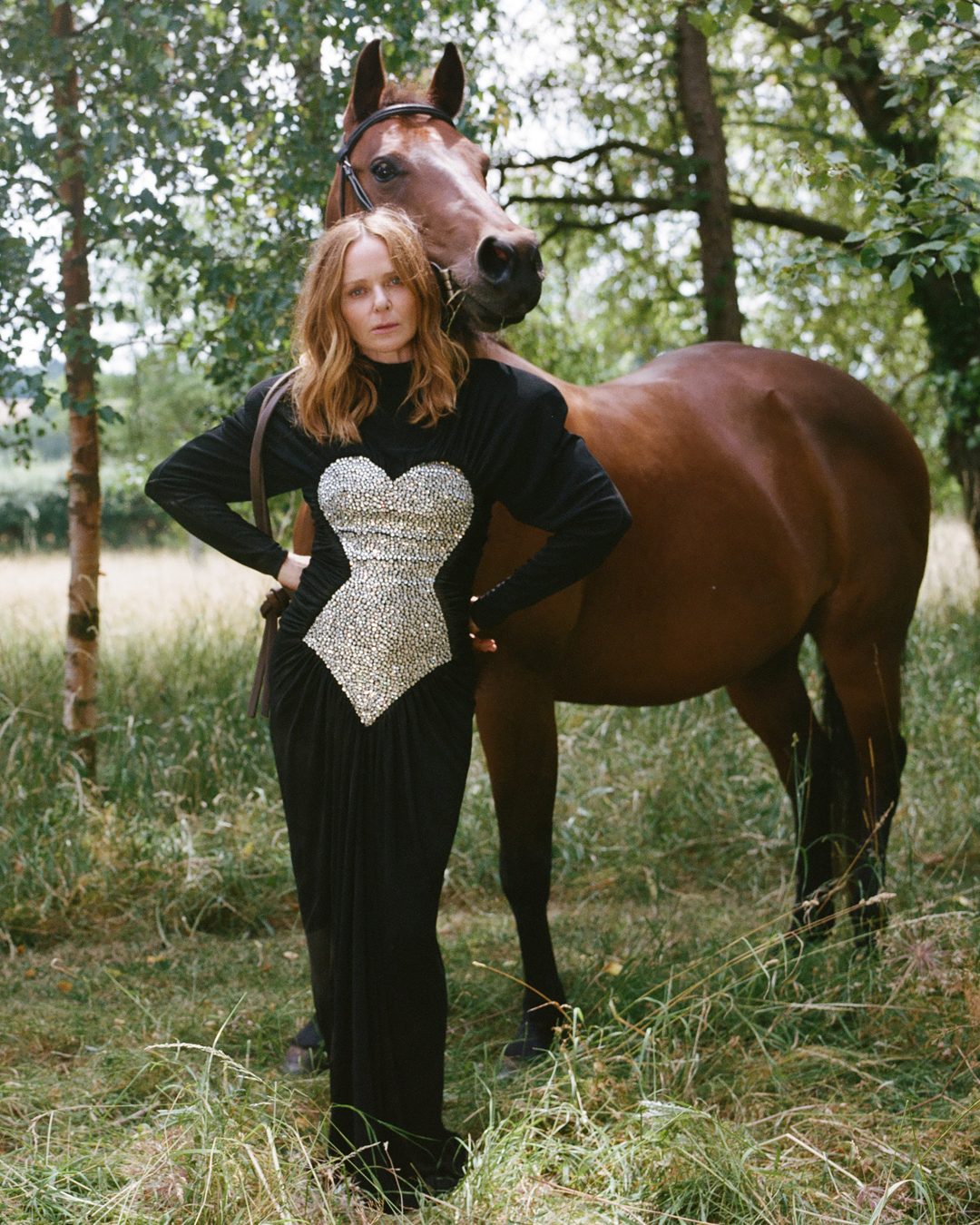








The pioneering vegan luxury fashion house has just unveiled another poor financial performance for its 2024 fiscal year. This is a perilous situation, given that Stella McCartney regained her independence in early 2025 and can no longer count on the support of LVMH, her former shareholder…
Stella McCartney may have an illustrious first name (as a pioneer of vegan fashion) and surname (as the daughter of Paul, former lead singer of The Beatles). However, she is not immune to the difficulties affecting the luxury market, and small fashion houses in particular.
The latest accounts filed for the 2024 financial year by her company with Companies House, the British equivalent of the commercial register, which have just been unveiled, show further poor performance…
Is there danger ahead?
Its sales fell by 27% to £16 million ($21.4 million), after already dropping 45% in 2023, while its pre-tax losses rose from £25 million in 2023 to £33.6 million ($44.9 million) in 2024.
It therefore appears that there is danger ahead for the brand, which has been in deficit since 2017.
However, Stella McCartney can no longer count on its former supporters, the luxury groups Kering and then LVMH, to help it get back on its feet. Admitting that the brand could run out of cash by 2028, the executives have nevertheless indicated that they “may consider other sources of financing to ensure the long-term viability of the business.”
From 2001 onwards, for 17 years, the designer’s fashion house was supported by Kering, which helped her to co-found and develop it.
End of support from Kering and then LVMH
In 2018, Stella McCartney ended this partnership and regained her 50% stake in her brand. But in 2019, the British designer once again sold a stake, this time 49%, to a luxury giant, in this case LVMH. While she remained the majority shareholder, the designer could once again rely on the substantial resources of the world’s leading luxury group.
But five years later, in January of this year, Stella McCartney “divorced” LVMH, taking back full ownership and control of her company.
In a joint statement with LVMH, the British designer spoke of “her desire to write a new chapter in her history in complete independence.”
This decision now seems all the more courageous in light of the 2024 financial results, the company’s weakest since 2009. That year, its revenues reached £14.6 million.
Difficult market conditions
This underperformance is said to be “mainly due to difficult market conditions and their impact on revenues.”
The company was reportedly weighed down by the reduction in profit sharing with its Italian subsidiary, which fell from £7.3 million in 2023 to £3 million in 2024, representing 19% of the company’s turnover.
Its royalties fell by 23% to £7.4 million, representing 46% of turnover. Sales from its retail stores (34% of turnover compared to 22% in 2023) rose slightly, however, from £4.9 million to £5.39 million, an increase of 10%.
Overall, despite a decrease in operating expenses (from £54 million in 2021 to £45 million in 2022 and £42 million in 2024), Stella McCartney’s operating loss widened to £29 million in 2024, compared to £23 million the previous year.
But Stella McCartney’s fashion house is not throwing in the towel.
“As the fashion industry looks to the future, Stella McCartney remains committed to redefining luxury through sustainable and impactful fashion and pioneering innovations,” she said in a statement approved by the board of directors.
Positive initiatives
Several positive initiatives allow her to look to the future with hope.
Last October, the company signed a strategic distribution agreement in India with local giant Reliance Brands. That same month, it held a fashion show during Riyadh Fashion Week (Saudi Arabia).
Most importantly, in September, the company welcomed a new CEO, Tom Mendenhall, a luxury veteran and former executive at Ralph Lauren and Gucci. He succeeded Amandine Ohayon after only two years in office.
However, he has a daunting task ahead of him. He will need to consolidate the brand’s business model by strengthening its various divisions (ready-to-wear, accessories, collaborations, etc.), finding new sources of international growth, and improving the structure of its governance. All this must be done while respecting the vegan DNA and environmental awareness that have earned Stella McCartney her strong reputation in fashion.
Stella McCartney has 36 directly operated stores and 11 franchised stores in major fashion capitals (London, Milan, Paris, New York, Tokyo). It is also distributed in approximately 650 multi-brand stores in 71 countries.
Read also > In free fall in 2023, Stella McCartney is determined to bounce back
Featured photo: © Stella McCartney