












The number of vehicle deliveries in the third quarter of 2025 illustrates the contrast between BMW’s strong momentum and Mercedes-Benz’s slowdown, which was hampered by unfavorable economic conditions in China and the United States.
Between July and September 2025, BMW saw its deliveries increase by +8.8%, while those of Mercedes-Benz fell by -4%.
The contrast between the two German groups illustrates the profound changes taking place in the premium automotive sector : BMW is reaping the rewards of a flexible strategy and a diversified electric vehicle offering that has been well received in Western markets. Mercedes-Benz, despite its innovative products, is paying the price for its heavy exposure to China, where local competition is intensifying.
BMW buoyed by European and American markets
The BMW Group benefited in the third quarter from a favorable base effect compared to a weaker third quarter in 2024 (+8.8%). In the first nine months of the year, 1.8 million BMW, MINI, and Rolls-Royce vehicles were delivered worldwide, a slight increase of +2.4%.
This momentum is driven in particular by the rise of the electrified range : sales of fully electric vehicles increased by 10% to 323,447 units, while sales of all electrified models (BEVs and plug-in hybrids) rose by 15%.
“The excellent results recorded in Europe and America, as well as for the MINI brand, are particularly encouraging. Demand for our wide range of electrified vehicles also remains strong,” commented Jochen Goller, Member of the Board of Management of BMW AG, Sales and Marketing.
Sales grew in all major regions outside China : +9.3% in Europe, +24.4% in America, while the Chinese market declined slightly (-0.4%).
The BMW brand delivered 514,620 vehicles in the third quarter (+5.7%), while MINI posted spectacular growth of +37.5%, driven by the launch of the new MINI family. Rolls-Royce remained stable, with 4,100 deliveries (+3.3%). BMW M GmbH continued its upward trajectory with an 11% increase in the third quarter, confirming the strength of demand for high-end sports models.
Mercedes-Benz struggles in China and the United States
Unlike its rival, Mercedes-Benz sold only 525,300 vehicles, down 4% from the previous quarter and 12% year-on-year. Total sales for the first nine months of the year amounted to 1.6 million units, down 9%.
The main cause remains the weakness of the Chinese market, where deliveries fell by 27% to 125,100 units, their lowest level since 2016. In the United States, the decline reached 17%, affected by the new customs barriers decided by the Trump administration, which increase import costs.
“In the United States, inventories were managed cautiously in the third quarter, while deliveries to customers have increased since the beginning of the year. Overall, demand for our premium vehicles continues to be strong, and the electric CLA has received excellent feedback, enabling electric vehicle sales to increase by 22% over the quarter. Our new products are creating new momentum and generating enthusiasm, paving the way for further sales growth,” acknowledged Mathias Geisen, member of the Mercedes-Benz Group’s board of management.
In contrast, Mercedes-Benz recorded slight growth of 2% in Europe, while sales in South America and the Middle East climbed 12%.
Passenger car sales reached 441,500 units (-12% year-on-year), while the Vans division declined by 8% to 83,800 units. The only bright spot was the electric vehicle segment. Sales of battery-powered vehicles jumped by 22% over the quarter, buoyed by the success of the new electric CLA.
Read also > BMW bets on electric vehicles to win back the Chinese market
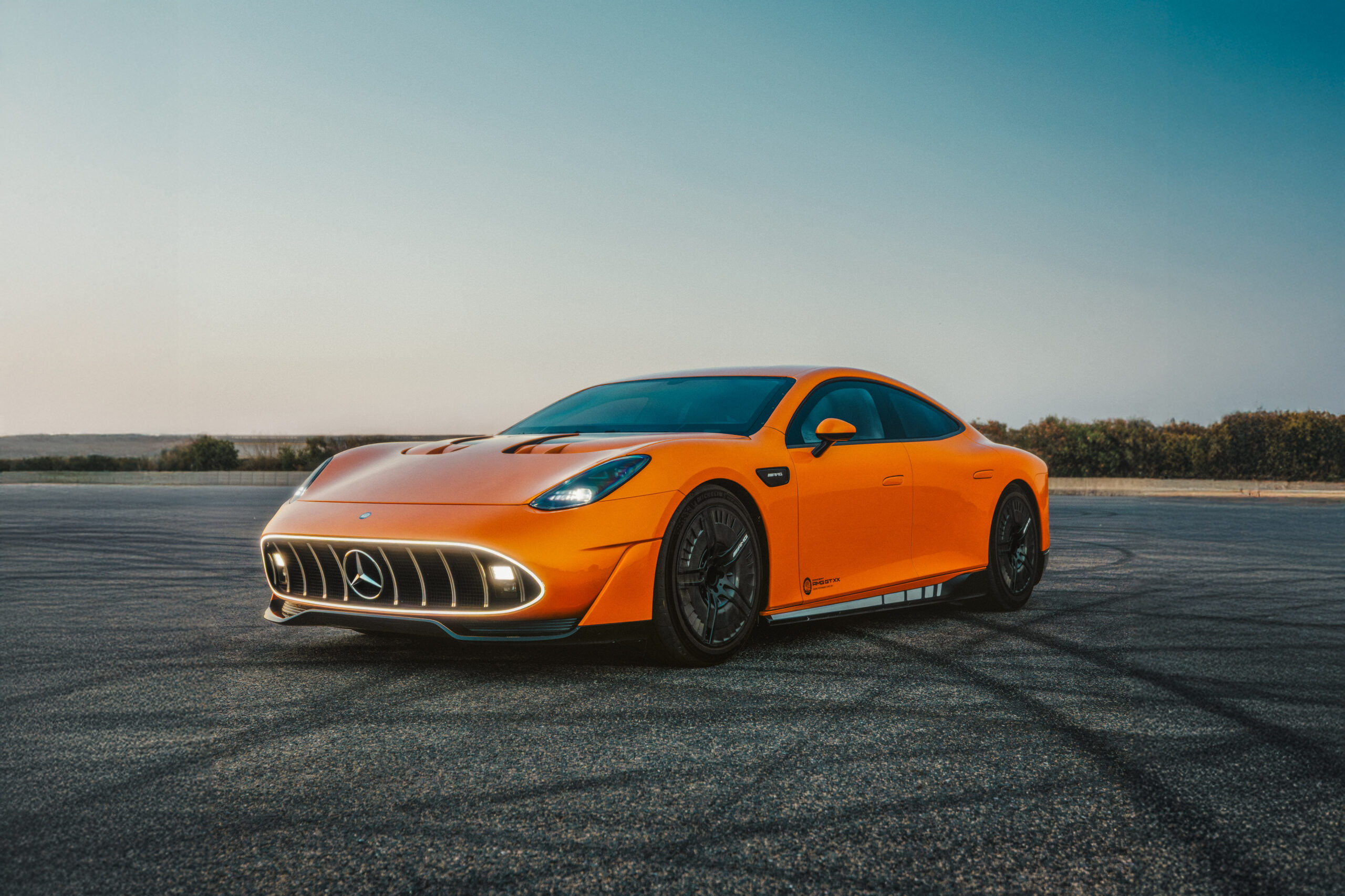
Featured photo : © Mercedes-Benz