










On July 2, Chanel announced the acquisition of Charvet, located on Place Vendôme. This is a strategic move for the French brand, which retains its exclusive, high-end status.
This acquisition is one of the most significant developments of the year in the luxury industry. In 2025, Chanel generated $19.3 billion in revenue, according to the financial results of Chanel Limited, confirming the strength of its business model based on scarcity, exclusivity, and control over its distribution channels. The appointment of Matthieu Blazy as creative director now appears to be part of this effort to put clothing and craftsmanship back at the heart of the house’s vision. Behind this move lie several strategic challenges for the house on Rue Cambon.
A French institution of understated luxury
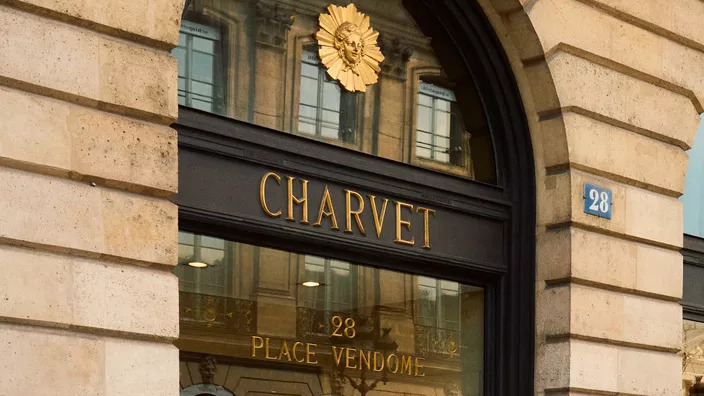
The world’s leading shirtmaker, Charvet was founded in 1838 by Joseph-Christophe Charvet. Renowned for its made-to-measure shirts, ties, and high-end pajama tops, the house is known for its French manufacturing, with a workshop located in the Indre department and limited production to preserve the quality of its pieces.
This historic boutique, located at 28 Place Vendôme, has become a symbol of understated luxury and the excellence of French craftsmanship. Its strategic location has allowed the boutique to welcome an international clientele, including heads of state, writers, industrialists, and collectors. Winston Churchill, Charles de Gaulle, and Coco Chanel were among the house’s loyal customers.
In 1965, the company changed hands and the Colban family became the owners. Denis Colban, then the house’s fabric supplier, and later his son Jean-Claude Colban, who has led the company since the 1990s, ensured that the house remained independent for 188 years. Chanel, for its part, makes a point of emphasizing that it does not simply seek to acquire a brand, but to massively develop a heritage worth protecting.
The key role of Matthieu Blazy
He needs no introduction, as his runway sets have become his trademark, much like those of Karl Lagerfeld during his lifetime. With remarkable shows such as his Fall-Winter 2026–2027 collection at the Grand Palais or the 2026–2027 Cruise show in Biarritz, Matthieu Blazy has redefined the codes of the House of Chanel.
For his first ready-to-wear collection, the designer collaborated with Charvet to create monogrammed white shirts. These pieces were so successful—both commercially and critically—that some were sold for around 3,900 euros.
Rarity and craftsmanship as pillars of ultra-luxury
For several years now, Chanel has pursued an active policy of safeguarding artisanal expertise through the acquisition of numerous exceptional workshops and manufacturers. The goal is not so much to increase production capacity as it is to preserve rare trades and artisanal techniques that are sometimes under threat.
The house has also consistently rejected certain traditional growth drivers in the sector: no widespread e-commerce for fashion, extremely selective distribution, strict control over production volumes, and regular price increases to maintain the desirability of its products. The acquisition of Charvet fits perfectly into this strategy: in the world of ultra-luxury, rarity remains one of the main drivers of perceived value.
Charvet: a gateway to the world of men’s fashion
To date, Chanel still does not have a permanent men’s line. The acquisition of Charvet could, however, allow the French fashion house to strengthen its presence in men’s fashion without taking the risk of launching a hypothetical “Chanel Homme” line, which could blur its image.
One strategy would then be to maintain two distinct worlds, each retaining its own identity while benefiting from the strength of the other. Bruno Pavlovsky, president of Chanel’s fashion division, sums up this vision in a single sentence: “We now have a name for women, Chanel, and a name for men, Charvet.”
Today, ultra-luxury relies less on logos or monograms than on rarity, discretion, and masterful craftsmanship. Charvet embodies precisely these three values.
Far from a traditional diversification move, the acquisition of Charvet illustrates the new equation of contemporary luxury: in a market where growth sometimes seems incompatible with exclusivity, Chanel is taking the opposite approach by focusing on discretion, rarity, and exceptional craftsmanship. This strategy could enable the house to reinforce its ultra-luxury status while cautiously opening the door to the men’s fashion world.
Read also > Chanel appoints Marie-Laure Cérède as head of jewelry design
Featured photo : © Charvet