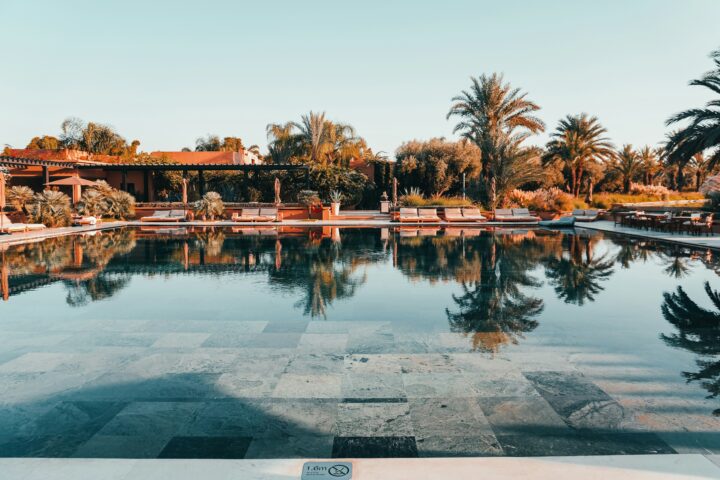







Ludwig Mies van der Rohe, a leading figure in 20th-century architecture whose name continues to resonate with astonishing modernity, was born 140 years ago. In contrast to the triumphant ornamentation of his era, “Mies” redefined interior design and luxury through simplicity, structural rigor, and an almost spiritual quest for the essential. From Berlin to Chicago, a look back at ten masterpieces by an architect who loved steel.
“Less is more” – a life dedicated to the essential
Mies said: “God is in the details” (“God is in the details”). His creations—whether buildings, houses, or furniture—are undoubtedly the most tangible proof of this.
Ludwig Mies van der Rohe remains one of the most significant figures in modern architecture. Born in Aachen in 1886, the son of a stonemason, he retained this almost mystical respect for materials throughout his life. For him, luxury lay in the quality of a joint, in the nobility of a raw material, and in the fluidity of the transition between interior and exterior. He was one of the last directors of the Bauhaus before the rise of Nazism—which forced him to emigrate to the United States in the late 1930s. There, he became director of the architecture school at the Illinois Institute of Technology (IIT) in Chicago and shaped the way we conceive of space, structure, and the relationship between interior and exterior.
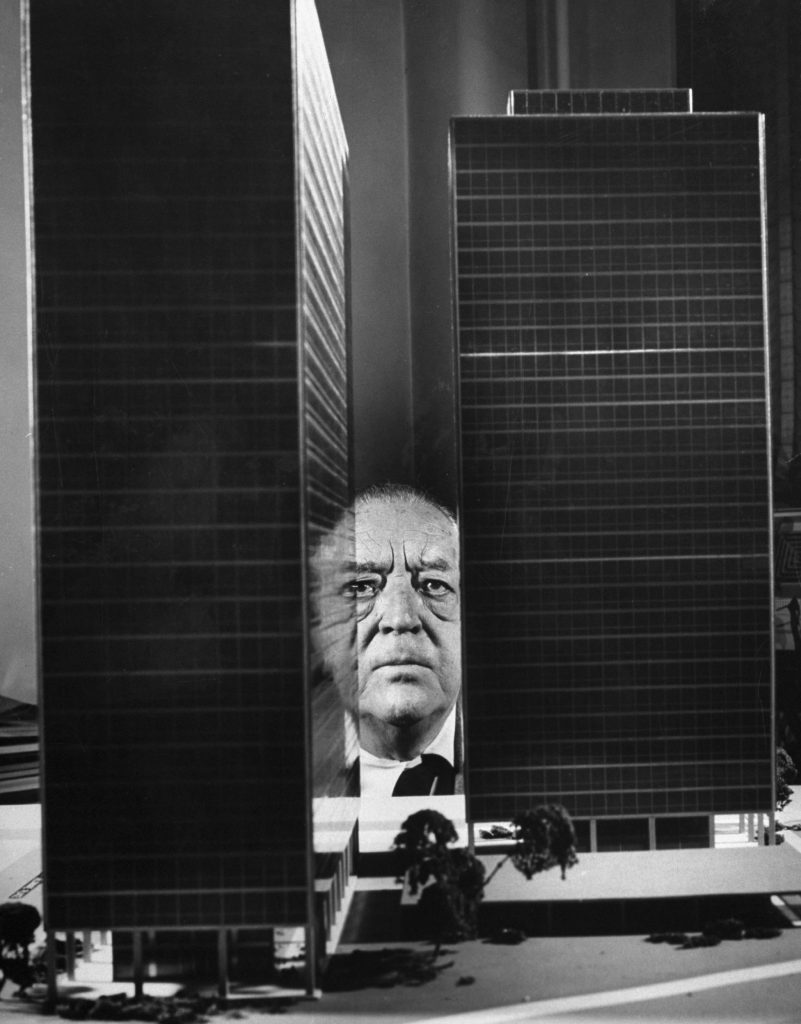
For Mies, architecture had to be honest in its structure and pure in its form. His famous maxim “less is more” reflects the spirit of his approach: eliminating the unnecessary to reveal the essential. But beware, this minimalism was not synonymous with economy; his projects often cost a fortune due to the demand for perfection he imposed on workers.
His collaboration with Lilly Reich, his longtime collaborator, was essential, particularly in the 1920s and 1930s—a creative partnership long downplayed, especially regarding major projects such as the Barcelona Pavilion and its associated furniture.
Barcelona Pavilion (1928–1929) – The Manifesto of Modernism
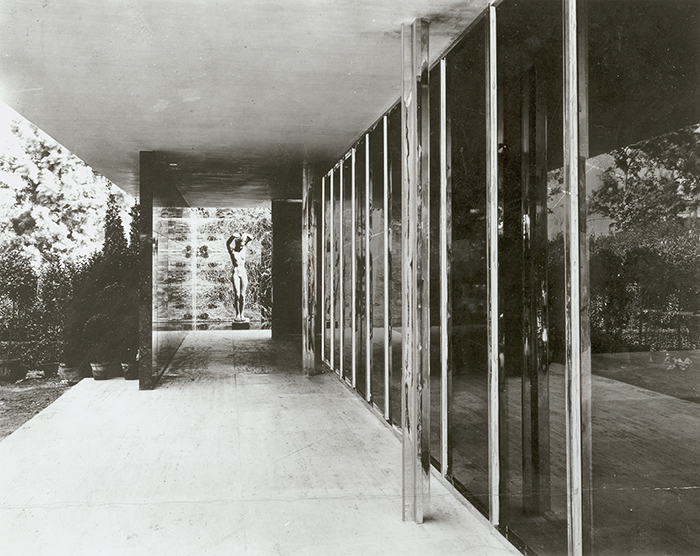
Perhaps his most instantly recognizable creation, this pavilion designed for the Barcelona International Exposition is an ode to open space, noble materials (marble, onyx, glass), and the balance of volumes. Designed in the late 1920s, the golden age of a Germany that had lost the war and was still plagued by social unrest and economic hardship, the Pavilion was intended to present a new image of the country to the world: that of a prosperous, peaceful, democratic nation at the forefront of culture. The building stood like an ancient temple on a travertine base.
A U-shaped wall delineated the southern space, which featured a large pool whose outline was defined solely by the floor slabs. On the north side, a U-shaped green marble wall bordered a patio adorned with a second, smaller pool.
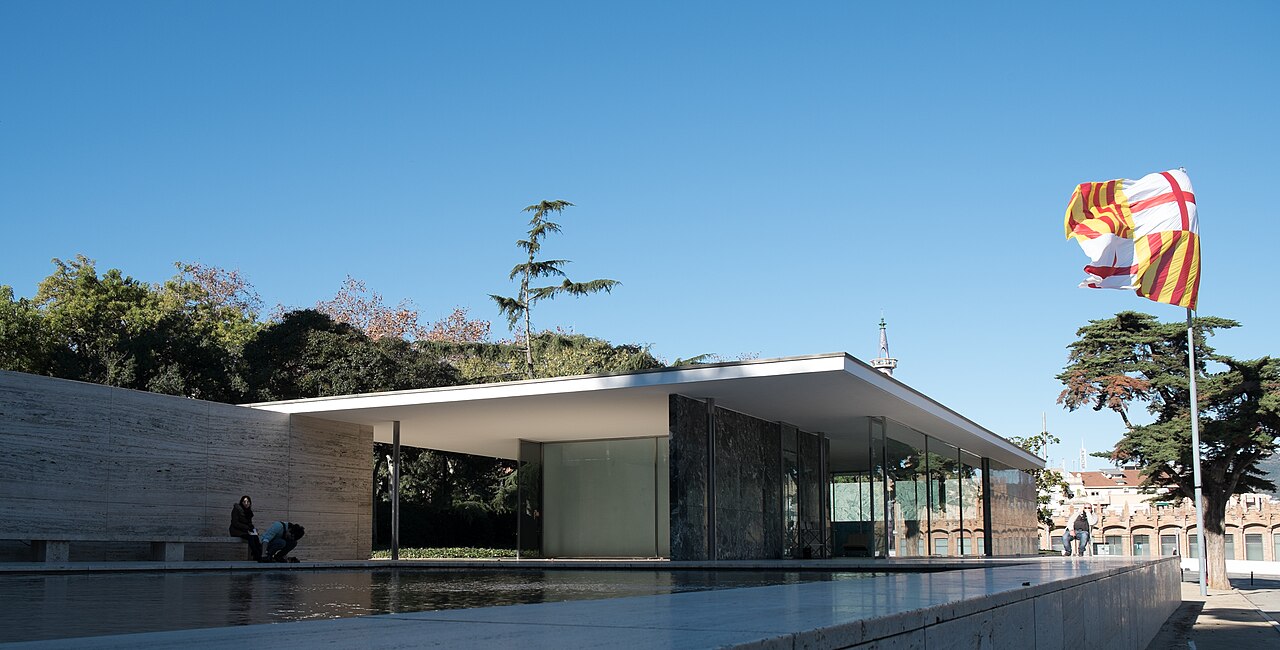
The building was dismantled at the end of the exhibition in 1930, but it left a lasting mark on history. Those responsible for its reconstruction in the 1980s sought to remain faithful to the original plans. With its limited color palette and floating planes, it is both an exercise in pure geometry and an invitation to contemplation.
A well-known anecdote: Mies and Lilly Reich designed the famous Barcelona Chair for this pavilion, which is still produced today by Knoll and has become a symbol of modern design.
Click here to read the full article on Luxus Magazine
Featured Photo: © DR