






Born in the suburbs of Paris, the bistro has remained a symbol of conviviality, generous cuisine, and popular spirit. From its modest origins to Michelin-starred tables, the bistro continues to resist the invasion of American fast food chains, but for how long?
Bistros and cafés have long been symbols of working-class Paris, where people get up early and celebrate at the bar with a glass of red wine and local produce. How distant seem the days when bougnats (Auvergnats who had moved to the capital, ed.) opened café-charbon, where while the wife managed the bar and kept the till, the husband climbed the stairs to supply Parisians with fuel for their fireplaces. In the 19th century, people still ate at home and drank exclusively outside. The bougnats also brought charcuterie in their suitcases, which enabled them to offer daily specials and other dishes such as steak and chips. The 1960s saw the advent of television, and bistros faced competition from a new leisure activity.
Globalization in the 1980s and 1990s also weakened the offering. Arriving in France in 1979, the McDonald’s burger chain—18 years after Wimpy’s furtive arrival—quickly understood the appeal of young people and executives alike for eating on the go during their lunch break, buying up a slew of bistros in financial straits for a song. As a result, of the 200,000 establishments in France in 1960, only 70,000 remained in 1992. This figure fell to 40,000 in 2024.
Today, although some chefs have reappropriated the model by making it more sophisticated through “bistronomy,” bistros are still losing ground. This phenomenon has been accentuated in recent years by soaring energy and real estate costs, inflation, fierce competition from street food, and the advent of post-COVID teleworking. The Auvergnats themselves turned to more lucrative, high-end concepts at the end of the 1990s. Meanwhile, McDonald’s has made France its second largest market, with 1,500 establishments.
Fortunately, as shown by the renewed enthusiasm for broths and cuisine that is as simple as it is authentic, lovers of eggs with mayonnaise, calf’s head with gribiche sauce, or blanquette-style stews can hope for a revival.
The origins of the Parisian bistro
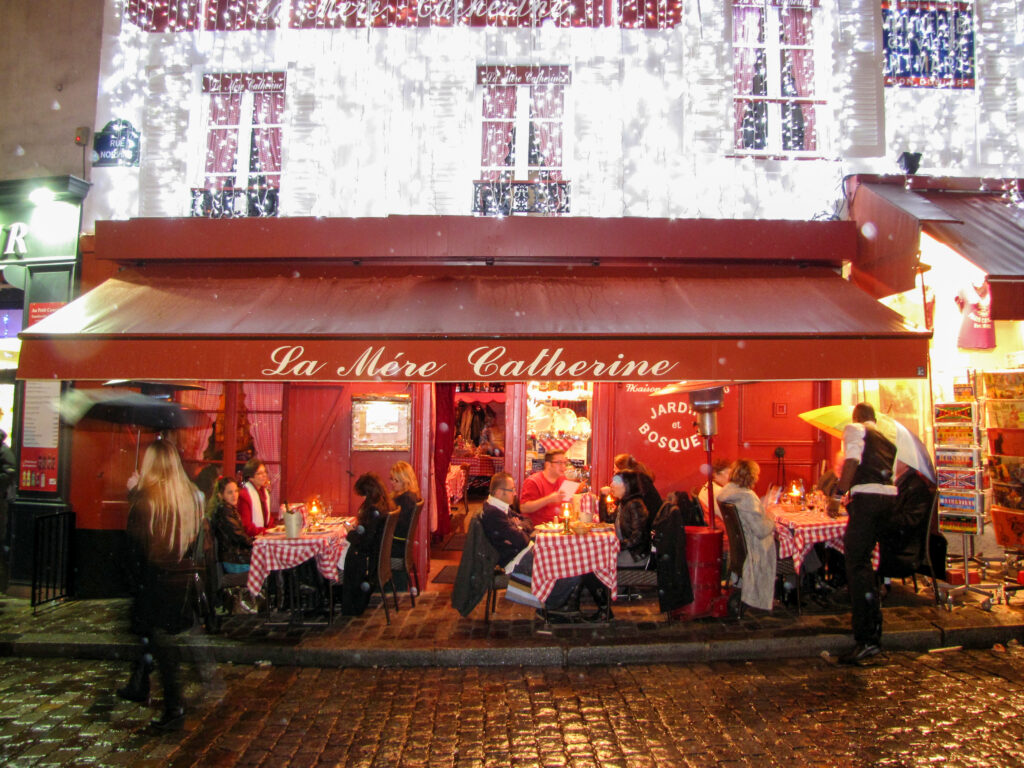
The word “bistro” resonates like Proust’s madeleine for all lovers of Paris. Yet its origins remain shrouded in legend and mystery. The most famous story tells that the term comes from the Russian “быстро!” “ (bystro), meaning ”quickly,” a cry uttered by the Cossacks during the occupation of Paris in 1814, urging café owners to serve them quickly. A commemorative plaque was even unveiled at La Mère Catherine, located at 6 Place du Tertre, in 1964 by the tourist office of old Montmartre. While no linguist has really settled the question of the veracity of this etymology, history records that the term was first attested in literature in 1884, in Abbé Moreau’s “Souvenirs de la Roquette,” as referring to a modest, popular café where one could eat and drink in simplicity. The author saw fit to add a footnote specifying “wine merchant.”
Philologists believe that the word bistrot could come from the Poitevin word “bistraud”, which refers to both a “young servant” and a “wine merchant,” or from the slang word “bistingot” (cabaret). The word originally referred to both the proprietor (bistrote) and the establishment. The latter was necessarily a small drinking establishment serving wine, liqueurs, and lemonade.
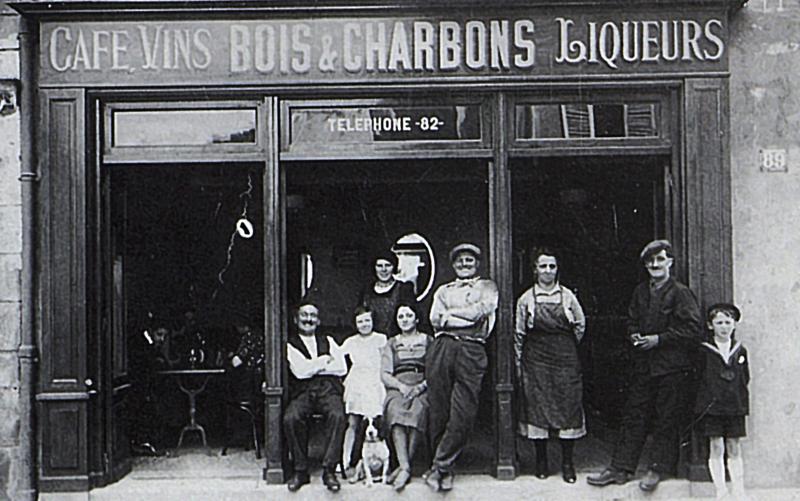
These were mainly run by families from Auvergne who had moved to Paris during the Industrial Revolution. After working as water carriers or ragpickers, these bougnats soon began to specialize in home delivery of wood, scrap metal, and coal. They also sold drinks and light meals. These establishments, which welcomed workers, students, artists, and neighbors, multiplied in the 19th and 20th centuries and were recognizable by their shiny zinc counters, wooden tables with checkered tablecloths, and local dishes.
Click here to read the full article in Luxus Magazine
Featured photo: © Restaurant Brass / Benoit Linero