






Every December 31st, the whole world turns its eyes to Times Square in New York, where a shimmering ball slowly descends, marking the arrival of the new year. An iconic tradition that goes back much further than one might think.
At the beginning of the 20th century, clock precision was vital for sailors. “Time balls”—visual spheres dropped at fixed hours—allowed ships in port to adjust their chronometers. Inspired by this concept, the founder of The New York Times came up with the idea of creating his own ball to celebrate New Year’s Eve.
Since 1907
The first drop took place on the night of December 31st, 1907, ringing in 1908. The ball, simple and sturdy, was made of wood and iron, weighed about 317 kg, and was lit by 100 bulbs. At the time, the event was both a technical feat and a chance to bring crowds together in a rapidly growing city. Since that first edition, the “Ball Drop” has become an annual ritual, interrupted only during wartime due to lighting restrictions.
Over the decades, the ball has undergone numerous transformations. From basic materials to sparkling crystals, each version reflects the evolution of technology and the growing taste for spectacle.
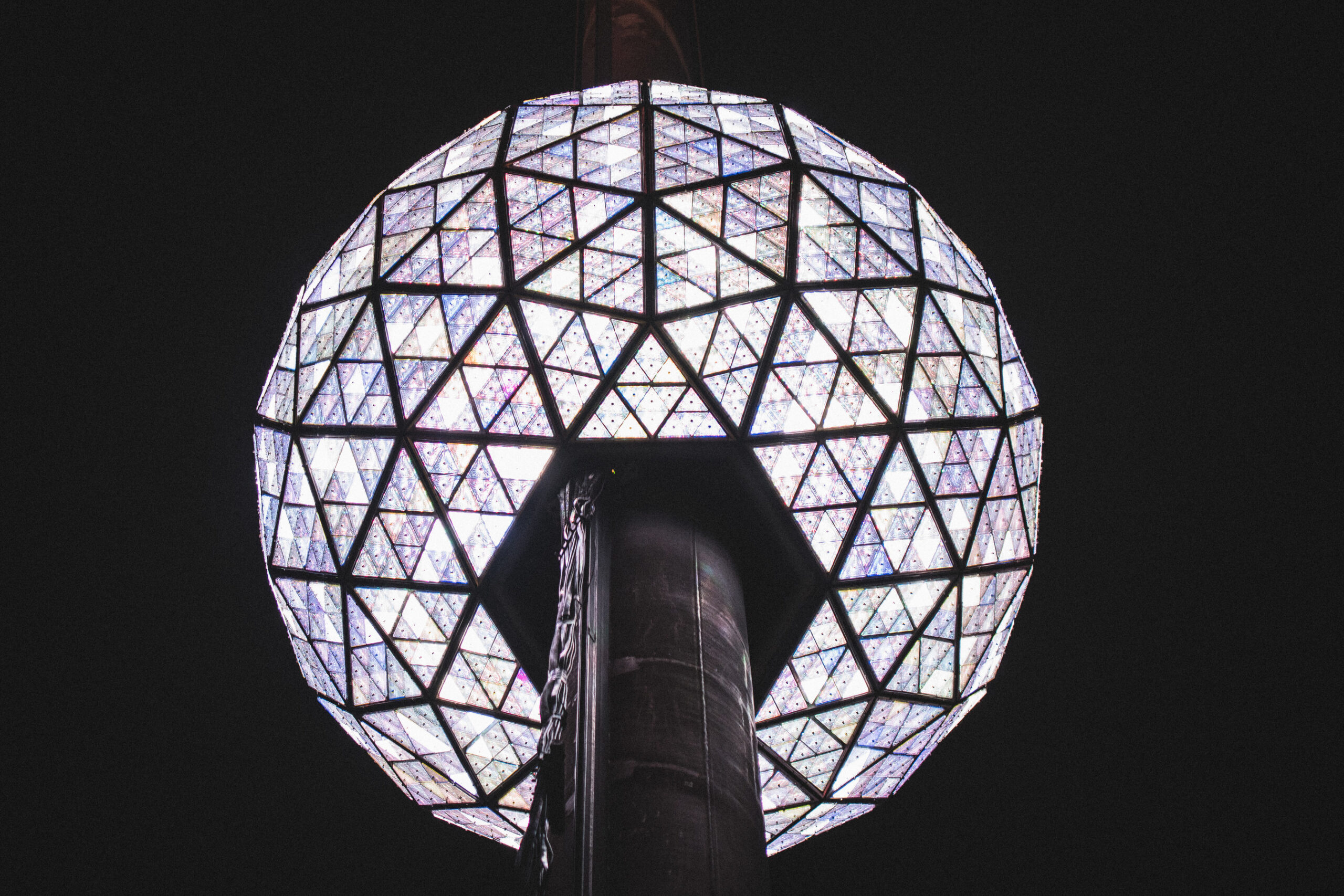
In 2008, it adopted its current form: a geodesic sphere covered in Waterford crystals, illuminated by more than 32,000 LEDs capable of creating millions of colors and billions of lighting effects. Measuring almost 3.7 meters in diameter and weighing 5.4 tons, the ball is now a masterpiece at the crossroads of craftsmanship and innovation.
Each modernization adds a touch of poetry and grandeur. The latest version, the Constellation Ball, features an entirely renewed surface with thousands of crystals of varying shapes and sizes, casting a mesmerizing glow over the Times Square crowd.
Click here to read the full article on Luxus Magazine.
Featured photo : DR