






When it opened on Sunday, October 19, the world’s largest museum lost eight of its heritage jewels in a spectacular burglary. Miraculously spared in this unprecedented heist targeting the Apollo Gallery, the crown of Empress Eugénie, wife of Napoleon III, was found broken on the pavement.
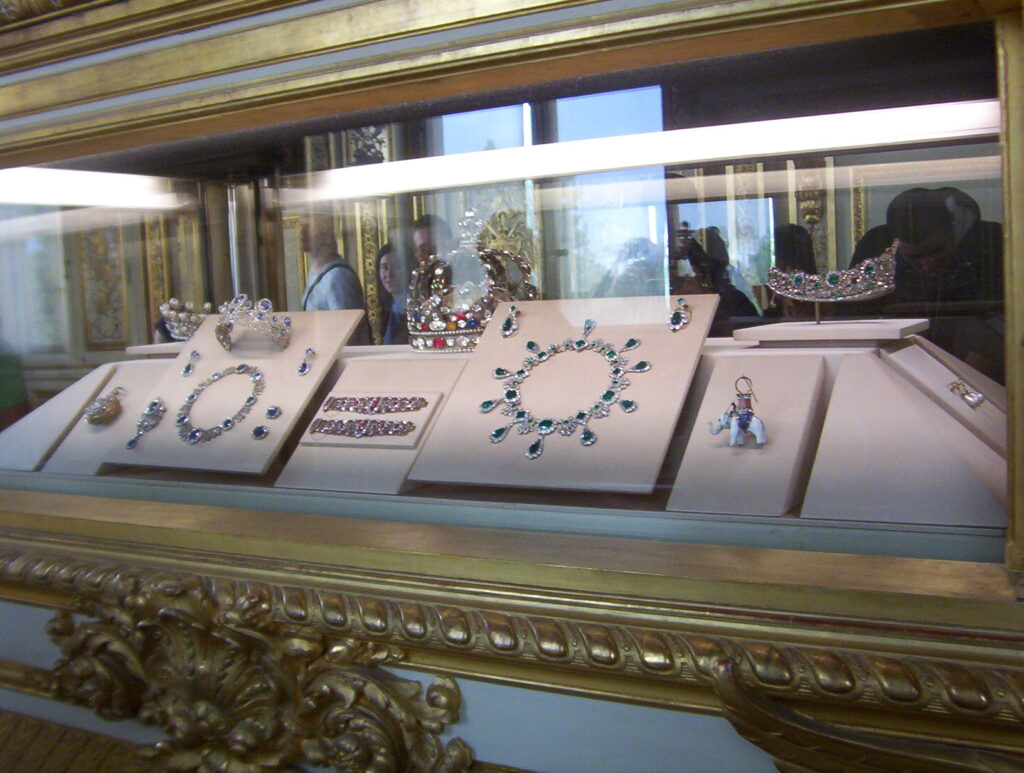
Like our British neighbors, France has its own crown jewels, a collection of gems and diamonds inherited from centuries of royal and imperial magnificence, on display in the Apollo Gallery at the Louvre Museum.
Although few jewels of royal origin remained following the spectacular robbery of the Garde-Meuble de la Couronne (ancestor of the Mobilier National) on the night of September 11-12, 1792, on what is now the Place de la Concorde, the world’s largest museum still housed jewelry reflecting all the expertise of the goldsmiths of the First and Second Empires.
Among the jewelry kept in the Apollo Gallery, eight jewels, most of which date from the reign of Emperor Napoleon III, were stolen on the morning of October 19. This “priceless” booty, reflecting the history of France and the French people, was stolen by four criminals disguised as construction workers.
An unusual modus operandi
At around 9:30 a.m. – in broad daylight – a commando of four criminals, two in a truck equipped with a freight elevator and two on powerful scooters, arrived at the foot of the Apollon Gallery.
Three of them, wearing yellow vests to simulate a construction site and motorcycle helmets, used a forklift and set up traffic cones.
Using the truck’s basket, they hoisted themselves up to the first-floor balconies of the museum and used an angle grinder to break a French window in the Galerie Apollon overlooking the Seine. The same method was reportedly used to break and loot two display cases, one containing “Napoleon’s jewels” and the other “jewels of French sovereigns,” the former of which was completely emptied.
Click here to read the full article on Luxus Magazine
Featured photo: Portrait of Empress Eugénie, wife of Napoleon III, painted by Franz Xaver Winterhalter, 1853