






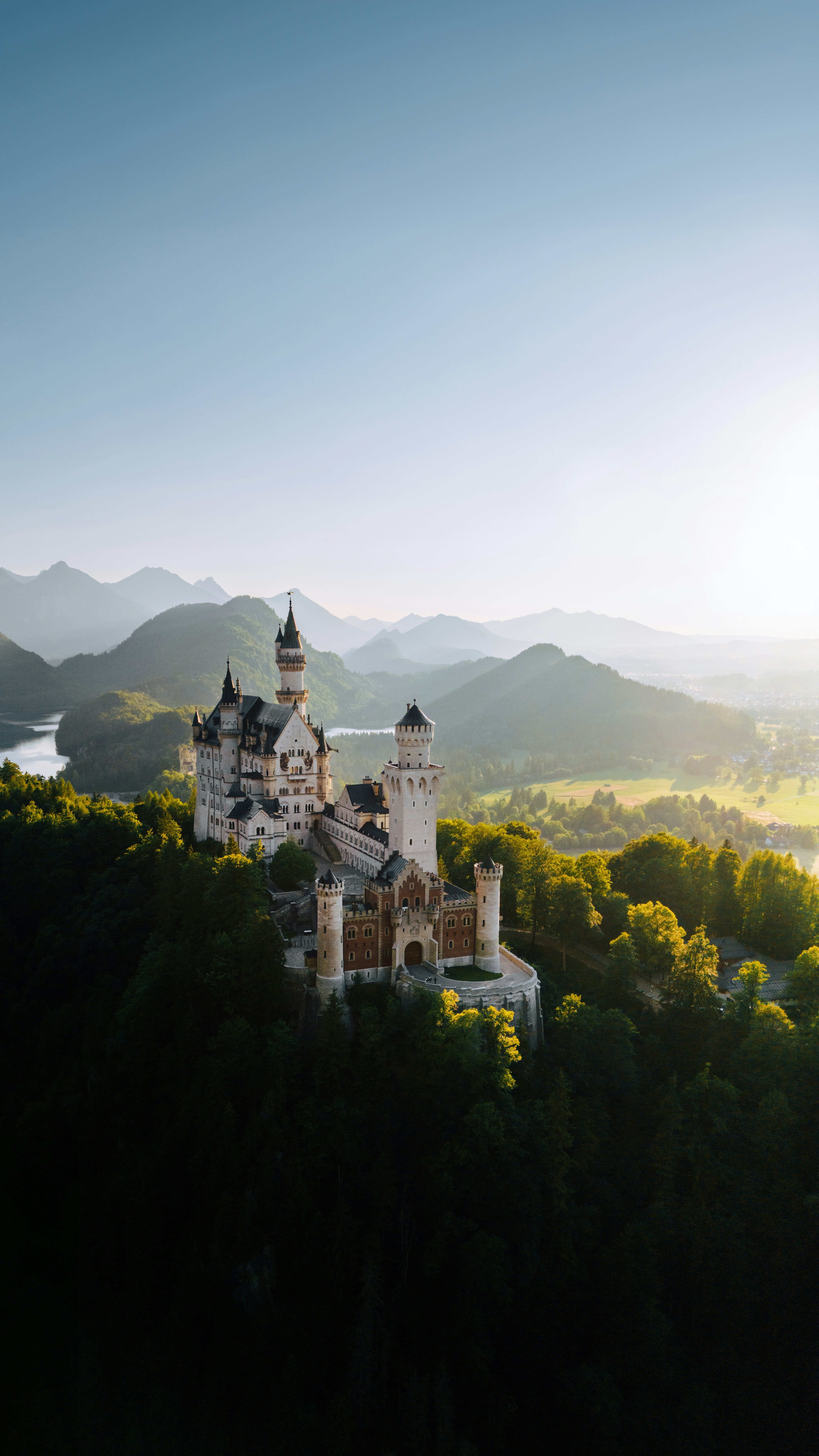
A source of inspiration for Disney when creating its animated film Cinderella (1950), Neuschwanstein Castle in Bavaria is a German gem that was added to the UNESCO World Heritage List last July.
Perched on a rocky spur in the Bavarian Alps, near the town of Füssen and Lake Alpsee, Neuschwanstein Castle was built starting in 1869 by King Ludwig II of Bavaria, nicknamed the “Fairy-Tale King.” Passionate about medieval legends and Wagner’s operas, Ludwig II dreamed of an intimate refuge where art and imagination would blend with the spectacular surrounding nature.
A Fairy-Tale Castle
Neuschwanstein was inspired by his father’s summer residence, Hohenschwangau Castle, which was designed by theater set designer Domenico Quaglio the Younger and which he was able to explore during his childhood. For his own castle project, the last king of independent Bavaria initially considered naming it Neu Hohenschwangau (New Hohenschwangau). He ultimately chose to invoke a Bavarian knightly legend, that of the Swan Knight. The current castle was built on the ruins of two ancient fortified castles, those of Vorderhohenschwangau and Hinterhohenschwangau.
Familiar with Wartburg Castle (Thuringia) and responding to Napoleon III’s invitation to visit Pierrefonds Castle in France, Ludwig II had the idea of combining Neo-Romanesque and Neo-Gothic styles in the architecture of his castle. Its forest of twenty slender towers, pinnacles, and immaculate white facades offer a spectacular view of the Hohenschwangau valley and the Alpsee and Schwansee lakes. Every detail of Neuschwanstein (literally “new swan rock”), from the Marienbrücke bridge to the arcades, contributes to the fairytale atmosphere envisioned by the king, giving the impression of a castle straight out of a fairy tale.
Click here to read the full article on Luxus Magazine
Featured photo : Unsplash